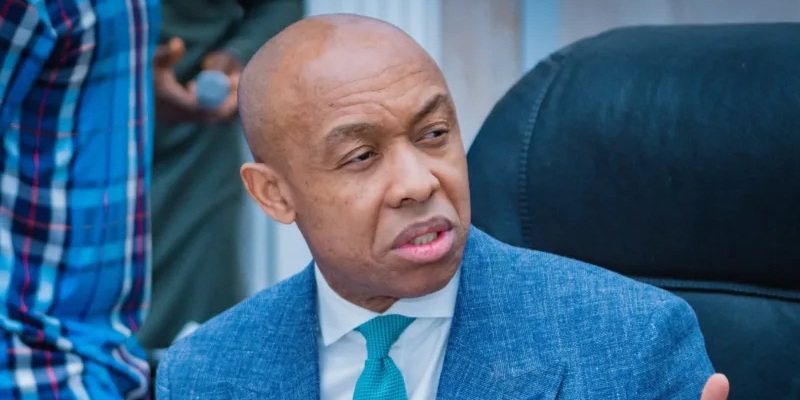
TD Human rights lawyer and former National Human Rights Commission (NHRC) chairman, Professor Chidi Odinkalu, has criticised President Bola Tinubu’s prolonged absence from Nigeria.
Professor Odinkalu made the remarks during an appearance on Channels Television’s Politics Today.
During the interview, he discussed Tinubu’s extended stay in Europe and the constitutional implications of the President’s absence from the country.
He described the country as an “ungoverned territory”, likening the President’s stay in Europe to Nigerians who “japa” abroad to work as housekeepers.
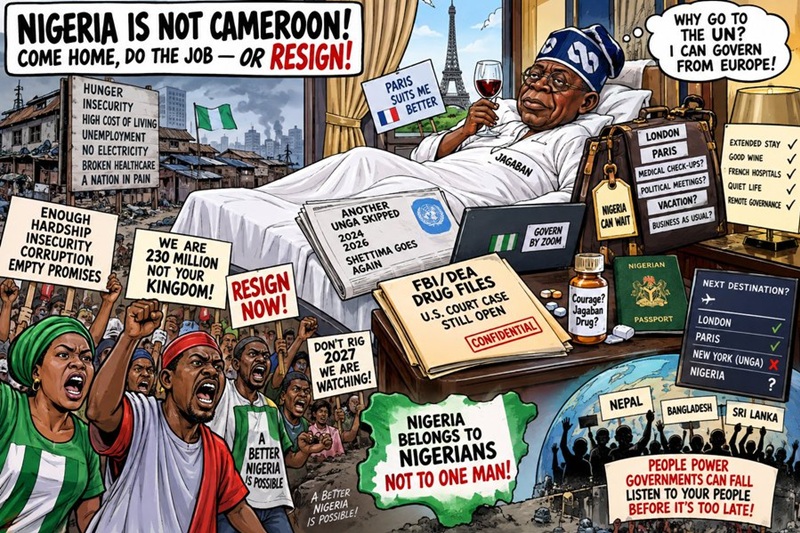
Tinubu left Nigeria on August 30 for a working vacation in Europe, initially travelling to London before moving to Paris, France.
The Presidency later announced that he had extended the trip by a few days and was expected to return to Nigeria at the weekend.

Odinkalu: ‘Nigeria has become an ungoverned territory’
Commenting on the President’s absence, Odinkalu said the situation had gone beyond a technical debate over the constitutional provisions governing presidential vacations.
He argued that Tinubu’s prolonged stay abroad, alongside Vice-President Kashim Shettima’s absence in New York for the 81st United Nations General Assembly, raised broader questions about leadership and governance.
He said: “Now, President Tinubu has been away for 24 days.
“It’s beginning to look like Nigeria is his vacation spot, and France is really where the Nigerian capital is and where he goes to do business.”
Odinkalu then declared:
“Nigeria effectively has become an ungoverned territory. This is exactly what it is. Nigeria is ungoverned.”
The lawyer linked his description to longstanding discussions about insecurity and “ungoverned territories”.

He argued that the simultaneous absence of the country’s two highest elected officials created a serious leadership concern.
Odinkalu also described the situation as unprecedented in recent administrations.
He said that previous presidents generally ensured that either the President or Vice-President remained in Nigeria when the other was abroad.
‘Tinubu is doing what people japa to do’ — Odinkalu
Odinkalu used the Nigerian expression “japa” to criticise Tinubu’s prolonged stay in Europe.
“Japa” is commonly used to describe leaving the country for opportunities abroad,
He compared the President’s activities abroad with Nigerians who leave the country to work in domestic or housekeeping jobs.

“Our President is looking after Europe.
“That’s what people japa from Nigeria to do and become housekeepers to go and clean houses for other people.
“That’s exactly what that President is doing,” he stressed.
He added that there was, in his view, no legalistic explanation that could make the situation appear satisfactory.
Odinkalu also pointed to the fact that several Western leaders were in New York for the UN General Assembly while Tinubu remained in Europe.
Dispute over the 21-day constitutional provision
The discussion also focused on Section 145 of the 1999 Constitution, which deals with the temporary absence of the President.
The provision states that when the President proceeds on vacation or is otherwise unable to perform the functions of office, he is to transmit a written declaration to the Senate President and Speaker of the House of Representatives, after which the Vice-President performs presidential functions as Acting President.
If the President fails to transmit the declaration within 21 days, the National Assembly may, by resolutions of both chambers, mandate the Vice-President to perform the functions of the office.
Odinkalu argued, however, that the calculation of the 21-day period is not necessarily as straightforward as a simple count of calendar days:
“When you look at the Interpretation Act, the 21 days would mean 21 working days, and 21 working days is effectively four weeks.”
He stressed that he was raising the interpretation as a legal issue rather than saying that the interpretation was settled.
There have in fact been differing legal interpretations of Section 145.
Constitutional lawyers disagreed over whether the 21-day provision operates as a period before the National Assembly must intervene or whether the President has an immediate obligation to transmit a declaration when proceeding on vacation.
Presidency says Tinubu remains in charge
The criticism comes against the backdrop of the Presidency’s position that Tinubu has continued to direct government affairs while abroad.
Special Adviser on Information and Strategy Bayo Onanuga, announced the extension of the President’s vacation on September 21.
Onanuga said Tinubu had remained in touch with developments at home and continued to direct the affairs of government.
The Presidency said Tinubu had, among other things, ordered an independent investigation into the deaths of 37 people who died in NSCDC custody in Niger State.
Vice-President Shettima has also been representing Nigeria at the United Nations General Assembly in New York.
There, he is expected to deliver Nigeria’s national statement on behalf of the President.
Odinkalu rejects SGF taking over presidential functions
Odinkalu also rejected suggestions that the Secretary to the Government of the Federation could effectively run the country during the simultaneous absence of Tinubu and Shettima.
According to him, Section 145 does not provide for the SGF to assume presidential functions.
He described suggestions that the country could simply be run by the SGF,
According to him, it is an attempt to “casualise” the constitutional responsibilities attached to the presidency.
The controversy over Tinubu’s absence therefore centres on two separate questions:
- the President’s continued ability to direct government while abroad, and,
- the constitutional procedure governing the formal transfer of presidential functions during temporary absence.
Tinubu was expected to return to Nigeria at the weekend.
The development followed the Presidency’s announcement that his European working vacation had been extended by a few days.