TD American journalist and transparency activist Aaron Greenspan has identified at least three United States legal proceedings connected to a 1990s drug-trafficking investigation involving President Bola Ahmed Tinubu.
Greenspan hinted on records associated with Tinubu while raising the possibility of a fourth case that could have been filed under seal.
Greenspan made the disclosure in an interview with Laolu Akande, founder of Empowered Newswire, published on September 23, 2026.
It could be recalled that Greenspan is pursuing a Freedom of Information Act (FOIA) litigation.
The litigation is seeking the release of historical US government records relating to investigations involving Tinubu and Nigerian businessman Abiodun Agbele.
Greenspan, it should be noted, runs the investigative website “PlainSite“.

He, meantime, stressed that the available records do not establish a criminal indictment against Tinubu.
His suggestion that a fourth indictment may exist remains an investigative possibility rather than an established fact.
Three cases identified
According to Greenspan, at least three separate US cases can now be linked to the drug network at the centre of the historical investigation.
He identified the first as a series of 1992 criminal indictments involving members of the alleged drug network.
The second was described as a separate criminal case involving Nigerian businessman Abiodun Agbele.
The third was the well-known 1993 civil forfeiture proceeding involving approximately $460,000 held in an account in Tinubu’s name.

“There’s at least three known cases now that are tied to this drug ring,” Greenspan said.
He explained that the cases should not be interpreted as three criminal prosecutions of Tinubu.
“There is the 1992 set of criminal indictments, which is where this transcript comes from, and that’s available in the National Archives.
“There’s the unknown date indictment of Mr Agbele, and then there’s the civil forfeiture case, which involves Bola Tinubu,” he said.
The distinction is significant because the 1993 forfeiture proceeding was a civil case involving money, rather than a criminal conviction of Tinubu.
Greenspan raises possibility of fourth case
Greenspan said his examination of historical investigative records had raised the possibility that there could be another proceeding involving Tinubu.

He noted: “There could be a fourth.
“There could be a criminal indictment of Bola Tinubu as well, and that’s what we’re trying to do.”
However, he repeatedly acknowledged that he had not established that such an indictment exists.
His theory is based partly on the unusual level of detail contained in some of the investigative material.
Greenspan said the records contain information concerning bank accounts, Tinubu’s family and his wife.
It also possibly involved his mother, as well as details about a Nissan vehicle, including its vehicle identification number.
He argued that the extensive investigative material raises a question about what happened after the investigation.
According to Greenspan, there are two possibilities: US authorities may have investigated the matter extensively but ultimately decided not to prosecute.
Or a criminal proceeding may have been filed but remained inaccessible because it was sealed.
“I don’t have any evidence that such a deal had been made, to be very clear.
“That remains an open question right now,” he emphasised.
Agbele and alleged financial connection
Greenspan also discussed Abiodun Agbele, whom he linked to the same broader investigation.
He said Agbele was connected to Muiz Akande, whom Greenspan described as a Chicago-based figure .
Akande was associated with the distribution of heroin from Thailand and other parts of Asia through Nigeria.
Greenspan said the allegations concerning Tinubu were different from those concerning the alleged drug distributors.
He said:
“Bola Tinubu comes into this because he was not distributing heroin directly.
“He was (accused of) laundering money for the proceeds from the heroin distribution.”
These are allegations contained in or derived from historical investigative records and should not be presented as established criminal findings against Tinubu.
What happened to the $460,000?
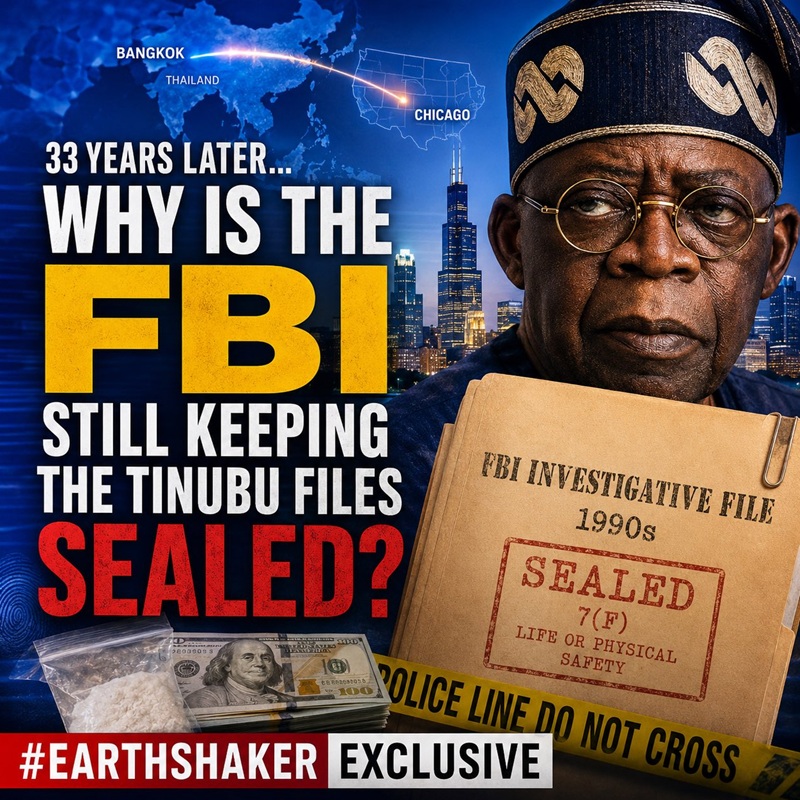
The $460,000 case is the most clearly documented part of the controversy.
US court records from 1993 show that funds in a First Heritage Bank account held in Tinubu’s name were forfeited to the United States.
A subsequent decree stated that the $460,000 represented proceeds of narcotics trafficking or property involved in financial transactions covered by specified federal statutes.
The proceeding was a civil forfeiture action. It did not constitute a criminal conviction of Tinubu.
The Presidency has repeatedly emphasised that distinction while defending the President against claims that he currently faces a criminal prosecution in the United States.
In September, Presidential spokesman Bayo Onanuga said the Washington FOIA proceedings were a civil dispute.
According to him, it involved access to government records and did not amount to a criminal case against Tinubu.
FOIA lawsuit seeks more records
Greenspan’s continuing legal battle is aimed at obtaining additional historical records from US government agencies.
Such records include material from the FBI and Drug Enforcement Administration.
In August, This Dawn reported that Tinubu had challenged efforts to release records relating to the investigations.
The documents sought by Greenspan include FBI records concerning Tinubu and interview records covering the 1992–1993 period.
The latest disclosures therefore add another dimension to a controversy that has for years centred largely on the $460,000 forfeiture proceeding.
The central unresolved question is whether any additional criminal case involving Tinubu was ever filed and, if so, whether such a proceeding remains sealed.
At present, Greenspan has not produced evidence establishing that a fourth criminal indictment against Tinubu exists.