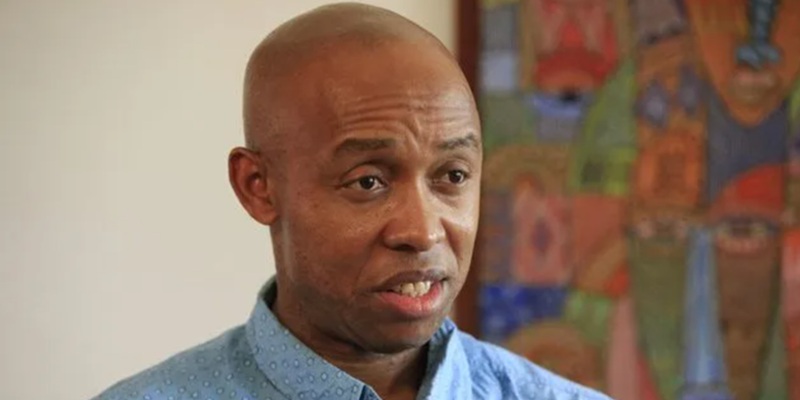
TDPresident Bola Ahmed Tinubu has emerged as the presidential candidate of the ruling All Progressives Congress (APC) for the 2027 general election, following a landslide victory in the party’s nationwide direct primary.

The results were announced on Sunday by the returning officer, Senator Pius Anyim.
The collation exercise took place at the Bola Tinubu International Conference Centre in Abuja.
It showed Tinubu securing 10.9 million votes, decisively defeating his sole challenger, businessman Stanley Osifo, who polled 16,503 votes.
A Landslide Victory
The direct primary was conducted across Nigeria’s 8,809 wards, with President Tinubu dominating in virtually all states of the federation.
His overwhelming margin of victory underscores his strong grip on the APC and sets the stage for his bid to secure a second term in office.
Party officials described the exercise as transparent and inclusive.
They note that the direct primary allowed millions of APC members nationwide to participate in the selection of the party’s flagbearer.
Tinubu’s Path to 2027
With this victory, Tinubu officially becomes the APC’s standard-bearer for the 2027 presidential election.
His campaign is expected to focus on consolidating ongoing economic reforms and tackling insecurity.
It is expected to focus on expanding infrastructure projects initiated during his first term.
Political analysts say the scale of Tinubu’s win reflects both his incumbency advantage and the absence of strong challengers within the party.
The APC leadership has now rallied behind him, emphasizing unity ahead of what is expected to be a fiercely contested general election.
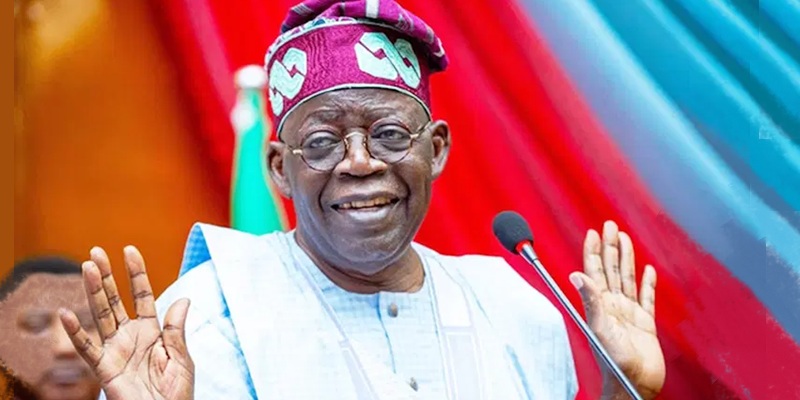
Reaction from the Party
Speaking after the announcement, Senator Anyim praised the conduct of the primaries, describing them as “a landmark in internal party democracy.”
He noted that the APC had once again demonstrated its ability to organize credible internal elections.
Party leaders and supporters at the collation centre celebrated Tinubu’s victory.
They chanted slogans and pledged loyalty to the president’s re-election bid.
Stanley Osifo’s Challenge, Criticism and Commentary
Stanley Osifo, the only other aspirant in the race, had campaigned on promises of economic diversification and youth empowerment.
However, his candidacy failed to gain traction against Tinubu’s dominance within the party.
Despite the defeat, Osifo congratulated the president and urged APC members to unite behind Tinubu to ensure victory in 2027.
While Tinubu’s victory was decisive, it has not been without criticism.
Prominent lawyer and public intellectual, Professor Chidi Anselm Odinkalu, described the outcome as “prophetic rigging”.
The remarks suggest that the scale of Tinubu’s win raises questions about the credibility of the process.
It also suggests that the exercise is a foretaste of the massive rigging expected in 2027.
His remarks reflect broader skepticism among some observers who argue that the APC’s internal democracy remains tightly controlled by entrenched interests.
Looking Ahead
Tinubu’s emergence as the APC candidate sets the stage for a high-stakes general election.
Opposition parties are expected to mount strong challenges, focusing on issues of security, governance, and economic hardship.
As campaigns intensify, the APC will seek to leverage Tinubu’s incumbency and party machinery to secure victory.
Meanwhile, critics will continue to question whether the overwhelming primary result reflects genuine grassroots support or the consolidation of political power.
For now, Tinubu stands as the APC’s flagbearer, preparing to lead the ruling party into what promises to be one of Nigeria’s most consequential elections.