TD

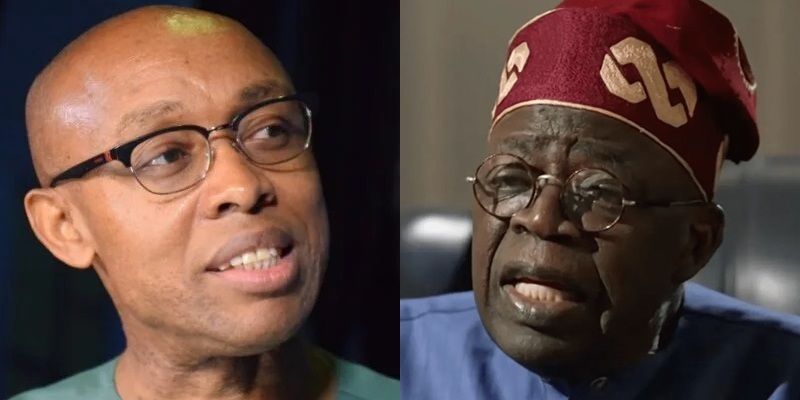
A heated debate erupted online Tuesday after President Bola Ahmed Tinubu defended the neutrality of Nigeria’s electoral body, the Independent National Electoral Commission (INEC), insisting that the commission “has never intimidated anybody.”
The statement, shared on X, drew sharp criticism from civic leaders and citizens who accused the president of whitewashing electoral irregularities.
Tinubu’s Statement
Speaking on electoral reforms, Tinubu said:
“INEC is neutral; it has never intimidated anybody.
“If political opponents are crying wolf, maybe they are afraid of their own shadows.”
The remark was intended to reassure Nigerians of INEC’s independence ahead of the 2027 general elections.
However, it quickly sparked outrage, with many arguing that the president’s defense undermines public confidence in the commission.
Odinkalu’s Response
Human rights lawyer and former National Human Rights Commission chairman, Professor Chidi Anselm Odinkalu, led the backlash.
Odinkalu wrote:
“If you have Tinubu asserting and defending the ‘neutrality’ of INEC, that is an assurance that the Commission lacks neutrality and independence.”
Odinkalu’s comment resonated widely, capturing the frustration of many Nigerians who believe INEC’s credibility has eroded since the 2023 elections.
His post was shared thousands of times, with users echoing concerns about the commission’s transparency and autonomy under Tinubu’s administration.
Public Reactions
The president’s statement triggered a flood of responses across social media:
@owinki1 wrote:
“Saying ‘INEC is neutral and has never intimidated anybody’ is a big lie and you know it. From card reader failures, server issues, voter suppression, to the way results are handled — Nigerians have seen the bias with their own eyes.”
@ChiedozieOnyeke added:
“So Tinubu is now the spokesman of the neutral INEC?”
@SirHenroDeGreat commented:
“When you hear such from the ruling party in charge that her government will fund INEC, it should worry you. The ‘Independent’ in INEC has never lived up to that name.”
Others questioned why the president was speaking for the commission at all. @VictorObiefuna asked:
“But why is he the one speaking for INEC? Is he the director of INEC?”
Several users linked Tinubu’s remarks to broader concerns about governance and insecurity. @im_patrickekong wrote:
“Mr President, have you heard that more than 15 people have been killed today in Benue State? Yet you’re fixated on elections and INEC.”
Broader Context
The controversy comes amid growing skepticism about Nigeria’s electoral institutions.
The 2023 general elections were marred by technical glitches, delayed result uploads, and allegations of voter suppression.
Although INEC defended its conduct, opposition parties and civil society groups have continued to question its impartiality.
Tinubu’s administration has pledged to strengthen democratic institutions, but critics argue that public trust cannot be restored through rhetoric alone.
Odinkalu’s rebuke reflects a wider sentiment that the government must demonstrate independence through reforms, not declarations.
Implications and Conclusion
Analysts say Tinubu’s defense of INEC could backfire politically, reinforcing perceptions of executive interference.
The president’s comments also highlight the delicate balance between defending institutions and respecting their autonomy.
For many Nigerians, the issue is not whether INEC is perfect but whether it is trusted. As one user put it:
“Denying the problem will not make it disappear. It only makes people angrier.”
Odinkalu’s criticism underscores a growing demand for accountability in Nigeria’s democratic process.
With elections approaching in 2027, the debate over INEC’s neutrality is likely to intensify.
Tinubu’s assertion that “INEC is neutral” may have been intended to reassure.
However, for many Nigerians, it has done the opposite — reigniting doubts about whether the nation’s electoral umpire can truly stand independent of political influence.