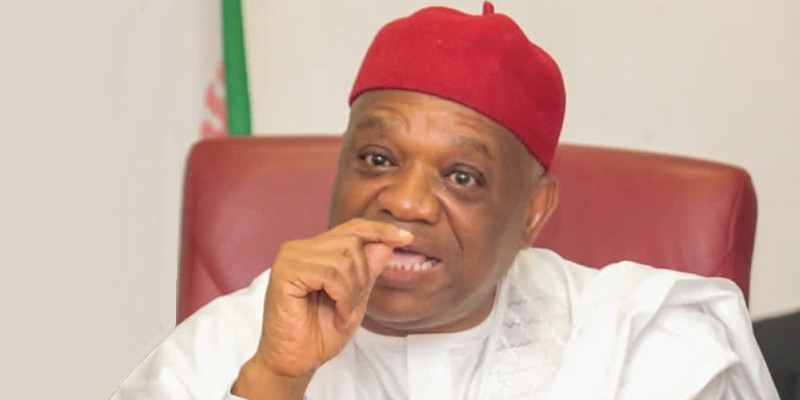
TD A resurfaced video of Nigerian politician, Senator Orji Uzor Kalu, has reignited debate about the country’s democratic transition in 1999.
In the clip, Kalu alleges that former President Olusegun Obasanjo had agreed to serve only one term (1999–2003) before handing power to former military ruler Ibrahim Babangida.
According to Kalu, this understanding was reached in 1998, during negotiations among Nigeria’s military elite.
That was when they prepared to return the country to civilian rule after years of dictatorship.
Kalu insists he personally witnessed the agreement, claiming that both Obasanjo and Babangida were present when the deal was struck.
He described Obasanjo’s decision to seek re-election in 2003 as a betrayal of trust, labeling the former president “immoral” and “shameless.”

“Immorality in a man is Obasanjo… He is supposed to be one-time president. This is the promise he made to us,” Kalu declared.
Financial Backing and Political Patronage to Obasanjo
The allegations echo accounts documented in Too Good to Die, a book by Chidi Odinkalu and Ayisha Osori.
The authors detailed how then-Vice President Atiku Abubakar provided financial support to Obasanjo’s near-bankrupt 1999 campaign.
The book also highlights the role of Babangida and Abdulsalami Abubakar.
Abubakar reportedly backed Obasanjo’s candidacy as part of a broader elite bargain to stabilize Nigeria’s transition.
Kalu’s claims suggest that Obasanjo’s rise to power was not purely democratic but heavily influenced by military patronage and financial lifelines from allies.

He further alleged that Obasanjo made overtures to hand over to Alex Ekwueme, another PDP heavyweight, but abandoned that understanding as well.
Instead, Obasanjo reconciled with Atiku, who agreed to run alongside him in 2003, effectively shutting down opposition within the ruling party.
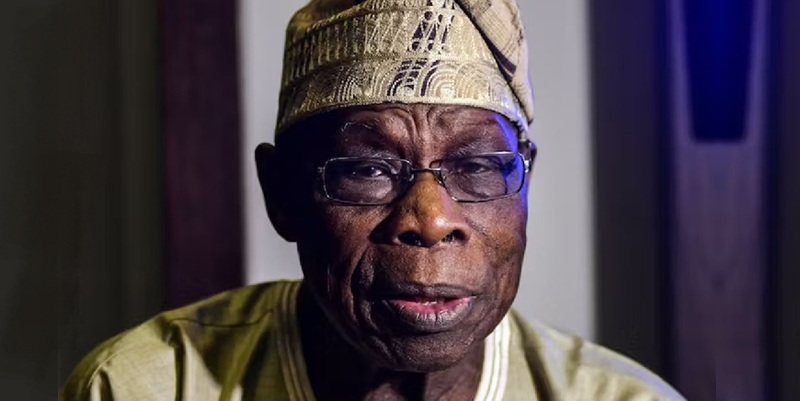
The 2003 Turning Point for Obasanjo
Kalu recounted how Obasanjo sought support from governors and political allies in the run-up to the 2003 elections.
He claimed that Obasanjo even knelt before him and Atiku Abubakar in private meetings to secure their backing.
“He came straight to my bedroom… He knelt and begged me,” Kalu said.
He added that Obasanjo’s survival in 2003 was due to last-minute reconciliations rather than genuine loyalty.

The alleged betrayal of the one-term pact became a flashpoint in Nigerian politics, with Babangida reportedly reluctant to confront Obasanjo directly.
Kalu said that when Babangida refused to challenge his former subordinate, the group considered rallying behind Atiku, but the vice president ultimately chose to remain loyal to Obasanjo.
This decision left Obasanjo unchallenged within the PDP and paved the way for his second term.
Taking further swipe on Obasanjo, he said:
“Obasanjo is an animal. He’s not supposed to be. He’s supposed to be caged inside a zoo.”
Implications for Nigeria’s Democracy
The controversy underscores the fragile foundations of Nigeria’s Fourth Republic.
Rather than being built on transparent democratic processes, the transition was shaped by backroom deals among former military rulers and political elites.
Obasanjo’s decision to pursue a second term is now framed by critics as a betrayal of trust.
Meanwhile, supporters argue it was necessary to consolidate Nigeria’s democracy after decades of instability.
For many Nigerians, the story highlights the enduring influence of military figures in shaping political outcomes.
It also raises broader questions about the moral obligations of leaders, the role of elite bargains in democratic transitions.
It also questions whether Nigeria’s political class has ever truly broken free from the shadow of its authoritarian past.
Conclusion
More than two decades later, the allegations continue to fuel debate about leadership pacts and betrayals in Nigeria’s early democratic era.
Senator Orji Kalu’s claims, combined with accounts from Odinkalu and Osori’s book, paint a picture of a political system deeply entangled with military patronage and personal bargains.
Whether Obasanjo’s actions were pragmatic or immoral remains contested.
Nevertheless, the episode serves as a reminder of how Nigeria’s democracy was born out of compromise.
It also reminds how those compromises continue to shape the trajectory of Nigeria’s democracy today.
Read also: