TD There is a question Nigeria must now confront with courage:

Who accounts for the Nigerian life lost in the name of national security?
Not the statistic.
Not the casualty figure.
Not the operational report.
The human being.
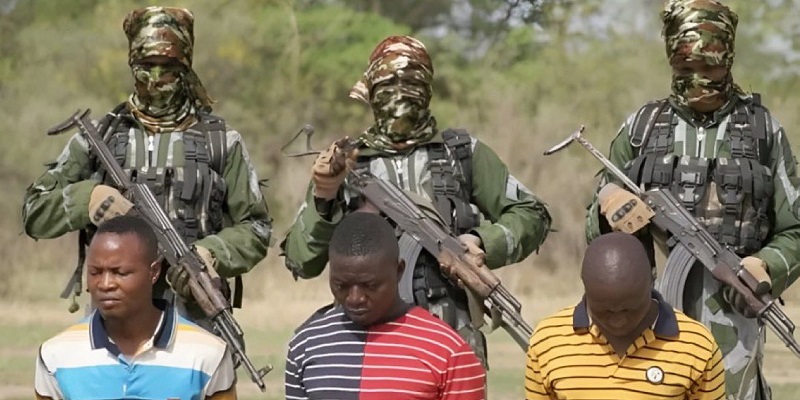
The son who left home and never returned. The daughter whose family has searched police stations, hospitals and detention facilities without finding her.
The farmer killed in an operation supposedly designed to protect him. The worshipper caught in a military airstrike. The soldier who died defending his country.
Who accounts for them?
This is not an academic question. It is one of the defining moral questions of the Nigerian Republic.
A recently published joint report by the International Society for Civil Liberties and Rule of Law (Intersociety), Nigeria, and the United States based Ekwenche Research Institute has placed before the nation a disturbing collection of allegations concerning disappearances, alleged unlawful killings, detention, mass criminalisation and violence associated with security operations, particularly in the South East.
Among its most disturbing claims is that thousands of families have been unable to account for relatives who allegedly disappeared in circumstances involving Nigerian military operations and custodial systems, with hundreds more allegedly unaccounted for in the first seven months of 2026.
These are extraordinary allegations.
Precisely because they are extraordinary, they cannot simply be believed because they have been published.
But neither can they be dismissed because they are uncomfortable.
They must be investigated.
That is the issue.
The question before Nigeria is not whether Intersociety is right about every figure.
The question is whether the Nigerian State has a credible system for establishing the truth when citizens disappear, when civilians are killed during military operations, or when families allege that their loved ones died in state custody.
If such a system exists, let it work.
If it does not, Nigeria must build one.
A CITIZEN CANNOT DISAPPEAR INTO THE STATE
There is something profoundly disturbing about a person disappearing into the machinery of government.
A man is arrested.
His family begins looking for him.
A police station says he is not there.
A military formation says there is no record of him.
A detention facility denies holding him.
No court appearance is recorded.
No release date is known.
No death certificate is issued.
Years pass.
The family remains suspended between hope and grief.
This is more than a humanitarian tragedy.
It is a failure of the Republic.
The State requires citizens to identify themselves, register their businesses, pay taxes, obey laws and submit to its authority. It cannot therefore be acceptable for the same State to become incapable of accounting for a citizen who disappears within the architecture of its security institutions.
The State cannot have a stronger memory when collecting obligations from citizens than when accounting for their lives.
THIS IS NOT AN ATTACK ON THE NIGERIAN MILITARY
Let us make this clear.
Nigeria’s military has paid a heavy price in the fight against terrorism, insurgency, banditry and other threats to national security.
Officers and soldiers have been killed in ambushes.
Families have lost fathers, husbands, mothers, daughters and sons in uniform.
Communities have been defended at great personal cost.
The Nigerian soldier deserves our respect.
But precisely because the military is a respected national institution, it must be held to the highest standards.
Accountability does not weaken the military. Impunity does.
A professional military should welcome credible investigation because investigation distinguishes lawful military action from unlawful conduct.
Where soldiers acted properly, investigation vindicates them.
Where intelligence failed, investigation exposes the failure.
Where an operational error occurred, investigation establishes responsibility.
Where criminal conduct occurred, investigation identifies those responsible.
And where an allegation is false, investigation clears the institution.
The military has nothing to fear from the truth.
TUDUN BIRI: A WARNING NIGERIA MUST NOT FORGET
Nigeria has already witnessed the devastating consequences of military operations involving civilian casualties.
In December 2023, a military airstrike struck civilians gathered at Tudun Biri in Kaduna State. Amnesty International documented more than 120 deaths and called for an independent, impartial and transparent investigation.
The tragedy became another painful reminder of the consequences of intelligence and targeting failures in a war environment.
The question should not be whether soldiers were fighting terrorists.
The question should be whether the people killed were terrorists.
If they were civilians, who made the error?
What intelligence was used?
What checks were performed before the strike?
Who authorised it?
What happened afterwards?
Were the victims identified?
Were their families compensated?
Were lessons learnt?
These are not hostile questions.
They are the questions a functioning republic must ask.
THE ZAMFARA QUESTION
The controversy surrounding the reported military airstrike in Tumfa, Zamfara State, in 2026 demonstrates why Nigeria needs institutional mechanisms for establishing truth.
Reports alleged substantial civilian casualties, while Defence Headquarters disputed the claims and said there was no credible evidence of civilian deaths.
Two competing narratives emerged.
One side said civilians were killed.
The other said there was no substantiated evidence.
In a mature democracy, that should immediately trigger one response:
Independent investigation.
Not propaganda.
Not political warfare.
Not social media outrage.
Not institutional denial.
Investigation.
Who died?
Who was present?
What was the target?
What intelligence informed the operation?
What weapons were used?
What do operational records show?
What do satellite images show?
What do hospitals and mortuaries show?
What do eyewitnesses say?
What does forensic evidence establish?
When the State possesses the capacity to answer those questions, truth becomes possible.
THE DANGER OF A LABEL
Perhaps one of the most dangerous developments in Nigeria’s security environment is the power of the label.
Once a citizen is labelled a terrorist, bandit, militant, separatist, criminal or security threat, the public imagination can begin to treat that person as though ordinary legal protections no longer apply.
That is dangerous territory.
A suspect is not a conviction.
An allegation is not a verdict.
A security classification is not a licence for extrajudicial punishment.
Even a convicted criminal remains a human being protected by law.
This is why due process matters most when society is angry.
The Constitution is not designed only for the innocent.
The rule of law exists precisely because governments possess enormous power and human beings are capable of error.
THE SOUTH EAST DESERVES THE TRUTH
The allegations concerning the South East contained in the Intersociety/Ekwenche report deserve serious attention.
The report alleges widespread disappearances, unlawful killings, discriminatory enforcement, mass criminalisation and other forms of abuse associated with security operations.
These claims should not be accepted as established fact without independent verification.
But neither should they be dismissed as mere propaganda.
The South East has suffered violence from multiple directions.
Armed non-state actors have killed.
Kidnappers have abducted.
Criminal gangs have terrorised communities.
Security personnel have also been accused of abuses.
The responsible position is to investigate every allegation regardless of the identity of the alleged perpetrator.
Justice must not have an ethnicity.
Neither should accountability.
If a terrorist kills an Igbo Christian, investigate.
If a bandit kills a Hausa Muslim, investigate.
If a militia kills a farmer, investigate.
If a soldier unlawfully kills a civilian, investigate.
If a police officer abuses a detainee, investigate.
If a civilian kills a soldier, investigate.
The Republic must not become selective about whose blood deserves justice.
NIGERIA HAS A DATA PROBLEM
One reason the security debate in Nigeria is so difficult is that the country does not possess a sufficiently authoritative, publicly accessible system for accounting for deaths, disappearances, detention and civilian casualties arising from conflict.
This creates what criminologists sometimes describe as the “dark figure” of crime: events that happen but never become part of reliable official statistics.
When communities report one number and government agencies report another, the public is left without an authoritative account.
That is unacceptable in the digital age.
Nigeria knows how to count votes.
Nigeria knows how to count money.
Nigeria knows how to count vehicles.
Nigeria knows how to count taxpayers.
Nigeria must learn to count lives.
A NATIONAL REGISTER OF THE MISSING
I propose the establishment of a National Missing Persons and Security Custody Register.
Every person arrested or detained by a security agency should be electronically recorded.
The record should contain the person’s identity, date and place of arrest, arresting agency, legal basis for detention, place of custody, transfers, court appearances and eventual release or disposition.
Where a detainee dies, the circumstances must be recorded.
Families should have a lawful channel through which they can seek information.
Independent oversight bodies should have access to the records.
No Nigerian should disappear into an administrative vacuum.
CIVILIAN CASUALTY INVESTIGATION SHOULD BE AUTOMATIC
Whenever a military operation results in credible allegations of civilian deaths, an independent civilian casualty review should be triggered automatically.
The process should establish:
Who died?
Where did they die?
How did they die?
Were they civilians or combatants?
What intelligence authorised the operation?
Was the principle of distinction observed?
Was proportionality observed?
Was the operation conducted according to established rules of engagement?
Who commanded the operation?
Were warnings possible?
Was compensation due?
Was any criminal offence committed?
The answers should be published.
Not every investigation will indict a soldier.
But every investigation should establish the truth.
COMMAND RESPONSIBILITY CANNOT BE A SLOGAN
Accountability must not stop with the lowest-ranking soldier.
If a military operation results in unlawful deaths, the investigation must travel up the chain of command.
Who authorised it?
Who supplied the intelligence?
Who approved the deployment?
Who supervised the operation?
Who received the reports?
Who knew?
Who ought to have known?
Who failed to act?
This is not an attack on military hierarchy.
It is the logical consequence of military hierarchy.
If authority travels downward, responsibility must also travel upward.
GOVERNMENT MUST INVESTIGATE BEFORE IT DENIES
Nigeria has developed an unfortunate pattern.
A tragedy occurs.
A community makes allegations.
Civil society publishes figures.
Government denies them.
The military rejects the allegations.
The controversy fades.
No authoritative public record emerges.
Then another tragedy occurs.
This cycle must end.
The first response to a credible allegation involving human life should be:
“We will investigate.”
If the allegation is false, publish the evidence.
If it is true, accept responsibility.
If the facts remain disputed, investigate further.
If wrongdoing is established, prosecute.
If victims suffered loss, provide remedy.
That is how trust is built.
THE PRESIDENT HAS A HISTORIC OPPORTUNITY
President Bola Ahmed Tinubu inherited a security crisis.
But every government eventually becomes responsible for the institutions it controls.
The President, as Commander-in-Chief, therefore has an opportunity to establish a new national security covenant:
The Nigerian State will protect your life. And where the State itself is accused of causing your death, an independent process will establish the truth.
That would be a historic contribution to Nigerian democracy.
It would also restore confidence in the military.
Because the military does not need protection from accountability.
It needs protection from the suspicion that accountability does not exist.
FROM PERFORMANCE DEMOCRACY TO PERFORMANCE SECURITY
My advocacy for Performance Democracy begins from a simple premise:
Democracy must ultimately be judged by what it does for the citizen.
That principle cannot stop at elections.
It must extend to security.
A government that conducts elections but cannot protect citizens has a performance problem.
A government that builds infrastructure but cannot account for missing citizens has a performance problem.
A government that spends billions on security but cannot explain civilian deaths has a performance problem.
A government that deploys soldiers without an effective civilian casualty accountability system has a performance problem.
Therefore, Nigeria must begin to measure Performance Security.
How many citizens were protected?
How many abductees were rescued?
How many missing persons were accounted for?
How many communities were returned to safety?
How many civilian casualties were independently investigated?
How many victims received justice?
How many security personnel were held accountable for proven violations?
How much confidence do citizens have in the institutions protecting them?
These are the metrics of a serious security state.
EVERY LIFE HAS A NAME
At the centre of this debate is not statistics.
It is humanity.
Behind every missing-person statistic is a family.
Behind every casualty figure is a name.
Behind every military death is a grieving household.
Behind every alleged unlawful killing is somebody who once had plans for tomorrow.
Nigeria must stop discussing human beings as though they are expendable entries in an operational report.
Every life has a name.
Every name has a family.
Every family deserves the truth.
And every Nigerian deserves a State that values life.
ACCOUNTABILITY IS THE NEW FRONTIER OF NATIONAL SECURITY
The battle for Nigeria’s future will not be won solely with guns, drones, aircraft or armoured vehicles.
It will be won when citizens trust the institutions carrying those weapons.
The military must remain strong.
The police must remain professional.
Intelligence agencies must remain effective.
But every institution exercising coercive power must understand one fundamental principle:
The Nigerian citizen is not the enemy.
Even where the citizen is suspected of wrongdoing, the citizen remains under the protection of the law until guilt is established through due process.
That distinction is the dividing line between a security state and a constitutional democracy.
Nigeria must therefore enter a new era in which security is measured not simply by enemies eliminated, but by citizens protected.
The time has come to move from a culture of denial to a culture of evidence.
From secrecy to accountable transparency.
From impunity to institutional responsibility.
From casualty figures to human stories.
From merely deploying force to measuring outcomes.
And ultimately, from security of the State to security of the citizen.
The report by Intersociety and Ekwenche Research Institute has raised serious allegations.
Let Nigeria investigate them.
Let the truth emerge.
Let false allegations be exposed.
Let genuine victims receive justice.
Let soldiers who served honourably be defended.
Let soldiers who broke the law face the law.
Let commanders accept responsibility for their commands.
And let every Nigerian know that whether killed by a terrorist, bandit, militia, criminal gang, police officer or soldier, his or her life belongs to the Republic and cannot simply disappear without an account.
That is the Nigeria we must build.
A Nigeria where the State has the courage to protect life, the humility to investigate its own failures, and the integrity to hold accountable anyone who unlawfully takes a life.
Nigeria must account for the lives.
Because the true test of national security is not how powerful the State has become.
It is how safe the citizen has become.
Citizen Bolaji O. Akinyemi
Nation Builder | Convener, National Citizens’ Conversation