TD Nigeria finds itself once again thrust into global headlines, grappling with persistent allegations of corruption that have long plagued its national institutions.
For many citizens, the sense of national dignity feels under siege as reports of graft, nepotism, and the erosion of public trust continue to dominate discourse.
While the provided perspective frames these challenges as the work of a specific “group” tied to the ruling All Progressives Congress (APC), the reality of Nigeria’s governance struggles runs deeper and spans multiple administrations.
The Enduring Shadow of Corruption
Corruption in Nigeria is not a new phenomenon. Successive governments—across military and civilian eras—have faced accusations of diverting public funds, with estimates suggesting hundreds of billions of dollars lost since independence.
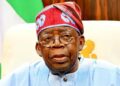
Under the current APC-led administration of President Bola Tinubu, critics point to specific issues.
These include withheld local government allocations in opposition states like Osun (reportedly over ₦202 billion amid political disputes) and broader claims of selective anti-corruption enforcement by agencies like the EFCC.

Opposition voices argue that institutions have been “captured,” with cases against politicians seemingly paused or resolved favorably upon alignment with the ruling party.
Historical examples exist on all sides: politicians defecting to APC to evade scrutiny, as well as unresolved high-profile cases.
Data from anti-graft efforts shows mixed results—some convictions occur, yet many cases drag on for years, fostering cynicism.
Surveys indicate bribery remains a daily reality for many Nigerians interacting with public officials, though slight declines have been noted in some metrics.
This is not unique to one party.
Nigeria’s challenges reflect systemic weaknesses: weak institutions, elite impunity, economic pressures from subsidy reforms and currency policies, and insecurity that diverts resources.

Blaming a single administration risks overlooking how patronage networks and impunity have persisted regardless of which party holds power in Abuja.
Operation Safe Corridor and Secularism in the North
A particularly charged element in current debates is Operation Safe Corridor (likely the intended reference for “operation self corridor”), a federal government program launched in 2016 to deradicalize, rehabilitate, and reintegrate low-risk former Boko Haram insurgents, primarily in the Northeast.
Proponents view it as a necessary non-kinetic complement to military efforts against insurgency, aiming to reduce violence through rehabilitation rather than perpetual conflict.
Critics, however, see risks: inadequate vetting of participants, potential community resentment, and concerns that it softens responses to jihadist ideology in a region already strained by religious tensions.
Some interpret such initiatives—alongside the broader influence of Sharia law in northern states—as tilting the balance against Nigeria’s constitutional secular framework.
Nigeria’s 1999 Constitution declares no state religion (Section 10), positioning the country as secular.

Yet, in practice, religion profoundly shapes politics, especially in the North, where historical dynamics of Islamic propagation, Christian minority concerns, and events like Boko Haram have tested this ideal.
Debates about secularism often highlight tensions between federal unity and regional identities, with accusations of favoritism or appeasement fueling division.
Calling rehabilitation programs a “coup against secularism” reflects deep frustration among those who feel the state has compromised on neutrality.
However, framing it solely as an orchestrated plot by one party oversimplifies multifaceted security and social challenges inherited across governments.
Time for Active Citizenship, Not Just Rhetoric
The call to “put our hands together” against perceived evils resonates with many disillusioned Nigerians.
Passivity in the face of poor governance has costs—eroded public services, youth unemployment, emigration (“Japa”), and insecurity.
Civic engagement is vital: supporting independent institutions, demanding transparency, voting based on evidence and performance, and backing reforms like stronger judicial independence and asset declaration enforcement.
That said, effective opposition requires more than labeling a government “evil.”
Constructive critique should:
- Demand accountability from all political actors.
- Focus on policy outcomes (economy, security, education) rather than blanket partisan attacks.
- Recognize shared national problems that transcend APC or PDP.
Nigeria’s diversity—its people, resources, and resilience—remains its greatest asset.
Headlines of corruption and institutional strain are real, but so is the potential for reform.
Citizens, civil society, the diaspora, and honest leaders across the spectrum must prioritize evidence-based governance over zero-sum politics.
True national dignity will come not from eroding trust further through inflammatory rhetoric, but from sustained pressure for institutions that serve the public interest above partisan or personal gain.
The fight against corruption and for genuine secular neutrality is ongoing. Nigerians deserve better—across regions, faiths, and parties.
Now is indeed the time to engage, but with clarity, facts, and a commitment to building, not just tearing down.