



TDAssociate Professor Dr. Chike Walter Duru, Head of the Department of Mass Communication at Achievers University, Owo, has described the media as a decisive force multiplier in contemporary security operations.
Dr. Duru stressed that effective communication is essential to operational success in today’s security environment.
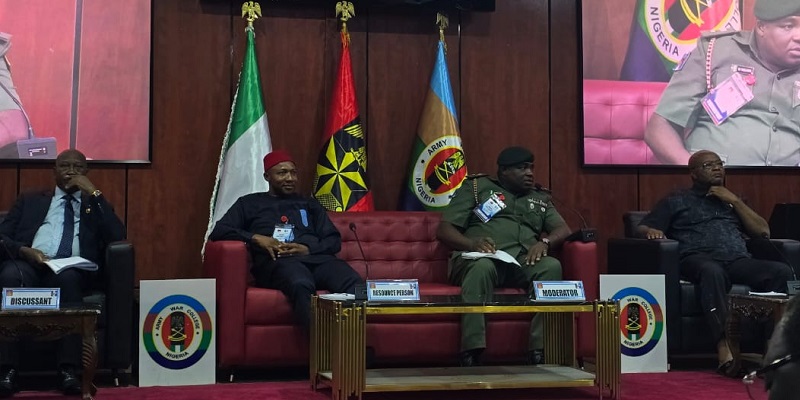
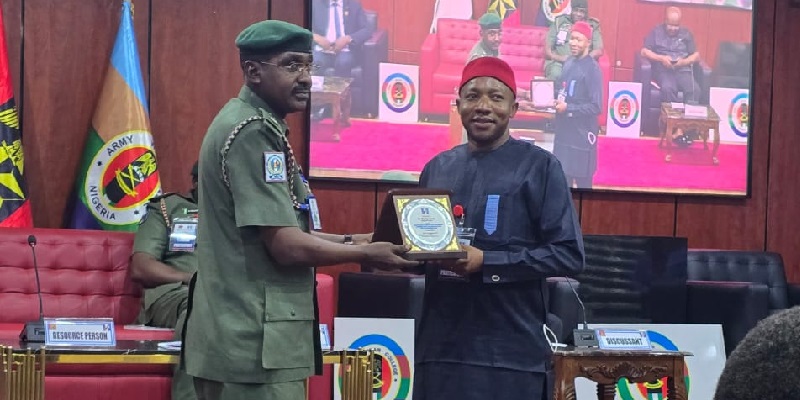
Dr. Duru delivered the address as a guest lecturer at a media workshop organised by the Directorate of Army Public Relations (DAPR).
The event was held at the Headquarters Nigerian Army, Army War College Nigeria, Asokoro, Abuja.
The workshop convened Army public relations officers, media practitioners, and public relations representatives from multiple security agencies.
The participants explored the role of strategic communication in strengthening national security outcomes.

Lecture forum details and Central argument
Dr. Duru spoke on the theme “Media as a Force Multiplier: Leveraging Integrated Platforms to Enhance Public Trust, Inter-Agency Synergy and Operational Outcomes.”
He argued that modern security success depends as much on communication as on military capability.
He noted that institutions now win or lose public support—and therefore operational legitimacy—by how well they communicate, counter misinformation, and sustain public confidence.
“Today, the success or failure of security operations is influenced not only by military capability, but also by how effectively institutions communicate with citizens, shape public perception, counter misinformation, and sustain public confidence,” Dr. Duru said.
He defined a force multiplier in military and strategic studies as any capability that amplifies operational effectiveness beyond raw personnel or equipment.
That, he said, positioned the media as such a capability—one that can bolster institutional credibility, foster national unity, and enhance legitimacy.

Information environment and risks
Duru highlighted how the rapid rise of digital media has reshaped the information environment, creating opportunities and vulnerabilities for security institutions.
He warned that misinformation, fake news, deepfakes, online propaganda, and coordinated disinformation campaigns now pose significant threats to national security and operational effectiveness.
As a result, he argued, information management must be treated as an integral element of national security, requiring proactive communication, transparency, and credibility.
Recommendations
To harness media as a force multiplier, Dr. Duru recommended a range of measures, including:
- Integrating strategic communication into operational planning
- Institutionalising regular security–media dialogue platforms
- Developing early-warning communication systems
- Promoting citizen-centred security messaging
- Building capacity in counter-disinformation and information warfare
- Strengthening collaboration with digital platforms and online publishers
- Creating indigenous language communication strategies
- Establishing joint communication frameworks for emergencies
- Investing in digital media capacity and communication technology
- Adopting clear crisis communication protocols
- Expanding community-based strategic communication and media literacy campaigns
Discussion and outcome
Dr. Duru reiterated that public trust is a strategic security asset and that effective communication is vital to maintaining cooperation between citizens and security institutions.
“Modern security victories are achieved not only through superior force, but through superior communication.

“Whoever shapes the narrative strengthens operational success,” he said.
The lecture prompted robust discussion, with Major General Chris Olukolade (Rtd) and Professor Okey Ikechukwu serving as discussants and Lt. Col. D.J. Danjuma moderating.
Participants praised the presentation for its relevance and for offering practical steps to improve media engagement and inter-agency coordination within Nigeria’s security architecture.
The workshop is part of DAPR’s ongoing efforts to strengthen military–media relations, enhance strategic communication capabilities, and promote effective public engagement in support of national security objectives.