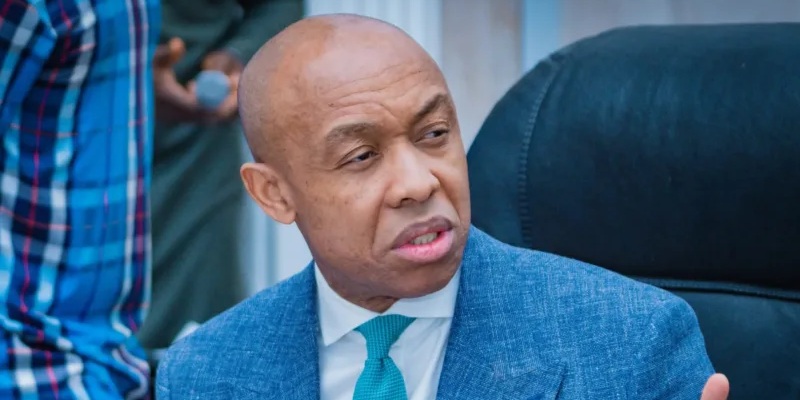

 Former Chairman of Nigeria’s National Human Rights Commission (NHRC) and human rights lawyer, Professor Chidi Anselm Odinkalu, has accused Federal High Court judges, Peter Lifu and John Tsoho, of political complicity.
His comments followed a November 5 ruling that invalidated the David Mark-led leadership of the African Democratic Congress (ADC).
Justice Lifu also nullified decisions made under that leadership, including the process that produced Atiku Abubakar as the ADC’s 2027 presidential candidate.
The judgment has heightened an existing legal dispute over who controls the party and whether the Mark-led committee was validly constituted.
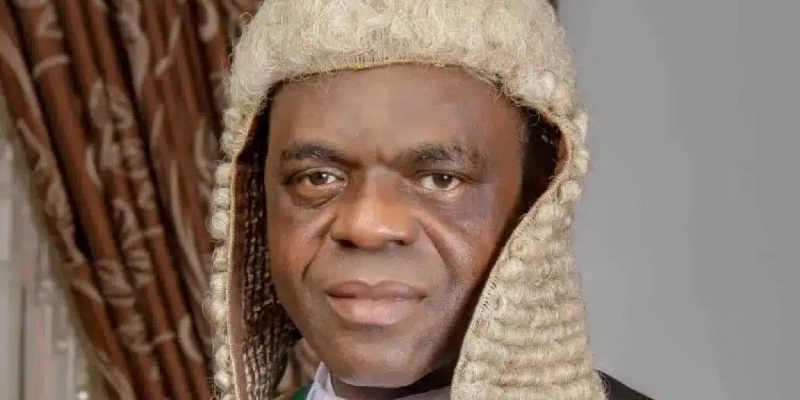
Odinkalu’s post described the judges as “members of an organised political crime gang,” a serious accusation that remains his opinion.
The post alleged corruption and political motivation, but did not present evidence establishing criminal conduct by either judge.

The court ruling itself concerned the legality of the party’s leadership and the validity of decisions made under it.
Odinkalu Accuses the Chief Judge of Enabling Peter Lifu
Odinkalu identified John Tsoho, Chief Judge of the Federal High Court, as the senior figure enabling what he called the “decadence” of Lifu.
He wrote that Tsoho “knows what he is doing,” suggesting the chief judge bore responsibility for the way the dispute proceeded.
The post accused both judges of being compromised by political ties and acting out of self-preservation.
Odinkalu argued that they believed they would face consequences under a different political administration, making impartiality impossible.
Those claims have not been independently substantiated in the reports reviewed, and neither judge’s response was identified.

Odinkalu’s post offered no supporting documentation for alleged political ties, bribery, or coordination between the judges and government officials.
His comments are therefore best understood as a forceful political and legal critique, not a factual finding about criminal conduct.
The distinction matters because judges’ decisions can be challenged through appeals, while allegations of corruption require separate evidence.
Earlier Judgment Complicates the Leadership Dispute
The November ruling has been contested partly because another Federal High Court judge addressed the ADC leadership dispute in July.
On July 2, Justice Musa Liman dismissed a suit challenging Mark’s leadership, holding that the court lacked jurisdiction over internal party affairs.
Liman also found that the claimant lacked standing and had not exhausted the party’s internal dispute-resolution process.

The court said Mark and National Secretary Rauf Aregbesola emerged through a process compliant with the ADC constitution and Electoral Act.
That judgment resolved the issues in that particular case, while the November ruling arose from a separate suit.
The ADC and Atiku’s camp argue that the later decision conflicts with Liman’s ruling and should be challenged.
Atiku’s campaign has said it intends to appeal and seek a stay of execution, leaving the dispute before the courts.
The November judgment also follows an earlier Lifu order directing INEC to deregister the ADC and four other parties.
In June, the Court of Appeal stayed that order, saying Lifu proceeded despite an appellate directive to halt proceedings.
The appellate court later overturned the deregistration judgment, finding that the trial court lacked power to hear the case.
It also faulted the plaintiff’s standing and criticised Lifu for proceeding despite the stay order.
Mahmud and Other Commentators Broaden the Criticism Against Tsoho, Lifu
Lawyer Abdul Mahmud responded to the latest ruling with the phrase, “Lifu strikes again,” invoking the earlier deregistration case.
Mahmud described the current political order as a “Tinubu hegemony” and questioned whether confronting it through elections could be effective.
His post reflected a deep distrust of the political environment, but it did not establish that the election process was compromised.
Another commenter urged opposition supporters to focus on scrutinising the Independent National Electoral Commission rather than concentrating only on campaigning.
That commenter called for pressure on INEC and proposed hiring international audit and information-technology firms to examine election systems.
The post also demanded the resignation of INEC chairman Joash Amupitan, using the slogan “AMUPITAN MUST GO.”
The commenter alleged that insiders would provide the ruling party with information and claimed Tinubu could not win a substantially free election.
No evidence supporting those allegations was provided in the post, and they should not be treated as established fact.
The call to scrutinise election administration reflects a broader political concern, but any specific claim requires independent proof.
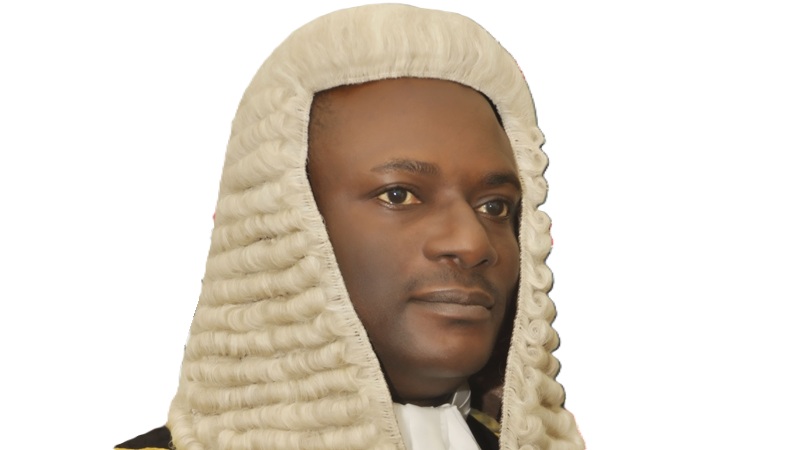
Lifu’s Record and the Limits of the Allegations
The earlier deregistration case is relevant context because an appellate court overturned Lifu’s order and criticised how proceedings continued.
However, that appellate decision does not by itself prove that the later ADC leadership ruling was politically motivated.
Nor does it establish that Tsoho directed Lifu or that either judge acted as part of an organised political network.
The November ruling must be assessed through its reasoning, the record of proceedings, and any appellate review.
The available reporting says Lifu held the Mark-led committee was improperly constituted and invalidated its decisions, including candidate nominations.
The judgment followed a case filed by former ADC deputy national chairman Nafiu Bala Gombe challenging the leadership transition.
Atiku and the ADC reject the ruling and say they will pursue legal remedies, while the court’s decision remains consequential.
The full implications depend on the precise orders, any stay granted, and decisions by higher courts.
What Happens Next
The controversy now combines a party leadership dispute, Atiku’s candidacy, and serious public criticism of the judiciary.
Odinkalu’s words may intensify pressure on judicial authorities, but they remain accusations rather than proof of a criminal conspiracy.
The most direct route for resolving the competing judgments is through the appeal process and authoritative court decisions.
Atiku’s camp says it will seek a stay and appeal, while the ADC contests the decision’s consistency with Liman’s earlier ruling.
Any appeal could address the legal effect of the two judgments and the scope of the orders of Justice Lifu.
The case also places renewed attention on how political-party disputes are handled by courts during an election cycle.
For now, the ruling has not been shown to establish that the judges acted on behalf of Tinubu or the APC.
Odinkalu, Mahmud and other critics have framed it as evidence of a compromised political system, a characterization the courts have not endorsed.