
 The Nigeria Democratic Congress (NDC) presidential candidate, Mr. Peter Obi, has urged European Union envoys (EU Ambassadors) in Abuja to support Nigerians’ democratic right to choose their leaders peacefully and fairly.
In a post dated November 5, 2026, Obi said he held a meeting with the ambassadors, adding that the discussions focused on living costs, Nigerians’ welfare, governance and the forthcoming elections.
He framed free political choice as essential to democracy and called on international partners to stand with Nigerian voters.
The meeting follows a separate discussion with the British High Commissioner, which Obi said took place the previous day.
Obi’s Appeal to EU Ambassadors
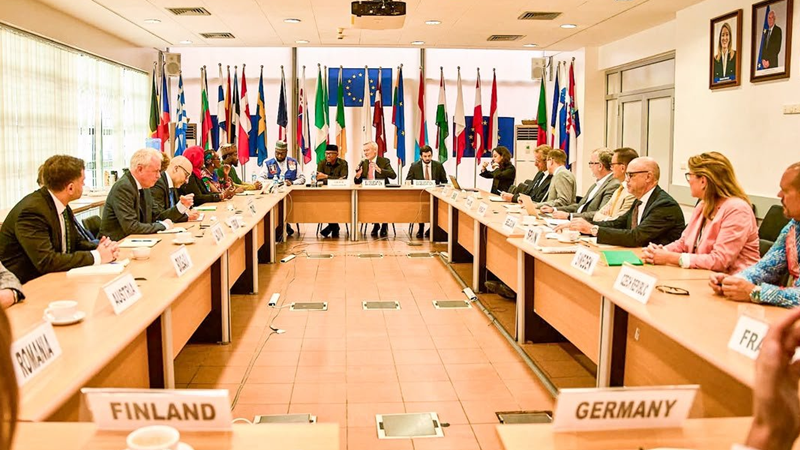
In his post, Obi described the engagement as a meeting with ambassadors of EU countries in Abuja.
He thanked the European Commission for the invitation and opportunity, but did not name individual diplomats or provide a detailed agenda.

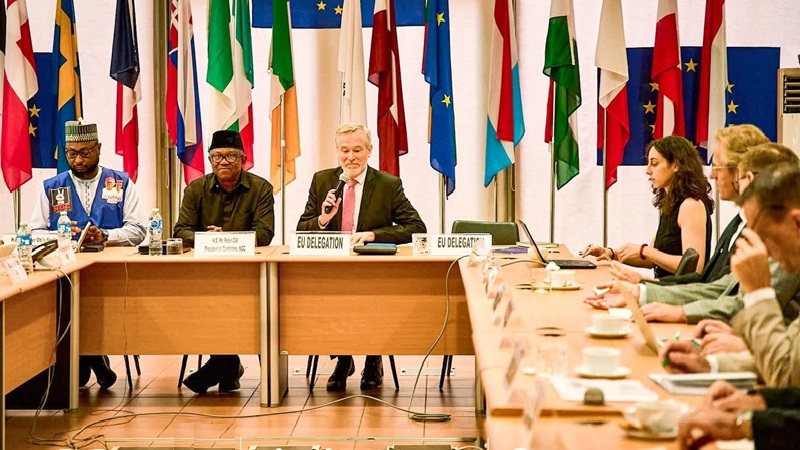
Photographs accompanying the post showed Obi seated with diplomats during discussions and standing with attendees in a group setting.
The images offered a visual record of the event, although they do not independently establish what was discussed or agreed.
Obi said the cost of living and citizens’ welfare were central topics during the meeting.
He also raised governance and the approaching election, connecting those issues to his call for support of democratic rights.
His appeal urged the international community to support Nigerians’ ability to choose leaders freely, fairly and in a peaceful environment.
The post did not say that the diplomats endorsed his campaign or made any public commitment to intervene in Nigeria’s election.

It also did not disclose whether the ambassadors discussed specific measures for election observation, voter protection or diplomatic engagement.
No separate statement from the European Union confirming the meeting’s agenda or outlining its response was identified in the sources reviewed.
Accordingly, the reported appeal and discussion points remain based on Obi’s account of the meeting.
Campaign Context and International Outreach
Obi is campaigning as the NDC’s presidential candidate for the 2027 general election.
Channels Television reported that the party unveiled him as its presidential candidate at a special convention in Abuja in May.
The NDC later announced its national campaign council, naming Obi as its candidate and Rabiu Musa Kwankwaso as running mate.

Obi has publicly described economic and governance questions as priorities, including the high cost of living raised in his post.
In August, Voice of Nigeria reported that he launched his presidential campaign with a manifesto focused on shifting Nigeria’s economy from consumption towards production.
His latest diplomatic meeting presents those domestic concerns to foreign representatives, while also emphasizing electoral rights.
Obi’s message comes during an active campaign period, with President Bola Tinubu seeking re-election and opposition parties preparing their bids.
The presidential election is scheduled for January 2027, according to current reporting on the election calendar.
The international outreach also follows earlier contact between Obi and foreign diplomats in Abuja.
Premium Times reported that in April, Obi met the British High Commissioner and representatives from several foreign missions, including EU member states.
That earlier meeting included diplomats from Germany, Canada and France, and was described as a breakfast engagement in Abuja.
In a separate April visit, the EU ambassador to Nigeria, Gautier Mignot, met Obi at his residence in Onitsha.
These previous engagements show that Obi has maintained contact with diplomats, though they do not establish a coordinated foreign endorsement.
EU and other diplomatic missions routinely engage political, civic and government figures to understand national developments.
The British Foreign, Commonwealth and Development Office previously told Premium Times that attendance at political and civic events reflects engagement with Nigeria’s democratic process.
Diplomatic meetings with candidates or party representatives do not, on their own, signal support for a particular candidate.
Election Rights and Diplomatic Engagement
Obi’s appeal placed the upcoming election at the centre of his conversation with EU representatives.
He argued that democracy depends on citizens having the freedom to make choices and determine who governs them.
The call for a peaceful environment also underscores the importance of credible processes and public confidence in election administration.
However, his post did not describe a specific threat to voters or claim that the diplomats had raised concerns about election security.
Nor did it specify whether the meeting addressed the Independent National Electoral Commission, election logistics, campaign conditions or observer access.
Those details remain unknown unless the participants or their institutions provide further information.
Nigeria and the EU maintain formal relations that include regular political dialogue and cooperation across several policy areas.
In March, Nigerian and EU officials held their eighth ministerial dialogue in Abuja, according to the EU’s official communiqué.
That dialogue covered bilateral cooperation and broader political and economic issues, within the established relationship between both sides.
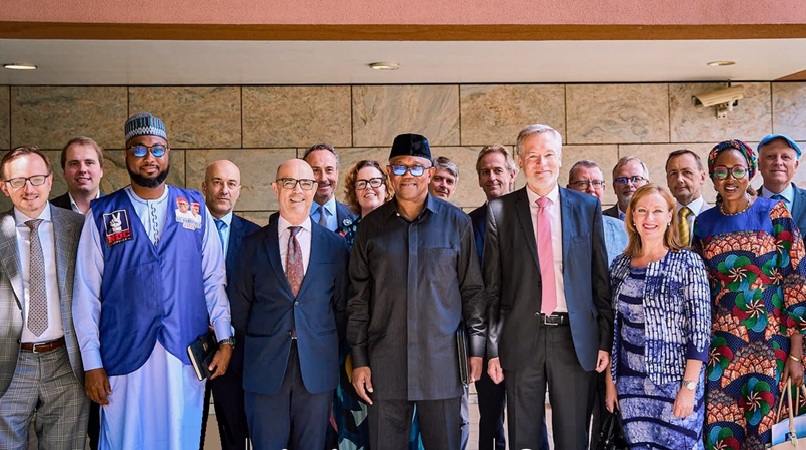
Expectations from Peter Obi’s meeting with EU Ambassadors
Obi’s meeting was a campaign-season engagement with diplomats, distinct from that formal government-to-government dialogue.
His post did not suggest the EU ambassadors were acting on behalf of their governments to negotiate with Nigeria’s authorities.
The distinction matters because diplomatic contact with a candidate is not the same as an official policy position.
For now, the clearest account of the meeting comes from Obi, who described the invitation, subjects discussed and appeal he made.
The photographs support that a gathering took place, but the meeting’s substance and any follow-up remain unreported.
The EU’s public response, if any, would clarify whether the ambassadors intend to address Obi’s appeal or simply heard his views.
The encounter nevertheless gives the NDC candidate a platform to present his concerns about living standards, governance and electoral choice.
It also highlights how opposition candidates use international outreach to communicate their positions during an election campaign.
Whether that engagement leads to further diplomacy or election-related action has not been established.