



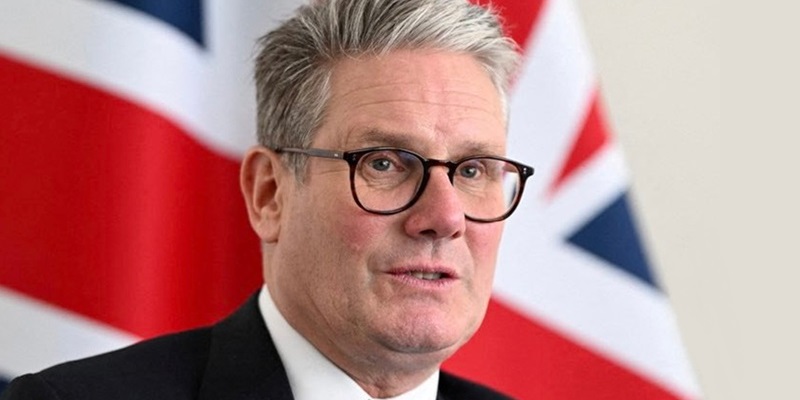

TDIn the summer of 2026, Keir Starmer stepped down as Prime Minister after less than two years in office, following a landslide victory in 2024.
The headlines screamed failure:
- plummeting polls,
- economic pressures,
- migration challenges, and,
- internal party discontent.
Yet this narrative misses the deeper truth. Starmer’s short tenure is not evidence of personal inadequacy, but a symptom of the inherent contradictions in British politics — a system that chews up serious, hardworking, intellectual leaders while rewarding (temporarily) the flashy and transactional.
Look at the pattern. Gordon Brown, a deeply intellectual Chancellor who steered Britain through the financial crisis, lasted just over two years as PM before resigning in 2010 after an election defeat.
He stayed on as an MP for his Kirkcaldy and Cowdenbeath constituency until 2015, continuing public service in quieter but meaningful ways — including later roles as a UN envoy.

Theresa May, methodical and dutiful, inherited the Brexit poison chalice and fought doggedly for three years before resigning in 2019.

She remained MP for Maidenhead, serving her constituents without the glare of high office.
Rishi Sunak, another serious-minded technocrat, took over in turbulent times and led the Conservatives into the 2024 election; he too fits the archetype of the diligent operator who couldn’t sustain the premiership long-term.
These figures — diligent, policy-focused, often “good” in the old-fashioned sense of public duty — contrast sharply with the more charismatic, headline-grabbing operators.
Boris Johnson, the ultimate showman, delivered Brexit and navigated COVID but resigned amid scandals, eventually leaving Parliament too.
The system briefly elevates the performers who promise easy wins and bold visions, only for reality to expose the gaps.
Liz Truss’s 49-day catastrophe stands as the extreme example of transactional flash over substance.

The Structural Trap
UK politics demands the impossible: a leader who must master detail-oriented governance while performing as a perpetual campaigner in a 24/7 media age.
Serious MPs who rise through expertise and hard work often lack the performative flair needed to maintain party unity and public adoration when tough trade-offs hit — higher taxes for services, migration controls versus labour needs, green transitions versus energy bills.
Voters and backbenchers demand quick results on intractable problems inherited from decades of policy choices, global events, and post-Brexit realities.
The contradictions run deeper. Britain’s parliamentary system rewards loyalty and party management, yet punishes compromise as weakness.
A landslide majority, like Starmer’s, should provide stability; instead, it amplifies expectations that no mortal can fully meet amid economic headwinds and cultural divides. Intellectual rigour — the kind Brown, May, and Sunak brought — becomes a liability when soundbites and decisive (often rash) action are prized.
“Good” leaders who try to govern conscientiously get blamed for not being transformative magicians.

Starmer’s record bears this out.
He delivered a historic win for Labour after years in opposition wilderness, stabilised some institutions post the chaos of multiple short premierships, and attempted pragmatic governance on economy, NHS, and security.
Critics will list shortcomings — and governance always involves failures and compromises — but judging him solely by tenure length or poll dips ignores how the role has become nearly impossible.
Britain has seen seven prime ministers in a decade for structural reasons, not because the nation suddenly lacks talent.
What “Success” Really Looks Like
The true measure isn’t surviving the Downing Street meat grinder indefinitely.
Many effective contributors to public life step back from the top job without disgrace.
They return to the backbenches or other service, as Brown and May did, embodying a politics of duty rather than ego.
The flashy transactional types often burn brighter but exit more completely — or leave bigger messes.
Starmer belongs in the former camp: a hardworking intellectual who gave it his best in an unforgiving arena. Labelling him a failure lets the system off the hook.
The real issue is a political culture addicted to regicide, impatient with complexity, and structured around contradictions that few can resolve.
Until Britain reckons with that — demanding realism from voters, stability from parties, and depth over dazzle — prime ministers will continue to rise and fall like dominoes.
Keir Starmer did not fail Britain. UK politics failed to sustain a leader of his type.
The next one, whoever it is, will face the same headwinds unless we address the contradictions head-on.