TDFresh controversy has erupted in South Asia following claims that Iranian military aircraft were secretly sheltered in Pakistan during the recent 12-day war with Israel.
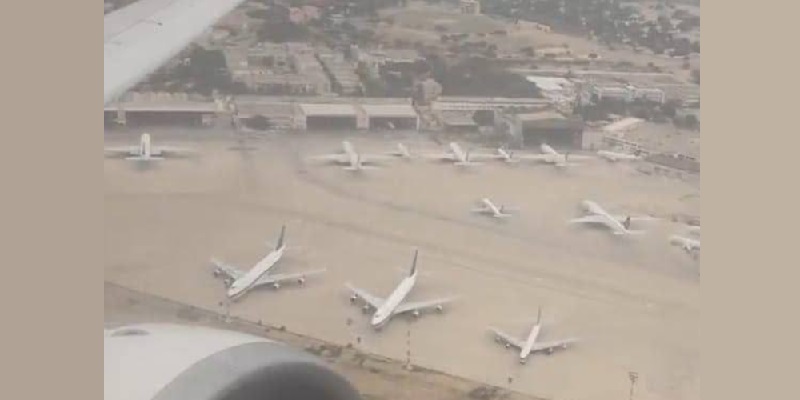
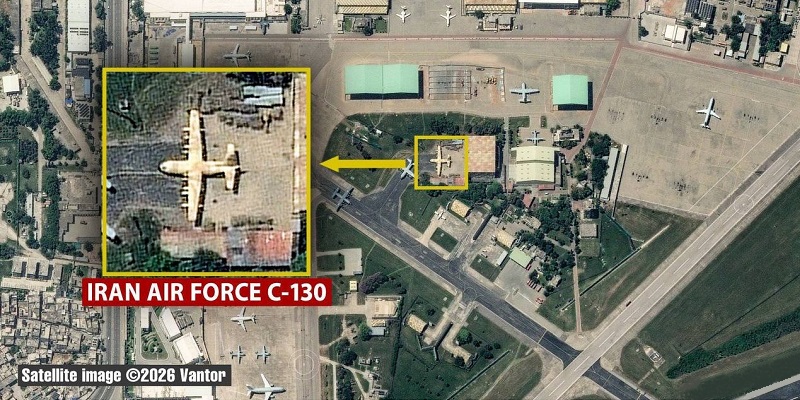
Satellite images allegedly showing Iranian Air Force assets at Karachi airport have added fuel to the speculation.
Islamabad, though, has categorically denied the allegations.
According to reports circulating in regional media, the aircraft allegedly included a KC-707 ELINT reconnaissance plane and two Boeing 747 transport aircraft, alongside C-130s.
Analysts suggested that Iran may have moved these assets to Pakistan to keep them beyond Israel’s reach during the conflict.
The move would have significant implications for regional security dynamics if and when confirmed.

Pakistan’s Response
In an official letter titled “Official Response to CBS Report on Iranian Aircraft in Pakistan“, the Government of Pakistan categorically rejected the CBS News report alleging the presence of Iranian aircraft at Nur Khan Airbase.
It insisted that the report is misleading and sensationalized.
“Aircraft from Iran and the United States arrived in Pakistan solely to support diplomatic personnel and administrative staff during the Islamabad Talks.
“These aircraft are unrelated to any military contingency and arrived during a ceasefire period,” the statement reads.
Pakistan reaffirmed its role as an impartial facilitator of dialogue and de-escalation, committed to transparency, regional stability, and peace.
Regional Reactions
An observer, Barrister Faiza Iqbal, dismissed the claims as politically motivated. She wrote:

“Pakistan has spent decades balancing extremely difficult regional crises while maintaining relations with competing global powers.
“Yet every time Islamabad begins playing a constructive diplomatic role, sections of foreign media suddenly rediscover old narratives designed to create suspicion around Pakistan’s intentions.”
Iqbal argued that the controversy was an attempt to undermine Pakistan’s efforts to support dialogue and prevent another catastrophic regional war.
Officials in Islamabad have reiterated that Pakistan remains committed to neutrality and regional stability.
They insist that no Iranian aircraft were sheltered on its soil.
More Reactions
Not all voices have been supportive of Pakistan’s stance.
A commentator writing under the name Revolutionary Monk accused Islamabad of betraying its defense commitments to Saudi Arabia.
He wrote:

“Pakistan has violated its defence agreement with Saudi Arabia by supporting Iran and harbouring Iranian warplanes, proving it is sleeping with two guys at the same time.”
The critic further questioned how Pakistan could seek another financial bailout from Riyadh while allegedly siding with Tehran.
He described Pakistan as “the ultimate parasite” after years of reliance on Saudi financial lifelines.
This sharp criticism reflects the broader unease among Gulf allies, who view Pakistan’s balancing act between Saudi Arabia and Iran with suspicion.
Geopolitical Outlook
While Pakistan maintains its denial, the episode underscores the fragile balance Islamabad must strike between competing regional alliances and domestic stability.
Pakistan has long relied on Saudi Arabia for financial support, yet it also shares cultural and religious ties with Iran.
The controversy highlights the geopolitical tightrope Pakistan continues to walk in the Middle East, where shifting allegiances can have profound consequences.
Observers note that the allegations, whether substantiated or not, could complicate Pakistan’s diplomatic efforts.
This is coming at a time when the region remains volatile following the June conflict.
Analysts warn that even the perception of siding with Iran could strain Islamabad’s relations with Riyadh and Washington.
Meanwhile, it could embolden Tehran’s regional posture.
This episode accentuates Pakistan’s role as a mediator and balancing actor in the Middle East.
It illustrates how Pakistan is constantly tested by external narratives and internal pressures.
Whether the claims prove accurate or not, the controversy has already added another layer of complexity to Pakistan’s foreign policy trajectory.