
 The Independent National Electoral Commission (INEC) has urged journalists and social media analysts to uphold professional standards ahead of Nigeria’s 2027 general elections.
At a media engagement in Enugu, the Commission warned that misinformation, disinformation and inflammatory political narratives could weaken public confidence and threaten peaceful polls.
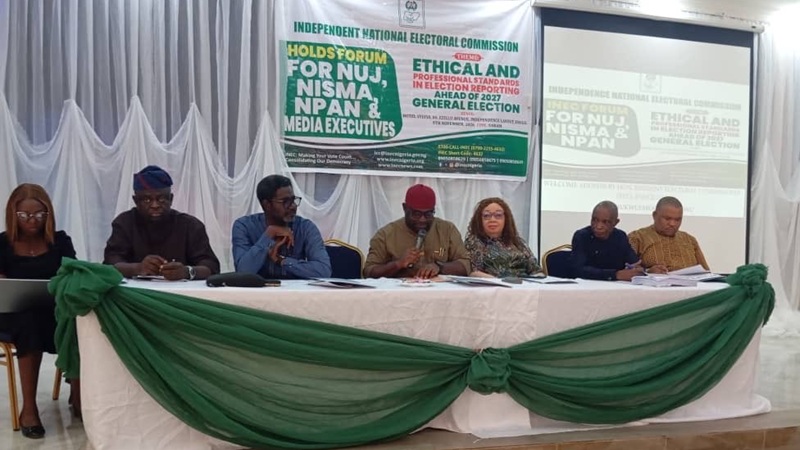
The forum, held at Hotel Sylvia, brought together representatives of the Nigeria Union of Journalists, the Nigerian Institute of Social Media Analysts, and newspaper proprietors.
Its theme was “Ethical and Professional Standards in Election Reporting Ahead of the 2027 General Elections.”
INEC Calls for Accurate and Inclusive Reporting
Resident Electoral Commissioner for Enugu State, Dr. Chukwuemeka J. Chukwu, represented National Commissioner Mohammed Kudu Haruna at the engagement.
Chukwu said the media remained a strategic partner, connecting the Commission and voters through information, voter education, public enlightenment and accountability.

He cautioned reporters against publishing unverified claims about results, polling-unit incidents, election materials or technology used during the voting process.
Speculation, he said, should never be presented as established fact, particularly when inaccurate reports could influence public perceptions of electoral fairness.
The REC also encouraged inclusive coverage that gives women, young people and persons with disabilities greater representation in election discussions.
He urged newsrooms to explain Permanent Voter Card collection, accreditation procedures, voting steps, BVAS and electronic result transmission.
The Commission’s message comes as election preparations intensify ahead of the 2027 polls, with media accreditation already underway. INEC’s media accreditation portal provides the Commission’s current coverage guidelines.
Haruna Warns Against Inflammatory Slogans
Haruna, whose remarks were delivered by Chukwu, said public confidence in elections depends substantially on credible and accurate information.

He warned against amplifying slogans such as “rig and die,” describing such language as dangerous to election workers, voters, party agents and observers.
Journalists were encouraged to report inflammatory rhetoric with context and care, while political actors were urged to pursue grievances through lawful channels.
Haruna also called on media organisations to support voter education and investigate practices such as vote buying.
He identified deepfakes and fake social media accounts among the forms of disinformation that could mislead voters and distort election coverage.
The Commission urged journalists and analysts to verify election-related claims through official communication channels before publishing or sharing them.
It also warned against announcing results before Returning Officers make official declarations.

The advice reflects broader concerns around the speed and reach of online information during campaigns and election-day reporting. Vanguard reported the Commission’s warning and emphasis on media partnership.
Newsrooms Asked to Prepare for 2027
Presenting the forum’s objectives on behalf of Voter Education and Publicity Director Victoria Eta-Messi, Deputy Director Wilfred Ifogah said the engagement aimed to deepen cooperation.
He said participants would discuss accuracy, fairness, impartiality and verification, alongside provisions of the Electoral Act 2026 and INEC’s election technologies.
Ifogah encouraged media organisations to create dedicated election desks, strengthen editorial guidelines and establish fact-checking procedures before the electoral cycle.
He asked attendees to return to their newsrooms and platforms as advocates for accurate and responsible election reporting.
The Commission also called on outlets to avoid amplifying violent slogans or publishing unverified results that might endanger people or undermine trust.
Participants were encouraged to seek clarification from INEC before reporting technical or operational claims about voting and results.
The agenda included voter turnout, PVC collection, combating hate speech, and public understanding of election administration.
The session also aimed to improve media familiarity with BVAS and the INEC Result Viewing Portal, known as IReV.
Journalists Raise Trust and Training Concerns
NUJ Enugu State Council Chairman Obinna Ogbuka welcomed participants and thanked INEC for selecting Enugu to host the forum.
He acknowledged public mistrust surrounding the Commission and urged journalists to report its activities accurately and with balanced context.
Ogbuka also called for continued training and capacity-building so journalists can cover elections with adequate knowledge and preparation.
Presentations from INEC’s legal, information technology and voter registration, and electoral operations departments addressed laws, systems and polling procedures.
The sessions gave attendees opportunities to ask questions and raise concerns about electoral administration, technology and election-day operations.
The forum thus combined INEC’s appeal for careful reporting with a discussion of how the Commission and media can communicate more effectively.
As the 2027 elections approach, both institutions face the task of providing voters with reliable information and addressing doubts about electoral processes.