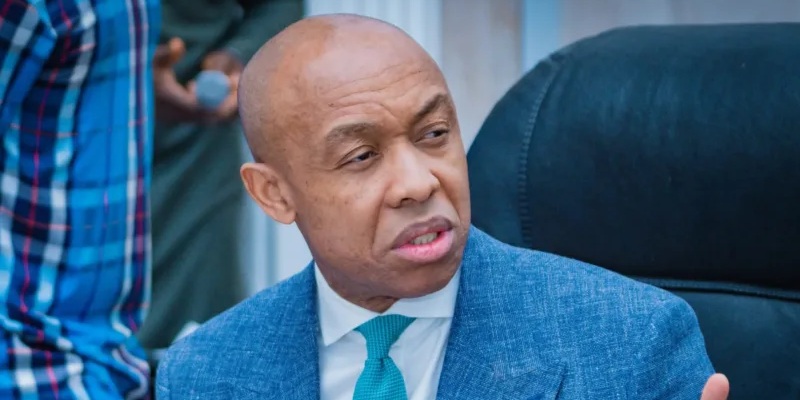

 ABUJA, FCT — Chidi Anselm Odinkalu has called for an independent technical audit of Nigeria’s preliminary voters’ register after the Independent National Electoral Commission (INEC) acknowledged that questionable registration records, including photographs suspected to have been generated by artificial intelligence (AI), had been flagged for investigation.
Odinkalu, a human rights lawyer and former chairman of the National Human Rights Commission, argued that the electoral commission’s explanation did not adequately address how the suspicious images entered a registration system that ordinarily requires voters to appear physically for photograph capture.
In a statement published on social media, he questioned INEC’s claim that Nigeria has 103.4 million registered voters, describing the figure as a “corpulent fantasy”.
He argued that the appearance of questionable photographs raised deeper concerns about the integrity of the registration process.
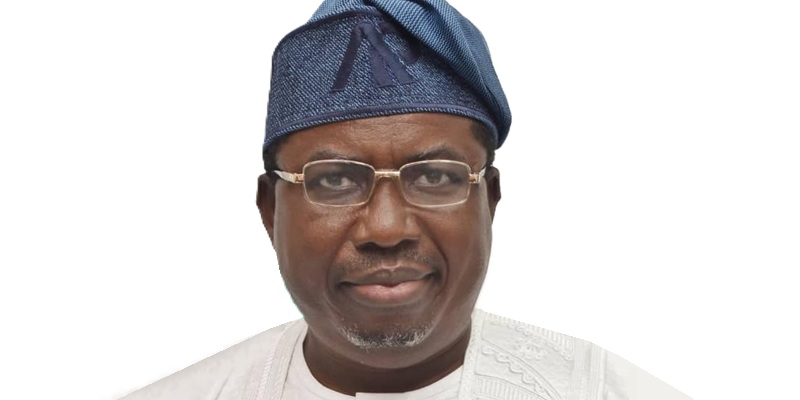
His criticism followed an INEC statement dated October 27, 2026, in which the commission confirmed that it was examining the circumstances surrounding suspicious photographs found in the preliminary register published online.
The controversy has intensified calls for greater transparency as Nigeria prepares for the 2027 general elections.

INEC Acknowledges Questionable Records
In its clarification, INEC said the preliminary register uploaded to its website on October 26 was the same register physically displayed at Registration Areas nationwide between October 9 and 15.
The commission said questionable records had been identified and flagged during the physical display exercise, with reviews and corrective measures already underway.
It explained that the online publication represented the original preliminary register and did not reflect all ongoing data-cleanup activities.
INEC also stressed that the register was not the final certified version, adding that the display exercise was intended to enable citizens to identify inaccuracies and irregularities before certification.
The commission said it was examining the circumstances surrounding the suspicious photographs, including possible technical or procedural lapses, and promised to take appropriate action based on verified findings.
It scheduled December 15, 2026, for certification of the final Register of Voters.

The statement, signed by Mohammed Kudu Haruna, chairman of INEC’s Information and Voter Education Committee, did not identify the specific records under investigation or disclose the findings of a completed technical examination.
Odinkalu Says Explanation Does Not Address the Core Problem
Odinkalu argued that INEC’s acknowledgment of questionable records was insufficient without a detailed explanation of how the images entered the register.
He criticised the commission for saying it was examining possible technical and procedural lapses without presenting findings about the origin of the images, the registration records affected or the safeguards that may have failed.
“The Commission now acknowledges multiple dubious entries that look like they are AI-generated,” he wrote, adding that the explanation was “not good enough”.
His central concern is the apparent contradiction between the physical requirements of voter registration and the presence of photographs suspected to be artificially generated.
Odinkalu noted that INEC’s registration procedure requires a prospective voter to be physically present for photograph capture. He argued that any breach involving registration data should therefore prompt a serious investigation into the people, processes and systems with access to that data.

He described the possibility of an insider’s involvement as a serious concern. However, whether the questionable images resulted from deliberate internal manipulation, technical failure, procedural lapses or another cause has not been established by the commission’s published statement.
The presence of suspected AI-generated photographs does not, by itself, prove that the entire voters’ register is fraudulent or that the commission’s leadership deliberately manipulated it.
Why Odinkalu Opposes an Internal Review Alone
Odinkalu warned that allowing the same institution whose registration process is under scrutiny to investigate and correct the questionable records without independent oversight could undermine public confidence.
He described the proposed approach as carrying a risk of a “whitewash”, arguing that Nigerians need more than assurances that the commission will review its own records.
His concern centres on the credibility of the process as much as the eventual outcome. Even if INEC removes inaccurate entries, public confidence may remain weak if the methods used to identify, investigate and correct the records are not independently observable.
The criticism does not establish that INEC’s planned review will necessarily be compromised. It highlights the need for transparent procedures, published findings and safeguards against conflicts of interest.
For an electoral register to command public confidence, the process used to verify its accuracy must be credible as well as technically sound.
Proposed Independent Audit to Include Political Parties, Labour and Media
Odinkalu called for an independent technical review and reconciliation of the preliminary register, with observer participation by registered political parties fielding candidates in the 2027 elections.
He also proposed participation by organised labour, media organisations, civil society groups and faith-based bodies.
Such a process, he argued, would provide broader oversight and increase confidence in the findings.
A credible independent review could examine several issues:
- Image authenticity: Determine whether the flagged photographs were generated or manipulated using AI, rather than relying solely on visual suspicion.
- Record integrity: Establish whether questionable photographs are linked to valid individual registrations, duplicate records or potentially fictitious identities.
- Registration audit trails: Examine when and where the affected records were created or modified and which authorised accounts or systems accessed them.
- Physical registration evidence: Compare records with available registration documentation and system logs to determine whether required procedures were followed.
- Data reconciliation: Identify duplicate, incomplete, inconsistent or otherwise invalid records using transparent, documented criteria.
- Independent reporting: Publish findings, the scope of the review, the number and categories of records examined, and the corrective actions taken.
The commission would also need to protect voters’ personal information while making the audit sufficiently transparent for independent verification.
An audit should not automatically classify every unusual-looking photograph as AI-generated or every questionable image as evidence of a fictitious voter. Technical findings must be corroborated with registration records and other available evidence.
The 103.4 Million Voters Dispute
Odinkalu also challenged INEC’s reported figure of 103.4 million registered voters.
That figure requires clarification and reconciliation with the commission’s latest official data.
INEC’s public-facing website currently displays a headline figure of more than 93 million registered voters, but the available information does not establish that the two figures refer to the same reporting date, register version or category of registration data.
The difference should therefore not be treated as proof of fabricated registrations without establishing the relevant reporting periods and definitions.
INEC should publish a clear statistical reconciliation showing the total number of registered voters, the date of the data, the number of new registrations, transfers and corrections, and the effects of removing duplicates or invalid records.
That information would allow journalists, political parties and the public to distinguish a genuine numerical discrepancy from differences arising from data updates or reporting periods.
What INEC Must Establish Before December 15
The commission has said it will complete verification, adjudication and data-cleanup processes before certifying the final voters’ register on December 15.
The timetable places importance on whether INEC can demonstrate that the concerns have been investigated thoroughly rather than simply removed from public view.
A credible outcome would require the commission to explain how the suspicious images entered the register, establish the number and nature of affected records, identify any confirmed procedural breaches and disclose what safeguards will prevent recurrence.
Where evidence establishes misconduct, the responsible individuals should be dealt with under the applicable law and disciplinary procedures. Where technical or administrative failures are responsible, the commission should disclose the corrective measures and demonstrate that they have been implemented.
Independent observers should also be able to assess whether corrections are consistent, whether the review has been applied across the country and whether eligible voters risk being wrongly excluded.
The December 15 deadline should not substitute for a transparent verification process. Accuracy and the lawful treatment of voters must remain central to the final register.
Public Confidence at Stake Ahead of 2027 Elections
The preliminary register is a critical component of election administration. Errors can affect individual voters, while duplicate or fictitious records, if confirmed, could undermine confidence in the integrity of the electoral process.
At the same time, suspected irregularities must be investigated carefully. A preliminary register is subject to claims, objections and corrections, and the discovery of questionable entries does not automatically establish that an election has been compromised.
Odinkalu’s intervention places the emphasis on independent verification, accountability and public participation.
INEC has acknowledged the concerns and announced an investigation, but the published statement does not yet provide the detailed findings needed to determine how the photographs entered the register or the scale of the problem.
The commission now faces the task of demonstrating, through evidence and a transparent process, that the final register accurately reflects eligible voters.
For Nigerians and the political parties preparing for the 2027 elections, the central question is not simply whether INEC can correct questionable records. It is whether the corrections can be independently verified and trusted.