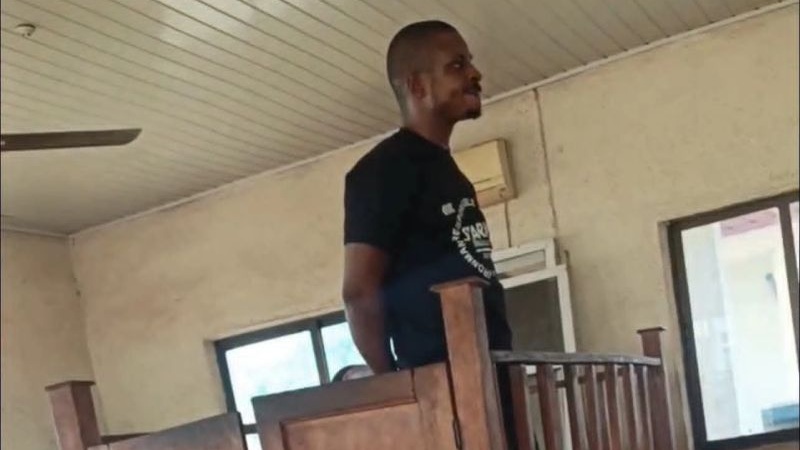

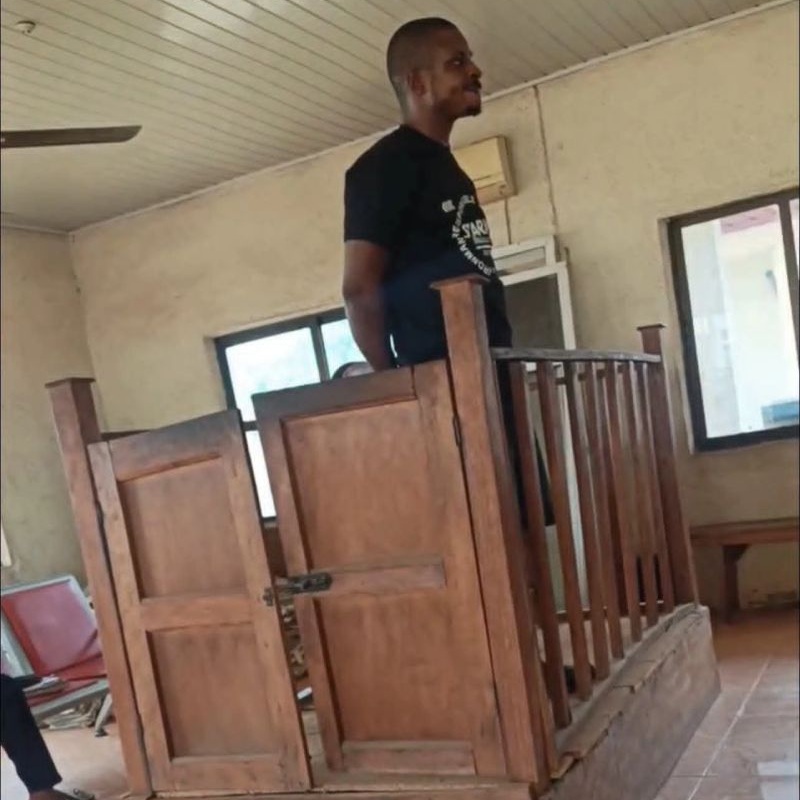
 ABAKALIKI, Ebonyi State — A man identified in court reports as Ugwumba Francis Enyinnaya Oje has been arraigned before a Magistrate’s Court in Abakaliki over allegations that he impersonated a qualified legal practitioner, forged academic and court documents, and collected ₦650,000 from a complainant under false pretences.
The defendant pleaded not guilty after the charges were read to him, according to a report by SaharaReporters published on October 27, 2026.
The case has attracted attention because of reports that the defendant allegedly practised law for more than 11 years. A separate publication claimed he had practised for 13 years and won 11 cases, although This Dawn News has not independently verified the reported number of cases or the exact circumstances in which they were handled.
The alleged case raises questions about the verification of legal practitioners’ credentials, the integrity of documents presented in court and the safeguards available to clients who engage people claiming to be qualified lawyers.
The allegations have not been proved in court, and the defendant is entitled to the presumption of innocence.
Defendant Denies Allegations, Faces Four-Count Charge
According to reports on the proceedings, the defendant is facing a four-count charge involving conspiracy, impersonation, forgery and obtaining money by false pretence.

The charges were brought by the Ebonyi State Police Command before a Magistrate’s Court in the Abakaliki Magisterial District.
SaharaReporters reported that the case was registered as Charge No. MAB/09/2026. The charge alleges that the offences were committed between March and August 2026 in Abakaliki, although another report describes the alleged period as extending to October 2026.
The prosecution alleges that the defendant conspired with other persons said to be at large to commit the offences.
One count accuses him of falsely presenting himself as a legal practitioner by appearing in a lawyer’s wig, gown and bib despite allegedly lacking the qualifications required to practise law.
Another count concerns the alleged forgery of Bachelor of Laws (LL.B.) and Master of Laws (LL.M.) certificates, a Nigerian Bar Association (NBA) seal and court documents.
The defendant’s plea of not guilty means the prosecution must establish the allegations through evidence before the court can determine his criminal liability.

Alleged ₦650,000 Transaction at Centre of Complaint
The police investigation reportedly began after a petition alleged that the defendant obtained ₦650,000 from a man identified in reports as Chukwu David Onu.
According to the prosecution’s account, the money was collected in connection with a request to register or approve a street name and construct a road leading to the complainant’s compound in Ohaozara Local Government Area of Ebonyi State.
The complainant allegedly believed he was dealing with an experienced legal practitioner.
The police said the investigation raised questions about the defendant’s professional qualifications and the documents he allegedly used to present himself as a lawyer.
The precise terms of the agreement, the extent of the work allegedly promised and whether any portion of the money was refunded were not established in the reports reviewed by This Dawn News.
Those details may become relevant as the proceedings continue.

Police Reportedly Recover NBA Seal, Wig, Gown and Law Certificates
Following the investigation, police said a search of the defendant’s residence led to the recovery of several items allegedly connected with the case.
They reportedly included:
- A Nigerian Bar Association seal.
- A portrait of the defendant dressed in barrister’s regalia.
- Purported LL.B. and LL.M. certificates bearing the name of Enugu State University of Science and Technology.
- A barrister’s wig, gown and bib.
- Court judgments allegedly procured or presented by the defendant.
- Legal documents, including powers of attorney and deeds of conveyance.
Police alleged that the items formed part of the evidence supporting the impersonation and forgery accusations.
However, the recovery of an item does not, by itself, establish that it was forged or unlawfully used. The authenticity of the certificates and court documents, and their connection to the alleged offences, must be established through appropriate evidence.
The relevant academic institution, court registries and professional authorities would be important sources for independently verifying the documents.
Did He Practise for 13 Years and Win 11 Cases?
The reported claim that the defendant practised law for 13 years and won 11 cases has generated interest, but it requires careful examination.
A report alleged that he had practised for 13 years and won 11 cases. Other reports based on the police statement described the alleged period of practice as more than 11 years.
This Dawn News could not independently verify the claim that he won 11 cases or establish whether the reported cases involved appearances in court, preparation of legal documents, work undertaken under another practitioner’s supervision or some combination of activities.
It is also important to distinguish between a case in which a party obtained a favourable judgment and a claim that a particular person personally secured that outcome as a qualified advocate.
To establish the reported claim, the relevant court records would need to be examined, including the case numbers, parties, judgments, names of counsel on record and the capacity in which the defendant allegedly acted.
This Dawn News also could not independently confirm that the defendant made the exact statement, “How can I be guilty when I have practised for 13 years and won 11 cases?” The wording is therefore retained as the requested headline framing, not presented as a verified verbatim courtroom quotation.
Bail Application and Next Court Date
A report by Daily News Hub stated that defence counsel, Sunday Eleke, applied for bail, arguing that the defendant was entitled to bail and would not abscond.
The report said Chief Magistrate Hosea Akata adjourned the matter until November 5, 2026, for a ruling on the bail application.
The adjournment concerns bail; it is not a determination of the defendant’s guilt or innocence.
The prosecution will still need to establish its case, and the defence will have the opportunity to challenge the evidence and present its position in accordance with the law.
Why the Case Matters for Clients and the Justice System
The allegations highlight the risks that can arise when people entrust legal matters to individuals whose professional credentials have not been verified.
Legal practitioners may handle property transactions, land disputes, court proceedings, business contracts, inheritance matters and other issues with significant financial and personal consequences.
If a person who is not authorised to practise law prepares documents or represents clients under a false professional identity, those clients may face financial losses, missed deadlines or disputes about the validity of documents and proceedings.
The allegations also raise questions about how the defendant was able to maintain the claimed professional identity for so long, whether the relevant credentials were checked by institutions or clients, and whether any public body engaged him in a legal capacity.
A report alleging that the defendant served as legal adviser to Ohaozara Local Government Area has also circulated.
This Dawn News has not independently verified the appointment or established the circumstances under which it was allegedly made.
If confirmed, that claim would warrant further scrutiny of the appointment records, qualification checks and duties performed.
What Happens Next?
The immediate legal questions include whether the prosecution can authenticate the documents allegedly recovered, establish that they were forged or used unlawfully, and prove the alleged ₦650,000 transaction and the defendant’s role in it.
The relevant institutions may also need to clarify whether the academic certificates are genuine and whether the defendant was ever enrolled as a legal practitioner.
The court proceedings should establish the facts through admissible evidence rather than assumptions based on the allegations or the public reaction to the case.
For now, the defendant has pleaded not guilty.
The allegations remain before the court, and the outcome will depend on the evidence and the court’s findings.