



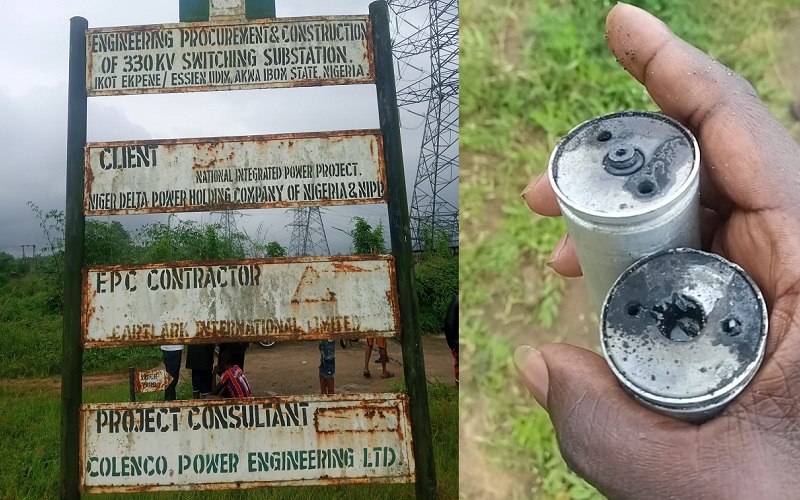
For nearly a decade and a half, the communities of Ikot Inyang, Atan, and Ikot Osurua in Akwa Ibom State have lived under the imposing presence of the Transmission Company of Nigeria’s (TCN) switching station.
The facility, located in Atan within Essien Udim Local Government Area and stretching into Ikot Inyang and Ikot Osurua in Ikot Ekpene Local Government Area, is a vital component of Nigeria’s national grid.
It transmits electricity to Cross River, Abia, Enugu, and parts of Northern Nigeria.
Yet, the host communities remain in darkness, deprived of the very electricity that flows above their heads through ultra-voltage cables.
The Irony of Darkness Amid Power
The station, commissioned in 2016 by then-Minister of Power, Works and Housing, Dr. Babatunde Raji Fashola, was meant to be a beacon of progress.

Construction began in 2012, and while the first phase was completed, the second phase—intended to connect the host communities to the grid—was abandoned.
Residents say they have endured years of broken promises.
“Radiation from this station is affecting us, but we have no electricity to use.
“Our homes are in total darkness, yet this station supplies power to other states,” lamented Mr. Nsikak Ntekpere, youth president of Ikot Inyang.
His words capture the frustration of a community that hosts critical infrastructure but lacks basic amenities.
Mr. Abraham Abraham, youth president of Ikot Osurua, echoed similar sentiments.

“They have been promising to give us light, roads, and other things, but they have not done it,” he said.
Failed Promises
Community liaison officers, who were supposed to serve as bridges between the project and the people, also expressed disillusionment.
Akparawa Nkereuwem Okon recalled promises of employment, compensation, and access roads that never materialized.
“Go to Odukpani and Afam where facilities like this are situated—the people there are enjoying, but we are here suffering,” he said.
Mr. Victor Essien painted a grim picture of life in the area: erosion has destroyed roads, schools are unsafe during rainfall, and even liaison officers have “nothing to show.”
For Mr. Solomon Udo Udo, a community leader, the irony is unbearable.

“The electricity here is taken to other states while the host communities suffer total blackout.
“We generate power for others, but we live in darkness. We cannot even charge our phones.
“Our children cannot read at night. We are not enemies of the government.
“We are not enemies of TCN. We are just Nigerians who want to live like human beings,” he said.
The Protest
On Saturday, residents decided they had endured enough.
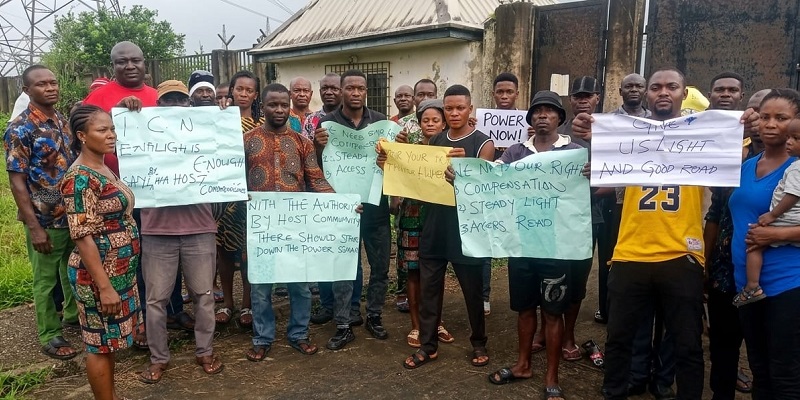
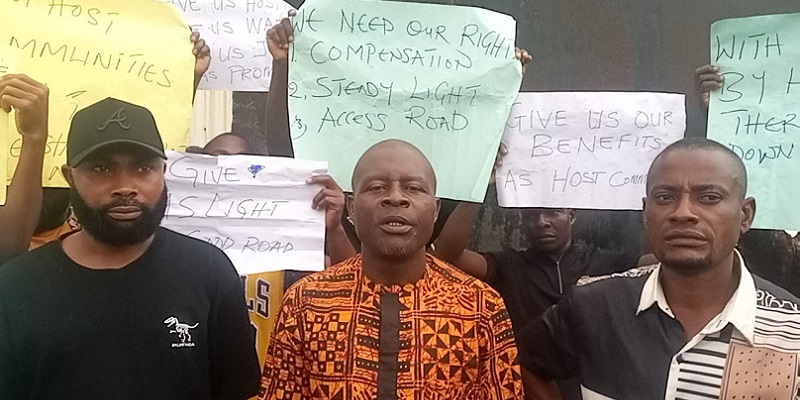
Exercising their constitutional right, hundreds gathered at the entrance of the facility, barricading it and demanding electricity, motorable roads, pipe-borne water, hospitals, and jobs.
At about 11:30 a.m., Engr. Julius Ukandu, a manager at the station, addressed the demonstrators.
He acknowledged their grievances and promised to relay them to TCN management and relevant government agencies.
His assurances were met with applause and cautious optimism. But hope quickly turned to despair.
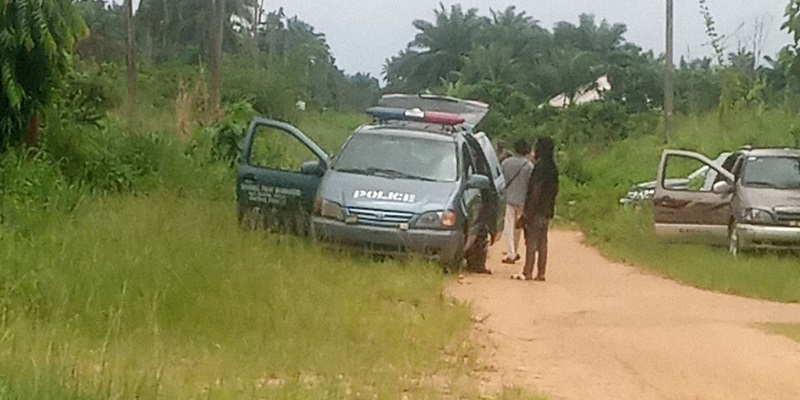
By 12:30 p.m., police officers led by the Divisional Police Officer of Ikot Ekpene arrived, urging protesters to disperse.
When they refused, reinforcements of over 50 security operatives from the police and the Nigeria Security and Civil Defence Corps (NSCDC) stormed the scene in vans, buses, and motorcycles.
Chaos and Arrests
Teargas canisters were fired into the crowd, filling the air with choking smoke. Live bullets were discharged into the skies.
Panic ensued as people coughed, stumbled, and fled. Amid the chaos, arrests were made.
This reporter witnessed two indigenes being dragged into waiting vans, including a physically challenged young man who pleaded in pidgin English:
“Me I be disable o, no carry my bike please, I no follow do protest.”
His motorcycle had been seized, and despite insisting he was not part of the demonstration, he was arrested.
Community sources allege that six people were detained, motorcycles confiscated, and personal belongings lost.
In a bizarre twist, food items prepared for the demonstrators—including a goat being roasted, two live chickens, and tubers of yam—were carted away by security operatives.
Official Silence to A Community at Crossroads
Efforts to obtain official comments from the Akwa Ibom State Police Command proved futile.
Calls to the Police Public Relations Officer went unanswered, and text messages were not returned.
The NSCDC spokesperson, SC Friday Ekerette, offered only a terse reply: “Noted please. I will find out what happened. Thanks for your feedback.”
The events of Saturday underscore the deep frustration of communities that feel abandoned despite hosting infrastructure critical to Nigeria’s development.
For Ikot Inyang, Atan, and Ikot Osurua, the switching station is both a symbol of national progress and local neglect.
Residents argue that their demands are modest: electricity, roads, hospitals, water, and jobs. Yet, for 14 years, these basic needs have remained unmet.
The protest, though marred by violence, reflects a broader struggle for equity in Nigeria’s power sector—whether host communities should continue to bear the burden of national infrastructure without sharing in its benefits.
As the dust settles, one truth remains clear: the people of these communities are not asking for luxuries.
They are asking for dignity, fairness, and the right to live like human beings.