




TD BIDUR, Nepal — September 1, 2026 — In the midst of chaos and rising waters, one man’s quick decision saved hundreds of young lives.
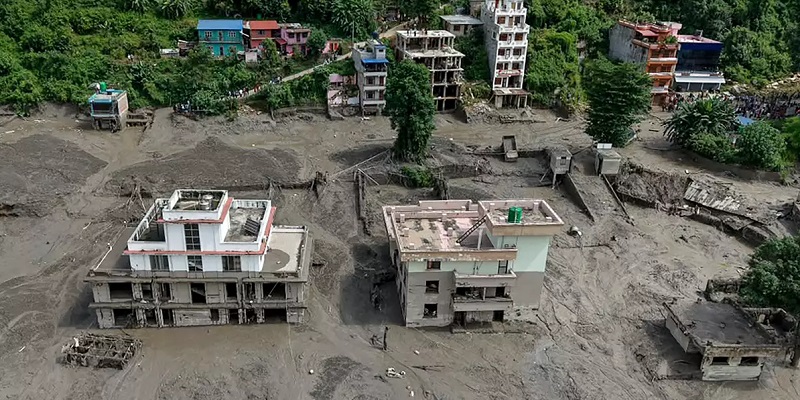
Rajendra Dawadi, principal of Tribhuvan Trishuli Secondary School, evacuated nearly 900 students moments before catastrophic floods tore through Nepal’s Trishuli Valley, destroying the school and leaving devastation in their wake.
The Warning
Dawadi was inside his classroom when a colleague rushed in with urgent news: floodwaters were racing through the valley, ripping apart homes and bridges.
A teacher received another warning by phone, and a parent arrived to collect a child.
Though the danger was not yet confirmed, Dawadi acted instantly. He rang the school bell and ordered everyone to evacuate to higher ground.
“I immediately decided to stop school and get the children out,” Dawadi told the Associated Press.

The Evacuation
Students and staff fled toward a nearby hill as the waters surged behind them.
From the hillside, Dawadi watched the school — where he had once studied and taught — vanish beneath a torrent of mud, boulders, and debris.
Two staff members were unable to escape and remain missing.
One bus packed with students had already reached the school when Dawadi instructed the driver to turn back.
The bus crossed a newly built bridge just before the old bridge beside it collapsed, narrowly avoiding disaster.
The Disaster
The flash floods, triggered by a glacial collapse in the Himalayas, have killed more than 950 people across Nepal and Tibet, with over 4,400 still missing.

The destruction of Dawadi’s school is part of a wider tragedy: at least 69 schools in northern Nepal were destroyed, disrupting the education of nearly 19,000 children, according to Save the Children.
Entire villages have been swept away, leaving families displaced and communities fractured.
Aid agencies warn that the long‑term impact will be severe, with children’s education, mental health, and safety at risk.
A Hero’s Reception
Days later, when Dawadi returned to the site, parents embraced him in gratitude.
“Their parents hugged me, they cried with me. They were emotional,” he said.
Students echoed the sentiment.

Fourteen‑year‑old Suvina Tamang recalled how the building was swept away shortly after they evacuated: “I will thank him when I see him for saving my life.”
For many families, Dawadi’s decision was the difference between life and death.
His swift action has been hailed across Nepal as an extraordinary act of courage and responsibility.
Looking Ahead
Despite being hailed as a hero, Dawadi insists he was simply fulfilling his duty.
He now calls for psychological counseling for students and urges the government to rebuild schools quickly so children can return to learning.
“I have no words. I got education from that school. And I gave education at that school,” he said, reflecting on the personal loss.
The challenge ahead is immense: rebuilding infrastructure, restoring classrooms, and ensuring children do not lose months of education.
Aid groups are pressing the Nepalese government to prioritize school reconstruction as part of the broader recovery effort.
Rajendra Dawadi’s foresight and courage prevented a tragedy from becoming even worse.
His actions stand as a powerful reminder of the importance of leadership in times of crisis.
As Nepal mourns its losses and begins the long road to recovery, Dawadi’s story shines as a beacon of hope amid devastation.