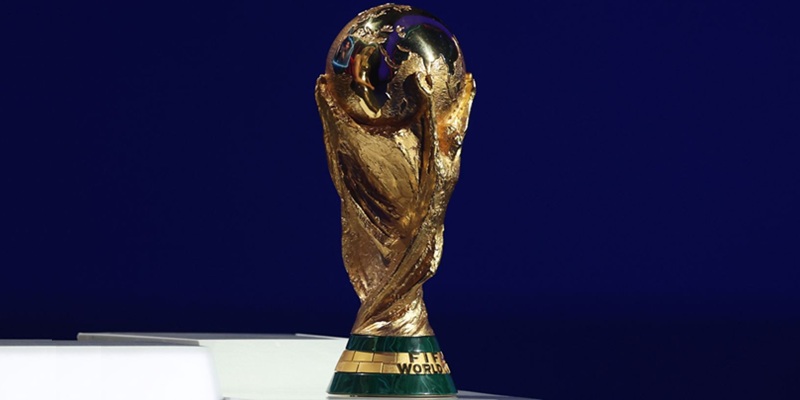

NEW YORK — FIFA has confirmed the largest financial distribution in World Cup history, pledging a record US$871 million to the 48 participating national teams at the 2026 tournament co-hosted by the United States, Canada, and Mexico.
The windfall represents a roughly 15% increase from the initial projection and nearly double the amount distributed at the 2022 tournament in Qatar.
It combines performance-based prize money with guaranteed qualification and preparation payments.
FIFA officials described the move as a commitment to reinvesting commercial success back into the global game.
Of the total, approximately $703 million is allocated as performance-based prizes tied to teams’ final standings, up from an initial $655 million target announced in December 2025.
The remaining funds cover baseline payments and additional support for participating associations.
How the Prizes Break Down
The champions will pocket $50 million in performance prize money, while the runners-up receive $33 million, third place $29 million, and fourth place $27 million.
Quarter-finalists (5th–8th) earn $19 million each, Round of 16 teams (9th–16th) take home $15 million each, Round of 32 sides (17th–32nd) get $11 million each, and the 16 teams exiting at the group stage will receive $9 million apiece.
Every qualified nation also receives a guaranteed baseline of $12.5 million before a ball is kicked: $10 million as a qualification payment and $2.5 million for preparation costs such as training camps and logistics.
Additional subsidies for team delegations and ticketing allocations exceed $16 million across the tournament.
As a result, even teams eliminated in the group stage will depart with at least $21.5 million. The eventual winners could earn more than $62.5 million in total.
A More Equitable Windfall
FIFA’s structure marks a deliberate effort to spread the wealth more evenly in the expanded 48-team format. Qualification and preparation fees were each boosted by $1 million from 2022 levels.
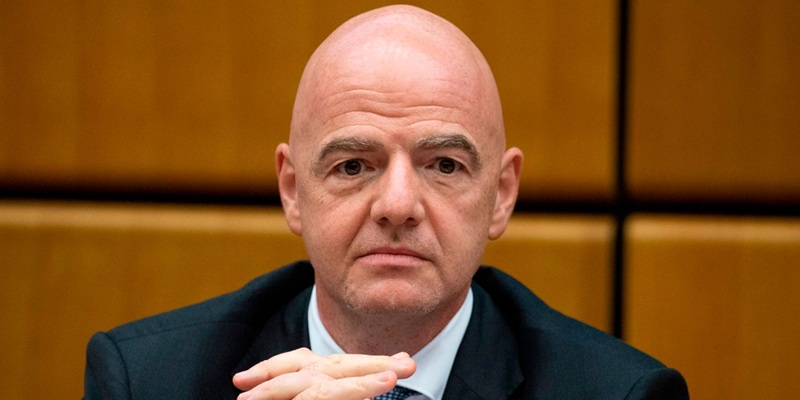
“FIFA is proud to be in its most solid financial position ever, enabling us to help all our Member Associations in an unprecedented way,” FIFA President Gianni Infantino said in a statement accompanying the April 2026 increase.
The 2026 tournament is projected to generate around $13 billion in revenue for FIFA from broadcasting, tickets, sponsorships, and licensing, with the $871 million distribution representing a significant but still modest share of overall proceeds being returned to the competing nations.
Analysts say the payouts could have a transformative effect on smaller footballing nations, providing crucial funding for grassroots development and infrastructure. For powerhouses like Brazil, Argentina, or the European heavyweights, the incentives to go all the way remain enormous.
With the tournament set to kick off in less than a year, the financial stakes have never been higher — nor more inclusive. Whether lifting the trophy or exiting in the group phase, every team at the 2026 FIFA World Cup will return home substantially richer.