TD The Federal Government has announced plans to mobilise 4,000 social media influencers to publicise infrastructure projects and communicate the achievements of President Bola Tinubu’s administration to Nigerians ahead of the 2027 general elections.
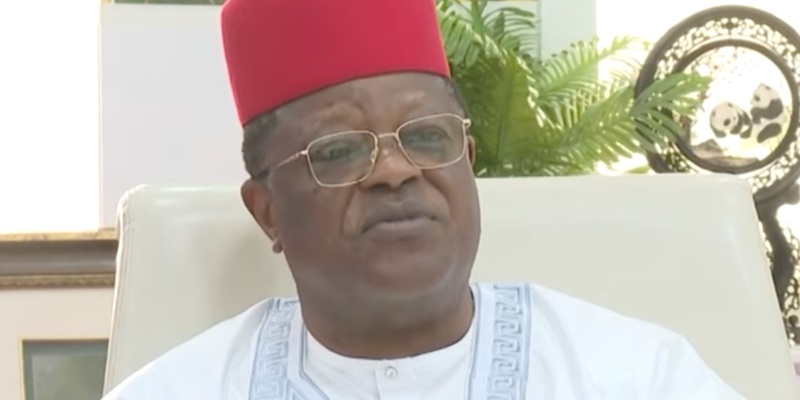
Minister of Works, David Umahi, disclosed the plan on Tuesday, September 22, 2026, in Abuja while receiving a report from the National Association of Nigerian Students (NANS) following its inspection of federal road projects across Kano, Jigawa, Kaduna and Sokoto states.
Umahi said the proposed influencer network would enable the government to communicate directly with Nigerians, particularly young people who increasingly obtain information through social media.
“We have to fight this social media war. So, we have to launch 4,000 social media influencers to tell our stories, and I want you to advise me on how to do it.”
The minister said he was proud of the infrastructure projects being undertaken by the administration and argued that the government needed to communicate its achievements more effectively.
“I’m proud of all the gains we have made in various sectors of the economy, so we have to tell our stories. If you don’t say ‘I am’, nobody will tell you who you are,” he said.
2027 Election Connection
Umahi’s announcement comes as Nigeria approaches the 2027 general elections, and he explicitly linked the proposed influencer network to the need to communicate the administration’s record to the electorate.

He said the government had sufficient infrastructure projects across the country to demonstrate what it described as its achievements.
The proposed programme has nevertheless raised questions about the government’s intended recruitment process, remuneration and oversight.
As of the announcement, the government had not publicly disclosed how the 4,000 influencers would be selected, whether they would be paid, how much the programme would cost or when the mobilisation would begin.
The minister’s use of the phrase “social media war” also reflects the increasingly important role of digital platforms in political communication and public debate ahead of the next election.
NANS Inspects Federal Road Projects
Umahi’s announcement followed a presentation by NANS after student representatives inspected federal road projects in four northern states.

The inspection covered infrastructure in Kano, Jigawa, Kaduna and Sokoto, with the students assessing the condition and impact of federal projects.
According to reports, the students also raised concerns about pedestrian safety around tertiary institutions.
Umahi subsequently directed ministry officials to consider the construction of pedestrian bridges around university campuses and other safety measures on federal roads.
He commended the students for physically inspecting government projects rather than relying solely on information circulating online.
Lagos-Calabar Highway Update
The Works Minister also provided an update on the Lagos-Calabar Coastal Highway, saying the 105-kilometre pavement section currently under construction was expected to be completed by November.

Umahi, however, expressed concern about alleged vandalism along the highway, accusing some individuals of removing construction materials and damaging infrastructure.
He said people had been entering construction areas with vehicles, cutting iron materials, damaging block walls and removing covers installed as part of the project.
The Lagos-Calabar Coastal Highway has been the subject of public debate over its alignment, environmental assessment and possible relationship with flooding in Lagos.
The Federal Government has rejected claims that the highway caused flooding and has maintained that drainage infrastructure was incorporated into its design to mitigate flooding.
Public Debate Over Influencer Plan
The proposed 4,000-person influencer network has already generated debate online, with some commentators questioning whether government resources should be devoted to digital promotion when Nigerians continue to raise concerns about living costs, public services and infrastructure.
Others have focused on the potential role of influencers in improving public awareness of projects that may not receive extensive coverage through traditional media.
The government has not, however, described the proposed initiative as an electoral campaign programme.
Umahi presented it primarily as a means of communicating the administration’s infrastructure activities and achievements, while acknowledging its relevance to the period leading up to the 2027 elections.
The plan therefore places social media communication at the centre of the Federal Government’s effort to present its infrastructure record to Nigerians as the country moves closer to the 2027 electoral cycle.