
 On November 11, 2026, Mr. Magnus Onyibe published “THE GREAT DEPRESSION USA LESSON — HOOVER VERSUS ROOSEVELT, AND NIGERIA’S CHOICE” in the Daily Independent newspaper.
Unfortunately, despite the copious literature easily available about USA Great Depression, a totally mistaken Mr. Magnus Onyibe taught Nigeria absolutely wrong and muddled lessons.
He was wrong about the roles of the two American Presidents (Hubert Hoover and Franklin Delano Roosevelt), wrong in likening 2023 Nigeria to 1929 USA and definitely wrong in the economic recovery lessons the disaster holds for Nigeria.
The real lesson for Nigeria as the general election gets near, is that Hoover’s wooden-headed refusal to grant subsidies hurt USA economy and caused the depression while Roosevelt’s subsidies brought economic recovery, but Onyibe missed it.

Mr. Onyibe wrote in the 14th and 15th paragraphs: “Unsurprisingly, Nigerians, especially those at the bottom of the economic pyramid, are despondent and crestfallen, owing to the delay in prosperity at the macroeconomic level filtering down to the microeconomic level.
The lengthy process of prosperity trickling down from the rich to the poor quickly enough to prevent the hoi polloi from becoming too anxious and eventually irrational is a fundamental issue that economic development experts have grappled with but have yet to find a quick fix for”.

What distracted Onyibe from noticing that those two quoted paragraphs irredeemably doomed his thesis that President Bola Tinubu is Nigeria’s version of the American President Roosevelt? Trickle-down Economics is the classic Supply Side Economics President Hoover, embraced and refused to retreat from.
The Great Depression happened in November 1929, eight months after Hoover’s inauguration as President but he refused to change course until he was voted out of office.
Actually, the humourist Mr. Will Rogers coined the “trickle-down” phrase to mock Hoover’s economic policies that “money was appropriated for the top in the hopes that it will trickle down to the needy”.
Onyibe should have saved his article for the non-educated, especially that “economic development experts have grappled with but have yet to find a quick fix for” “the lengthy process” of “prosperity trickling down from the rich to the poor quickly enough to prevent the hoi polloi from becoming too anxious and eventually irrational”.
Side-stepping the fallacy in his mention of “experts”, whether that of a single cause, oversimplification or argumentum ad verecundian – appealing to authority- or argumentum ad populum -appealing to the people or mob appeal- I will state that the effect of any developmental effort is like the effect of Mass Communication.
“Some kinds of communication on some kinds of issues brought to the attention of some kinds of people under some kinds of conditions, have some kinds of effects” (Bernard Berelson; 1948).

So, too, some kinds of government policies have some kinds of effects under some kinds of conditions, to some kinds of people. For instance, lower taxes and bank lending rates and the rich will benefit richly. Make education and or health carefree and the poor may benefit splendidly.
An effective policy could have immediate effect while a faulty policy may never have the required effect in a million years…and the people would be told to be patient because unnamed “experts” have not agreed on the timelines for results’ appearance.
Recently, Trickle-down Economics under Donald Reagan tripled USA National Debt and in Margaret Thatcher’s Britain caused deindustrialization, wiped out three million jobs and accelerated income inequality, increased relative poverty and disunity. And is that the silver bullet Tinubu wants to use to kill Nigeria’s economic woes?
Yet, there is the Demand Side Economics, too, and both form the basic economic concept of demand and supply, known even by even Senior Secondary School form One (SS1) students. This alone inspired my reply – to save Nigerians from befuddlement.
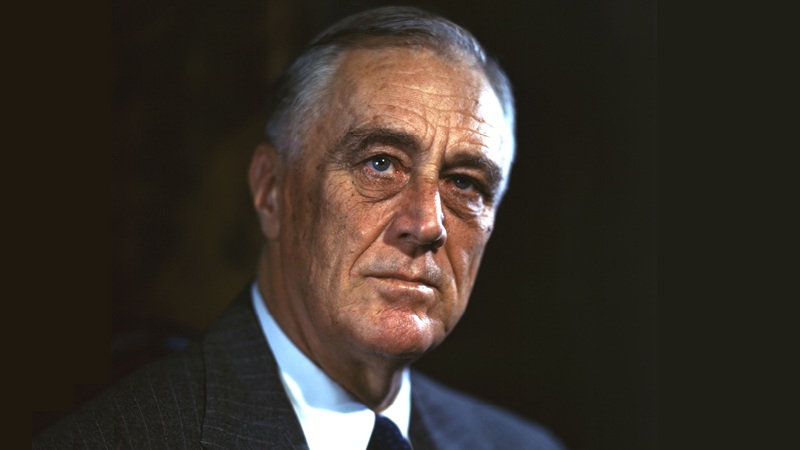
President Roosevelt whom Onyibe rightly credited with combatting the Great Depression but incorrectly likened to Tinubu actually embraced populist interventions – unlike Tinubu.
He opposed Trickle-down Economics which Tinubu and Onyibe embrace and backed Demand-Side Economics and pushed through policies that put money into the hands of the poor and provided safety nets.

Onyibe misrepresented both Economics and History facts in likening 2023 Nigeria to 1929 USA. Hear him: “In 1929, America was in a position comparable to that of Nigeria in 2023.
That is because, in the United States of America (USA) at the time, Gross Domestic Product (GDP) was rising, stock markets were booming, and prosperity was palpable”.
Onyibe continued: “However, the top 0.1% of the population owned 34% of the country’s wealth, just as banks in Nigeria declared profits of N6.7 trillion in 2024 (beneficial owners are less than 1% of population) an unprecedented and humongous financial gain, while youth unemployment remained above 40%.
Then, during that period in the US, an economic crash occurred. What the leaders of government did to tackle the challenge determined whether 15 million people would remain unemployed or return to work.
President Herbert Hoover, who was in office from 1929 to 1933, was the equivalent of our leaders who opted to use palliatives to patch up an economy that was tanking and in turmoil.
That was Nigeria’s economic playbook before the advent of President Tinubu, and it is the approach some prospective leaders are promising to take us back to if elected. As may be recalled, President Herbert Hoover believed in subsidies”.
No, brother, no and Nigerians must beware of wrong lessons. Hoover despised subsidies.
In the above quoted paragraphs Onyibe taught the wrong lessons, and bore false witness against the long dead President Hoover, who granted no subsidies. The real lesson here is that subsidies didn’t cause America’s economic woes…and based on that faulty foundation, Onyibe’s other constructs have collapsed.
The Great Depression resulted as thousands of banks failed when depositors panicked into rushed fund withdrawals, thus constricting the money supply and rendering credit unavailable to businesses and people.
As thousands of banks failed, peoples’ monies were trapped and the stock market (starting with Black Thursday on October 24 and intensified on Black Tuesday on October 29, 1929) crashed, wiping out billions in paper wealth and shattered consumer and business confidence.
Financial panic ensued. The only way to know if Tinubu saved Nigeria from such a catastrophe is to check the health of Nigerian banks in 2023.
Nigerian banks weren’t failing by May 2023, instead they maintained a solid average Capital Adequacy Ratio (CAR) of 12.3% and a Return on Equity (ROE) of 30%, with non-performing loans (NPLs) managed at 4.5%—within regulatory safety limits. There was absolutely no panic! No threat, even!
How bad is the economy, now, almost four years to the day Tinubu became President? A BBC report of last year said:
“Overall, annual inflation, which is the average rate at which prices go up, is now close to 30% – the highest figure in nearly three decades. The cost of food has risen even more – by 35%. In the north, some people are now eating the rice that is normally discarded as part of the milling process. The waste product usually goes into fish food”.
The Premium Times “How fuel subsidy removal worsened Nigerian poverty levels” report of March 13 this year said that “Nigeria’s recent policy reforms, including fuel subsidy removal, have worsened poverty, highlighting the need for stronger social protection programmes to support vulnerable households. (It) led to sharp price increases across the economy, worsening poverty levels”.
The report quoted research findings presented by Prof Mohammed Shuaibu of Abuja University: “After the subsidy removal, poverty increased from a baseline of about 50 per cent to 63 per cent.”
What is subsidy removal’s effect on industries and small and medium-scale enterprises? A report said that “Manufacturing & SMEs face drastically higher operating, power generation, and raw material transport expenses, narrowing profit margins.
Construction Sector: Increased diesel and PMS prices have inflated the cost of heavy machinery operation, material haulage, and site labour. High costs of captive power (relying on diesel or petrol generators) have crippled uncompetitive domestic producers”.
The result is huge job loses as many industries have fled since 2023. Ride-Hailing & Tech: Uber left Nigeria in September 2026 after 12 years. Bolt Food & Jumia Food online food delivery platforms exited Nigeria in December 2023.
Microsoft’s African Development Centre (ADC) in Lagos closed in May 2024. 54gene & Lazerpay, the genomics startup and crypto payment platform exited in 2023.
Manufacturing & Consumer Goods (FMCG):
Procter & Gamble (P&G) ended local manufacturing in Nigeria in December 2023, GlaxoSmithKline (GSK) discontinued direct commercial and manufacturing operations in August 2023 after 51 years.
Kimberly-Clark closed its Nigerian manufacturing facility and commercial office in Lagos in May 2024 (stopping local production of Huggies and Kotex). Unilever ceased local production and sales of select homecare and skin-cleansing product lines due to the foreign exchange crisis.
MABISCO (Maiduguri Biscuit Company): Halted biscuit manufacturing operations in October 2023. Diageo / Guinness Nigeria: Sold its 58.02% majority stake in Guinness Nigeria to Tolaram Group in 2024 amid high inflation and forex pressures.
Pharmaceuticals & Healthcare: Sanofi: Transferred the commercialization and distribution of its pharmaceutical products to third-party distributors in late 2023.
Energy & Oil:
Equinor: Divested its Nigerian business and sold its stake in the Agbami oil field to Chappal Energies in late 2023. Shell sold its domestic gas distribution business and divested from onshore oil fields, though shifting focus to deepwater and integrated gas rather than abandoning the country entirely.
Retail & Supermarkets:
ShopRite wound down its last legacy Nigerian outlets under its previous operational structure in early 2026 following sustained currency devaluation and forex shortages.
Why the closures? “Industry groups and analysts attribute these exits to acute foreign exchange scarcity, massive Naira devaluation, soaring energy/electricity costs, and high inflation affecting consumer purchasing power” a report said.
In May 2023, N10,000 naira would buy $22 instead of around $6.40 today. The closures threw Nigerians into unemployment and shrank demand. So, where Roosevelt provided jobs and safety nets for Americans during the great depression, such are non-existent here.
To further disprove Onyibe’s forced Tinubu-is-the-Nigerian-Roosevelt claim, perhaps even Onyibe himself needs to learn some lessons about the American Great Depression.
Somebody should tell President Tinubu that Hoover’s subsidy policy neither caused nor exacerbated the Great Depression because he gave no subsidies. How did Onybe come by the subsidy claim? How did it occur to him?
The Great Depression happened in the eighth month of Hoover’s administration. Hoover had opposed subsidy to farmers even when he was a Secretary (Minister equivalent in Nigeria).
A few minutes of internet search would show anyone that American farmers suffered greatly in the 1920s as their incomes shrank to only one-third of the national average as overproduction owing to new technologies that increased their productivity, caused a glut and low prices.
Farmers wailed for subsidies (known as McNary-Hauganism for the congressional sponsors of such legislation) to boost farm incomes but Secretary of Commerce Hoover opposed them.
With Hoover as President in early 1929, the agricultural sector was still troubled yet Hoover opposed subsidies but created a Federal Farm Board with a $500 million budget; to loan money to farmers to create and strengthen farm cooperatives that would, in turn, control production and bring crops to market more efficiently.
Note that Onyibe also highlighted Tinubu’s students loan scheme! Roosevelt did not just promise Americans a “New Deal” and waited for years for the promises to come true at snail speed.
He signed many groundbreaking new laws in his “Hundred Days” as president, creating new pro-poor people agencies and Tinubu should hear this, supported “direct federal aid, tightened government control over many industries, and favoured deficit spending, all in the hope of jump starting both consumer confidence and the economy”, the Miller Center said.
I repeat, President Franklin D. Roosevelt provided extensive agricultural subsidies and price supports during the Great Depression. He paid workers direct subsidies and cash payments and stimulated job creation which stimulated demand and ended the depression.
To borrow an idea from Mr. President, subsidy “is not leprosy”.
Tony Eluemunor, an authority on the Nigerian presidency, is a Ford Foundation Scholar and 1991 Fellow of the Nieman Foundation For Journalism at Harvard University where he focused on Development and Population Studies.