



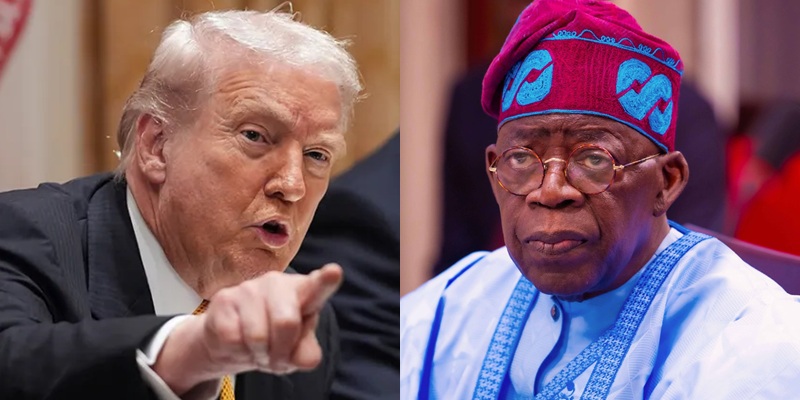

TD NEW YORK/ WASHINGTON — A Washington, D.C.-based Republican policy advisory and lobbying firm, Von Batten-Montague-York, says it has briefed senior officials at the U.S. Mission to the United Nations in New York over historical FBI and DEA investigations involving Nigerian President Bola Ahmed Tinubu.
The firm said the engagement was aimed at ensuring that senior U.S. officials are aware of the longstanding controversy surrounding American law-enforcement records concerning Tinubu.
Meanwhile, Nigerian officials pursue diplomatic engagement between Tinubu and U.S. President Donald Trump during the ongoing 81st United Nations General Assembly.
The development comes amid renewed attention to a long-running Freedom of Information Act (FOIA) litigation in the U.S. District Court for the District of Columbia concerning records sought from the FBI, DEA and other American agencies.
Lobbying firm says it briefed US Mission officials
In a statement published on social media, Von Batten-Montague-York said it had recently begun engaging senior leadership at the U.S. Mission to the United Nations.
The firm said the briefing followed a recent meeting between Nigeria’s Permanent Representative to the United Nations, Ambassador Jimoh Ibrahim, and the U.S. Ambassador to the United Nations.

According to the lobbying firm, its objective was to ensure that American decision-makers have relevant information before making decisions concerning Tinubu.
The firm argued that the size and complexity of the U.S. government makes it impossible for every policymaker to be familiar with every international issue.
It described its role as providing information and arguments to policymakers.
Firm revives allegations over 1990s heroin investigation
Von Batten-Montague-York alleged that historical FBI and DEA investigations linked Tinubu to a criminal organisation involved in moving heroin from Nigeria into the United States during the 1980s and 1990s.
The firm also pointed to records concerning bank accounts and a 1993 civil forfeiture proceeding involving approximately $460,000.

However, the historical allegations require important legal context.
The existence of a U.S. investigation and the forfeiture proceeding does not establish that Tinubu was convicted of heroin trafficking.
A 2025 ruling by U.S. District Judge Beryl A. Howell in the FOIA case established that publicly disclosed Department of Justice material had officially acknowledged that Tinubu was a subject of a criminal investigation involving the FBI and DEA.
The ruling, however, was a decision in a FOIA records-disclosure case, not a criminal judgment against Tinubu.
What the US court actually established
The litigation, Greenspan v. Executive Office for U.S. Attorneys et al., Case No. 1:23-cv-01816 (BAH), was initiated by American transparency activist Aaron Greenspan.
Greenspan filed multiple FOIA requests seeking records relating to investigations of Tinubu and other individuals.

In April 2025, Judge Howell ruled that the FBI and DEA could no longer rely on so-called Glomar responses to refuse to confirm or deny the existence of responsive records concerning Tinubu.
Howell held that information about the investigation had already been officially acknowledged in public government filings.
The judge ordered the FBI and DEA to search for and process non-exempt records responsive to the FOIA requests.
The ruling did not, however, find Tinubu guilty of drug trafficking or money laundering.
The court’s decision concerned the agencies’ obligations under the Freedom of Information Act and whether they could continue refusing to acknowledge the existence of records.
Tinubu was never convicted in the US
Available court records and reporting indicate that Tinubu was not criminally charged or convicted in the United States over the allegations.
The historical $460,000 matter arose from a civil forfeiture proceeding, rather than a criminal trial resulting in a conviction.
This distinction has become central to the political dispute surrounding the FOIA litigation.
The Presidency has repeatedly stressed that no U.S. court has convicted Tinubu of criminal wrongdoing.
Critics, however, argue that the existence of the investigation and the historical forfeiture warrant further scrutiny and disclosure.
Fresh FBI disclosures keep controversy alive
The dispute intensified again in August 2026 after FBI court filings concerning the remaining records sought in the FOIA litigation.
Recent reporting on the FBI’s filings said the bureau argued that releasing some withheld information could potentially expose individuals to retaliation or endanger their physical safety.
The filing reportedly did not identify the individuals whose safety could allegedly be threatened.
The case, therefore, remains focused on the extent to which records can be released and which portions can lawfully remain redacted under FOIA exemptions.
UNGA meeting with Trump becomes political flashpoint
The latest lobbying effort is occurring against the backdrop of discussions over possible contact between Tinubu and Trump during the UN General Assembly.
Nigeria’s Permanent Representative to the UN, Jimoh Ibrahim, had previously confirmed that Tinubu planned to attend the UNGA.
The Nigerian envoy also said a possible interaction with Trump could occur.
He subsequently said Tinubu and his family faced no U.S. movement restrictions during the UNGA.
Ibrahim added that the Nigerian Mission had received no notification from Washington imposing restrictions on the President’s movement.
He cited the 1947 UN-U.S. Headquarters Agreement and its provisions concerning transit to and from the UN headquarters district.
Von Batten-Montague-York, however, has publicly opposed efforts to secure a Trump-Tinubu meeting.
It argued that such an engagement would be inconsistent with U.S. anti-drug policy given the historical allegations it has been raising.
Lobbying campaign is not a criminal proceeding
The firm’s latest intervention should also be distinguished from the underlying court case.
Von Batten-Montague-York is not a party to the original FOIA lawsuit.
Moreover, its public advocacy does not constitute a finding by the FBI, DEA or a U.S. court that Tinubu committed drug-trafficking offences.
Indeed, the Nigerian Presidency has recently emphasised that the FOIA litigation is a civil records-disclosure dispute.
The Presidency emphasised that the release or withholding of government records does not itself establish criminal liability.
The firm has nevertheless continued to make the historical investigation a central part of its advocacy campaign in Washington.
Nigeria-US diplomatic implications
The dispute has now moved beyond the question of historical law-enforcement records and into the arena of U.S.-Nigeria diplomatic relations.
The lobbying firm’s position is that American officials should consider the unresolved allegations before granting Tinubu a high-profile meeting or photo opportunity with Trump.
For Nigeria, however, the matter is being presented differently: the government maintains that Tinubu faces no U.S. arrest restriction during the UNGA and that the historical allegations do not amount to a criminal conviction.
The competing positions have created an increasingly public confrontation over how Washington should treat historical allegations concerning a sitting Nigerian president.
What the records may still reveal
The key unresolved issue is not whether a historical U.S. investigation existed.
The 2025 federal court ruling established that the existence of an investigation involving Tinubu had already been officially acknowledged.
The outstanding questions concern what the FBI and DEA records actually contain:
-
what conclusions investigators reached,
-
what information remains withheld or redacted, and,
-
whether additional documents materially alter the public understanding of the case.
Until those records are fully processed and the contents independently examined, allegations of criminal guilt should not be presented as established fact.
At the same time, the existence of the investigation and the civil forfeiture proceeding are matters of public record and remain legitimate subjects of scrutiny.
This Dawn News will continue to monitor the FOIA litigation, the release of FBI and DEA records, and developments surrounding any meeting or engagement between Presidents Bola Tinubu and Donald Trump at the United Nations.
Source: U.S. District Court records in Greenspan v. Executive Office for U.S. Attorneys, Case No. 1:23-cv-01816; recent reporting on the FOIA litigation and the statements of Von Batten-Montague-York.