TD The debate over the cost of governance under President Bola Ahmed Tinubu has intensified as Nigerians scrutinise expenditure on the State House, presidential travel, aircraft, vehicles and official residences.
The strongest basis for assessing the 2026 figures is no longer the original budget proposal.
Bola Ahmed Tinubu assented to the 2026 Appropriation Act on April 17, 2026.
He provided aggregate federal expenditure of ₦68.32 trillion, including ₦15.8 trillion for debt service.
Other are ₦15.4 trillion for recurrent expenditure and ₦32.2 trillion for the Development Fund for capital expenditure.
₦56.93bn for six State House offices
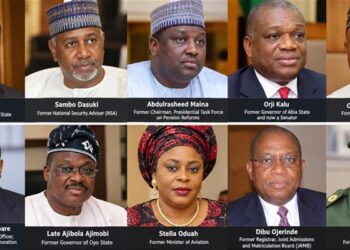
The striking claim in the supplied graphic is substantially supported by the enacted budget figures.
According to the detailed 2026 Appropriation Act, the following allocations were made:

- State House Headquarters: ₦43.191 billion
- State House Operations, President: ₦8.386 billion
- State House Operations, Vice President: ₦2.642 billion
- Office of the Chief of Staff: ₦1.360 billion
- Office of the Chief Security Officer: ₦371.24 million
- State House Medical Centre: ₦978.81 million
Taken together, those six appropriations amount to approximately ₦56.93 billion.
Dividing ₦56.93 billion by 365 produces approximately ₦155.97 million per day.
Importantly, that calculation is an illustrative daily average, not evidence that the government actually spends ₦155.97 million every day.
There is also a separate ₦298.33 million allocation for the State House Lagos Liaison Office.
Adding that office would push the seven listed State House units to about ₦57.23 billion.

Where the biggest allocation goes
The dominant unit is the State House Headquarters itself.
Its ₦43.191 billion allocation consists of:
- Personnel: ₦2.643 billion
- Overheads: ₦10.061 billion
- Capital expenditure: ₦30.488 billion
That distinction matters.
Describing the entire ₦43.19 billion as simply the cost of feeding, travelling or maintaining Aso Rock would be misleading because more than ₦30 billion of the allocation is classified as capital expenditure.
Presidential and vice-presidential offices
The President’s State House Operations received ₦8.386 billion, comprising about ₦7.609 billion in overhead and ₦777.19 million in capital expenditure.

The Vice President’s State House Operations received ₦2.642 billion, including approximately ₦2.001 billion in overhead and ₦641.39 million in capital expenditure.
A published analysis of the budget details reported that the President’s allocation included ₦6.14 billion for international travel and related expenses and ₦873.89 million for local travel and transportation.
It also identified ₦79.67 million for drugs and medical supplies, ₦56.43 million for meals and refreshments and ₦65.78 million for honoraria and sitting allowances.
For the Vice President, another analysis reported ₦1.73 billion for travel, including ₦1.31 billion for international travel and ₦417.49 million for domestic travel.
The Presidential Air Fleet
Executive travel costs extend beyond the President’s personal travel allocation.
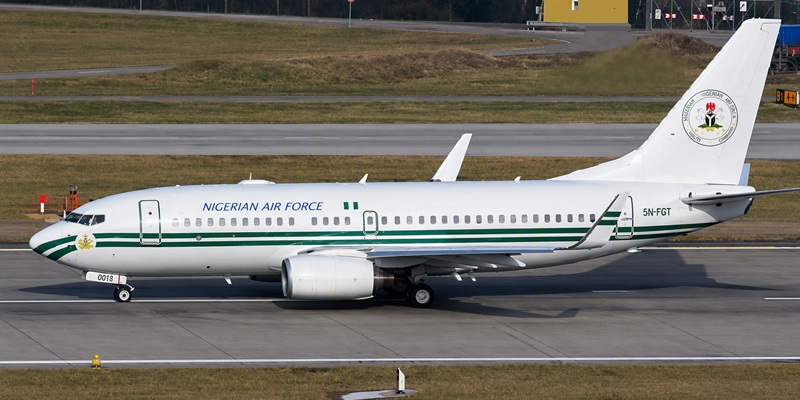
A detailed examination of the 2026 State House estimates reported a ₦14.7 billion allocation for the Presidential Air Fleet.
This includes ₦1.55 billion for aircraft fuel and ₦1.26 billion for maintenance.
It also includes more than ₦1.25 billion for international training transport for pilots and crew.
This is important when assessing the real cost of presidential mobility.
The President’s travel vote and the cost of maintaining and operating the aircraft used for presidential and vice-presidential duties are separate budget lines.
The austerity question
There is a legitimate public-policy question underlying the numbers:
“How much should maintaining Nigeria’s highest political offices cost at a time when the government is asking citizens to absorb difficult economic reforms?
Bola Ahmed Tinubu himself acknowledged in his December 19, 2025, budget speech that the government’s reforms had “not been painless” and that families and businesses had faced pressure.
His administration presented the 2026 budget as an effort to consolidate economic reforms and improve living standards.
The President also promised tighter budget discipline.
The State House reported that Bola Ahmed Tinubu said Nigeria would end the practice of operating overlapping budgets and move to a single budget and revenue cycle.
What the numbers establish, and what they do not
The clearest finding is that the ₦56.93 billion is approximately the combined 2026 appropriation for the State House Headquarters, President’s operations, Vice President’s operations, Chief of Staff, Chief Security Officer and State House Medical Centre.
That equals roughly:
- ₦4.74 billion a month
- ₦1.095 billion a week
- ₦155.97 million a day
But those numbers are averages obtained by dividing an annual appropriation by units of time.
They should not be reported as evidence that Aso Rock literally spends that amount each day.
There is an even more important journalistic distinction:
Budget allocation is not the same thing as actual expenditure.
A definitive assessment of the cost of the Bola Ahmed Tinubu presidency therefore requires expenditure and procurement records alongside the Appropriation Act.
Bottom line
The evidence supports a narrower and more defensible conclusion than many social-media claims.
Nigeria’s 2026 Appropriation Act provides approximately ₦56.93 billion for the six State House units identified in the graphic.
That is an illustrative average of about ₦155.97 million for every day of the year.
The State House Lagos Liaison Office has a further ₦298.33 million allocation.
Those figures sit alongside billions budgeted for presidential and vice-presidential travel and a separately reported ₦14.7 billion Presidential Air Fleet allocation.
The key accountability question, however, is not simply: “How much did government budget?”
It is: “How much was ultimately spent; on precisely what; and did Nigerians receive value for the money?”
Nota bene: the strongest framing is to distinguish clearly among appropriated, released, spent, and proposed amounts.