
 Videos and social media posts from the November 7 All Progressives Congress (APC) rally in Port Harcourt have sparked debate over attendance at Adokiye Amiesimaka Stadium.
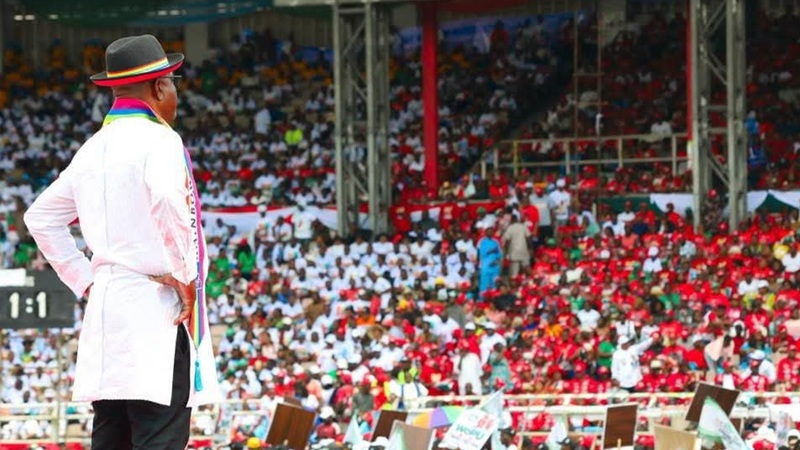
The footage being shared shows some sparsely occupied sections of the stands, alongside views of a dense crowd on the stadium field.
One circulating clip appears to show FCT Minister Nyesom Wike confronting a rally organiser and saying, “You will hear from me.”
The posts frame the moment as evidence that the rally fell short of expectations, though the footage alone cannot establish total attendance.
Wike’s Attendance Prediction
The rally was organised by the APC Rainbow Coalition, which is led in Rivers State by Wike, a former state governor.
It was held at the 40,000-capacity Adokiye Amiesimaka Stadium in support of President Bola Tinubu’s 2027 re-election campaign.

Before the event, Wike said organisers expected at least 70,000 people, including supporters who might gather beyond the stadium seating.
He made the estimate while inspecting preparations, and said security, logistics and arrangements for overflow crowds were in place.
That projection raised expectations for a large turnout and has since shaped online commentary about the event’s apparent attendance.
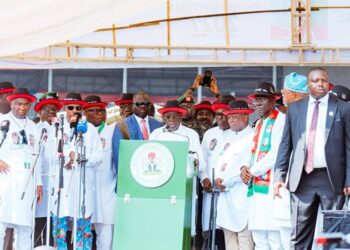
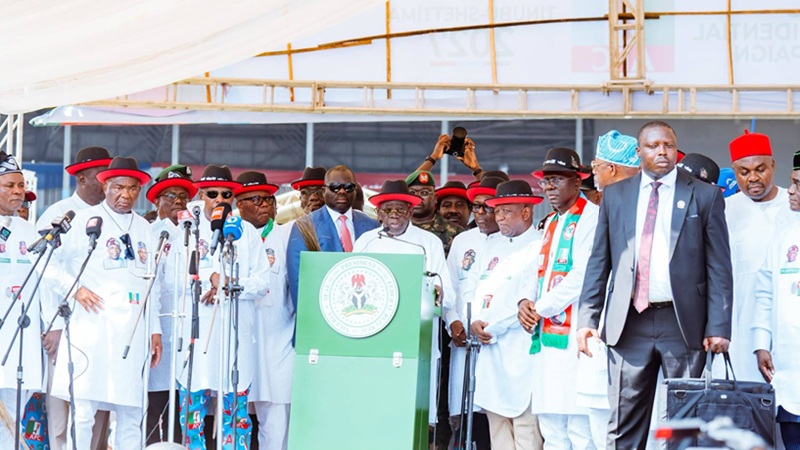
The rally drew Tinubu, Vice-President Kashim Shettima, Governor Siminalayi Fubara and other senior political figures.
Wike welcomed Tinubu and said Rivers residents had resolved to support him, pointing to federal appointments and projects in the state.
The President’s office also described the turnout as “mammoth” and said the stadium was packed, with crowds extending into nearby areas.

The State House account gives the government’s version of the event.
Viral Clip and Claims About Organisers
In a clip circulating online, Wike appears to address an organiser about the stadium’s occupancy and the resources spent on mobilisation.
The caption accompanying the video says Wike asked why the stadium was not filled, then warned one organiser, “You will hear from me.”
The post says people nearby began pleading with him after the remark, but the full context of the exchange remains unclear.
The available clip does not independently verify how much was spent, who was responsible for organising attendance, or what Wike meant by the warning.
Separate images and television footage have been shared to highlight empty or lightly occupied sections of the stadium’s upper stands.

Other views show a sizeable crowd gathered on the field, making it difficult to assess turnout from any single camera angle.
No independently verified attendance count was available in the reporting reviewed for this article.
The competing descriptions—“mammoth” from the Presidency and “failure” from critics—reflect sharply different interpretations of selective footage and crowd images.
Political Reactions in Rivers
Samuel Omogor, whose post criticised the rally, said the stadium’s capacity and mobilisation effort made the visible gaps especially striking.
He argued that even substantial spending had failed to fill the venue, and predicted that Rivers voters would reject Tinubu and Wike at the polls.
Omogor’s remarks are political commentary, not an independently measured assessment of crowd size or a reliable forecast of election results.
The hashtag #TinubuMustGo has also featured in posts interpreting the rally footage as a sign of opposition to the President.
However, rally attendance cannot establish how residents across Rivers State will vote in 2027.
The event took place amid intense political competition in Rivers, where Wike remains influential and has aligned with Tinubu’s re-election effort.
Governor Fubara, who succeeded Wike and later reconciled with him, also attended and pledged Rivers support for Tinubu.
The rally therefore served both as a campaign event and as a public display of unity between former political rivals.
What the Footage Can—and Cannot—Show
The images support the observation that some visible seating areas were not full at the moments captured.
They do not, by themselves, show the entire stadium throughout the event or establish the number of people present outside camera view.
Likewise, a crowd concentrated on the field can appear large while upper sections remain comparatively sparse.
Wike’s pre-event estimate of 70,000 was a projection, not a final attendance figure verified by an independent count.
The circulating confrontation clip adds a dramatic moment to the debate, but its limited context leaves questions about what prompted the exchange.
For now, the rally’s scale remains contested: official accounts described a packed venue, while critics pointed to empty stands.
The political consequence will be measured later through voter behaviour.