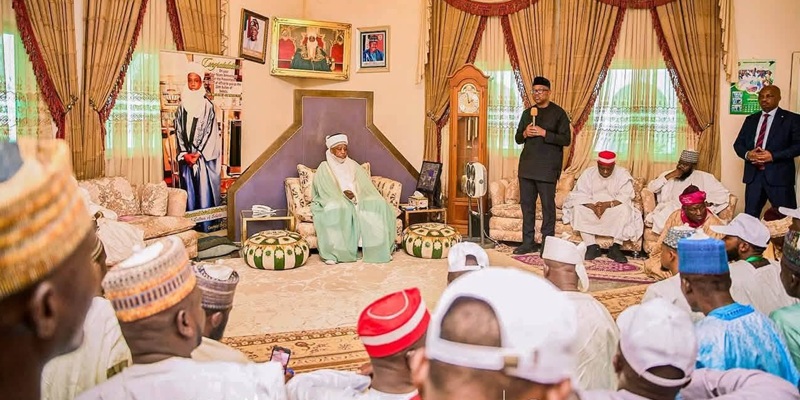

 Peter Obi in the Sultan’s palace. Peter Obi at the mosque. Peter Obi waiting his turn in yet another reception room. Watching the pictures, one question would not leave me alone: why does seeking public office in Nigeria require so much grovelling?
Why must a man who wants to run the country spend the campaign making other men feel important?
I understand the value of meeting people and respecting their customs. What I am tired of is a political culture in which candidates audition for the approval of powerful men instead of presenting themselves for examination by ordinary citizens.
I learnt a long time ago that in Nigeria everyone is a big man. Everyone is chairman of the board. Everyone expects recognition, flattery and an elaborate acknowledgment of his importance before you are allowed to get down to business.
Bring a serious idea into that room and you will spend half your time nursing wounded egos before anyone asks whether the idea is any good.
This is how progressive people get dragged into the gutter. A candidate arrives with a programme and soon finds himself negotiating personalities, observing endless protocol and making promises that will one day compromise his ability to govern.

What exactly are we electing a president to do? Manage Nigeria, or spend four years repaying the people who let him into their drawing rooms?
My concern is not really Peter Obi. He happens to be the man whose pictures prompted these thoughts. The same questions should be put to every candidate, whatever his party, religion or ethnic background.
A Christian can visit a mosque sincerely. A Muslim can visit a church sincerely. Nobody has to abandon his convictions to show respect for another person’s faith, and no photograph can tell us what is in a man’s heart.
But voters are entitled to ask about the theatre. Why must faith become another campaign stage? Why should a candidate feel obliged to perform religious belonging in order to prove he can govern fairly?
I want a president whose commitment to Muslims, Christians and everyone else is shown through equal protection, competent government and respect for their rights, and who goes on showing it long after the cameras have gone.
The same goes for the traditional institutions. Respecting a ruler’s customs is one thing. Allowing political gatekeepers to behave as though they own the votes of everyone in their community is another. A citizen’s vote belongs to the citizen. It is not palace property.

And beneath all this deference lies a dangerous bargain. If a powerful man believes he delivered your presidency, what will he expect when you arrive? An appointment? A contract? Protection from investigation? The right to telephone you and overrule a minister?
A candidate must be able to say, before he takes office: I respect you, but I cannot promise you a share of the government. Otherwise the obligations begin before the oath is sworn.
We all know what follows. The candidate who waited patiently in your reception room becomes president and your calls go unanswered. The host feels used.
The president resents being reminded of his dependence. What was presented as friendship is exposed as a transaction. And the ordinary voter is still waiting for electricity, security and a hospital that works.
What troubles me most is how little room this leaves for serious thought. We need candidates explaining how they will modernise agriculture, fix the schools, attract investment, create jobs and make public institutions function.
Instead, the attention goes to who received whom, who endorsed whom, who knelt, who bowed and whose ego was properly attended to.

There are times when Nigerian politics seems to demand that an educated man use only half his brain. Speak with precision and you are called arrogant.
Explain a hard problem honestly and someone tells you ordinary people will not understand. Ordinary Nigerians understand hardship perfectly well. They deserve politicians willing to explain solutions without insulting their intelligence.
Accessibility does not require deceit. Humility does not require surrendering your judgment. Respect does not require becoming somebody’s political servant.
I want candidates who can enter any community with courtesy, speak honestly and leave without having mortgaged their independence. Nigeria needs leaders with the confidence to say what they can deliver, what they cannot and what nobody has the right to demand of them.
If a man must spend his whole campaign pretending, flattering and incurring debts he cannot honour, then tell us: on which day does the honest government begin?