TD There is a rather convenient argument I often hear: why should government subsidise petrol when the poor man does not own a car?
That sounds clever until we remember that the poor man enters a bus, the tomatoes he buys enter a truck, the yam enters a vehicle, the teacher who teaches his child travels to school, and the nurse who attends to his pregnant wife must also get to work.
The vulcaniser operates machinery, the barber powers his shop, the welder needs electricity and the woman freezing fish needs electricity. Where public electricity fails, somebody somewhere buys petrol or diesel.
Therefore, when energy and transportation costs rise dramatically in an economy without reliable public transport, stable electricity and an effective welfare state, the poor man does not need to own a Toyota Prado before petrol price reaches his pocket. Petrol will find him.
It will meet him inside the bus, inside the market, in the price of garri, in school expenses and in the cost of transporting vegetables from the village. It will even meet him at the cemetery because the ambulance and hearse require fuel. There is no hiding place.
Let nobody deliberately misunderstand me. I am not suggesting that Nigeria should return to an unlimited petrol subsidy where nobody knew precisely how many litres were being consumed, where questionable claims could be presented to government and where subsidised products could disappear across borders.

That would simply replace today’s suffering with yesterday’s waste.
What I advocate is something different: subsidise the Nigerian, not the fraud.
If government saves trillions by removing petrol subsidy, a clearly identifiable portion of those savings should finance a legally protected social-protection system.
Not another political empowerment programme, not bags of rice bearing the photograph of a governor, not five thousand naira distributed at a party rally, and certainly not wheelbarrows photographed by commissioners. Nigeria needs a real and permanent social-protection system.
A Nigerian earning below an objectively determined threshold should be identifiable and entitled to support. An elderly Nigerian without a pension or sufficient income should have a minimum income guarantee, while genuinely disabled citizens should have disability support.
Poor children should have properly funded school meals, vulnerable families should receive meaningful health protection, and pregnant women should not avoid hospitals because they cannot produce money before treatment.

Public transport should be massively expanded and subsidised in major cities, while agricultural transportation should receive targeted support so that removing petrol subsidy does not merely transfer the cost into food prices.
Small businesses dependent on generators because government has failed to provide reliable electricity should receive carefully designed energy support.
Most importantly, the system should be digital, transparent, independently audited and accessible without knowing a councillor, party chairman, traditional ruler, governor or minister. That is subsidy too, only this time we would know who is being subsidised and why.
There is yet another question the promoters of subsidy removal have not satisfactorily answered. One of the strongest arguments for removing subsidy was that Nigeria could no longer afford it.
We were told that subsidy was swallowing resources needed for development and that removing it would free enormous sums for infrastructure and investment.
Fair enough. But if subsidy has been removed and government revenues have consequently increased, Nigerians are entitled to ask: why does government still require substantial borrowing?

This is not an argument that government must never borrow. Governments borrow, including some of the richest governments in the world.
The relevant questions are:
- why we are borrowing,
- how much we are borrowing,
- what the borrowed money is financing, and,
- whether the promised fiscal benefits of subsidy removal are actually materialising in a manner that improves the country’s finances and the lives of its citizens.
A few weeks ago, I wrote about the Common Agricultural Policy of the European Union, a subject I had the privilege of studying during my postgraduate years in Brussels.
European taxpayers deliberately put money into agriculture because Europe considers food security, farmers’ incomes and rural communities too important to be abandoned completely to market forces.
The CAP is not perfect. Questions have always existed about who receives what, whether larger farms benefit disproportionately and whether the distribution could be fairer.
But Europe did not respond to those imperfections by declaring subsidy itself a crime. It reformed the subsidy.
Today, I bring that discussion home because ultimately economics must come home. It must leave the television studio, leave the beautiful PowerPoint presentation, leave the pages of economic reports and arrive at the compound of the ordinary Nigerian.
After all the explanations about macroeconomic stability, fiscal consolidation, market forces, increased FAAC allocations and removal of distortions, the man in Ukpor, Nnewi, Aba, Kano or Makurdi is entitled to interrupt the lecture and ask one question: what did I get?
Before subsidy removal, he bought petrol at a lower price. Today he pays considerably more. His transport fare increased. The cost of moving his goods increased.
The generator powering his business became more expensive to run. Food became more expensive as the farmer, transporter, wholesaler and retailer all encountered higher costs.
Government told him that this sacrifice was necessary because the money previously spent subsidising petrol would be freed for development. Three years later, therefore, he is entitled to look around his community and ask: where is my own share of the sacrifice I made?
Where is our own share? What did we get?
That, for me, remains the question at the heart of the subsidy debate.
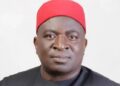
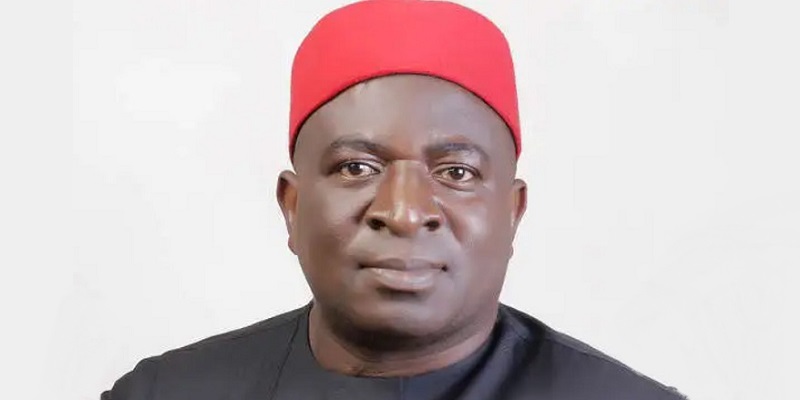
Obunike Ohaegbu, NDC aspirant for Nnewi North/Nnewi South/Ekwusigo Federal Constituency, writes from his village in Ukpor, Nnewi South LGA, Anambra State.