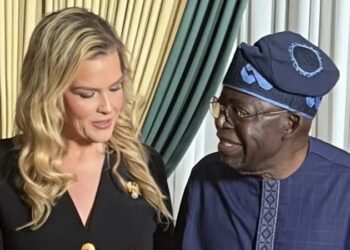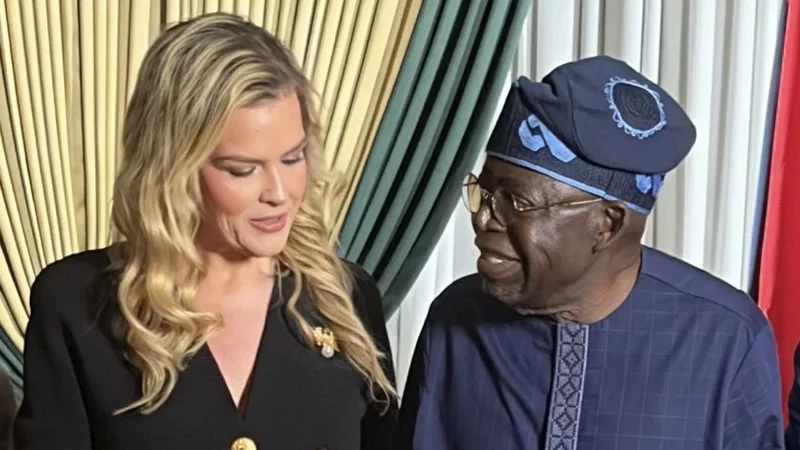

 An American lobbyist, Diana London, who recently interviewed President Bola Ahmed Tinubu has a previous criminal conviction in the United States.
Diana London pleaded guilty to misdemeanor larceny in North Carolina in December 2018.
The conviction followed allegations that she misappropriated approximately $30,000 from a restaurant where she previously worked.
The revelation has triggered questions about her professional background and association with the Nigerian presidency.
The 2018 Theft Conviction
According to reports by Peoples Gazette, London previously worked at Pigman’s Bar-B-Que in Kill Devil Hills, North Carolina.
She allegedly used the restaurant’s credit card for unauthorised personal and business-related expenses.

The disputed transactions reportedly amounted to nearly $30,000.
A recording released by the local district attorney’s office reportedly captured London admitting that she had stolen money from the restaurant.
On December 5, 2018, she pleaded guilty to misdemeanor larceny.
Prosecutors dropped a felony embezzlement charge under the plea agreement.
London agreed to pay $25,000 in restitution to the restaurant’s owners.
The agreement required an initial $10,000 payment, followed by another $15,000.

The case also attracted attention because London was working as a legislative assistant to former North Carolina State Representative Bob Steinburg.
Steinburg subsequently terminated her employment following the controversy.
London’s Interview With Tinubu
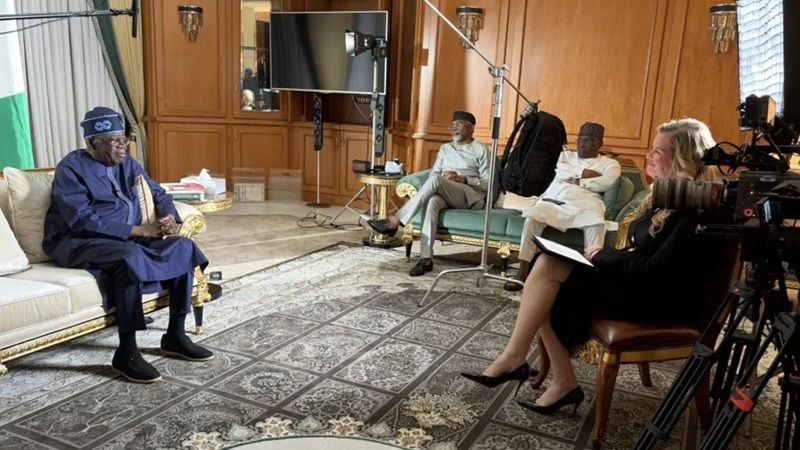
London recently attracted attention after interviewing President Tinubu at the State House in Abuja.
Her association with the presidency has generated controversy following revelations about her previous conviction.
Reports also identify her with DCI Group, a Washington-based lobbying firm involved in representing Nigerian government interests in the United States.
The Nigerian government’s engagement of American lobbyists has attracted scrutiny over the reported financial arrangements and public relations objectives.

However, London’s previous conviction does not establish wrongdoing by President Tinubu or other Nigerian officials associated with her.
Tinubu’s Previous US Forfeiture Case
The controversy has also revived discussions about Tinubu’s financial history in the United States.
On October 4, 1993, a US federal court ordered the forfeiture of $460,000 held in a First Heritage Bank account bearing Tinubu’s name.
The forfeiture decree stated that the funds represented proceeds of narcotics trafficking or involved prohibited financial transactions.
The proceedings were civil forfeiture proceedings, not a criminal conviction against Tinubu.
The historical court order remains an important document in discussions about his past financial dealings.
FBI Confirmation of Historical Investigation
The controversy resurfaced following developments in an American Freedom of Information Act (FOIA) lawsuit.
On August 28, 2026, the FBI submitted a sworn declaration before the US District Court for the District of Columbia.
The declaration concerned historical investigative records involving Tinubu and other individuals.
The FBI stated that the requested records were compiled during investigations into multiple individuals for drug-trafficking crimes.
An earlier April 2025 judicial ruling had also acknowledged Tinubu’s connection to the historical investigation.
However, these proceedings have not established that Tinubu committed drug-trafficking offences.
He has not been convicted of drug trafficking in the United States.
The current litigation concerns access to historical government records and the legality of withholding certain information.
Questions About Accountability
London’s previous conviction has raised questions about the background checks conducted before individuals receive prominent assignments involving Nigeria’s presidency.
It has also renewed public interest in the government’s international lobbying arrangements.
Nevertheless, a person’s criminal history does not establish the guilt of everyone with whom that person works.
The separate issues involving London and Tinubu must therefore be examined independently.
The central questions concern transparency, professional credibility and accountability in the management of Nigeria’s international public relations.