
 Abuja, Nigeria — Nigeria’s electoral register has come under renewed scrutiny following reports that the voter verification portal of the Independent National Electoral Commission (INEC) continues to return records for several prominent Nigerians who have died, including former President Muhammadu Buhari, Senator Ifeanyi Ubah, media mogul Raymond Dokpesi and former Ondo State Governor Rotimi Akeredolu.
According to reports published on October 28, 2026, checks on INEC’s voter verification platform showed that the deceased individuals’ records remained accessible, displaying the message indicating that voter information had been found.
The development has raised fresh questions about the accuracy of Nigeria’s voters’ register ahead of the 2027 general elections, particularly concerning the identification and removal of deceased persons from the electoral database.
However, the appearance of a deceased person’s record on a verification portal does not, by itself, establish that the individual has been counted as an active voter or that the record has been used to manipulate an election.
Four Prominent Nigerians Whose Records Were Reportedly Found
The individuals identified in the reports include:
1. Muhammadu Buhari — Died July 13, 2025

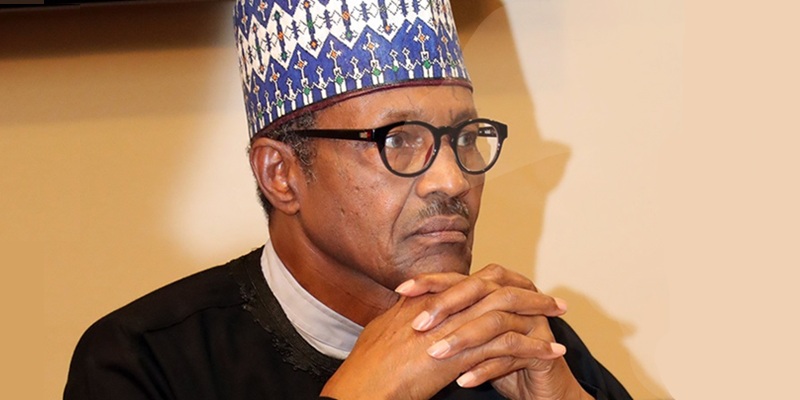
Nigeria’s former president died in London on July 13, 2025. His death was officially announced by the Presidency and independently reported by international news organisations.
2. Senator Ifeanyi Ubah — Died July 2024
Ubah, who represented Anambra South Senatorial District in the National Assembly, died in July 2024.
3. Raymond Dokpesi — Died May 29, 2023
Dokpesi, the founder of DAAR Communications, which operates African Independent Television (AIT) and Raypower FM, died on May 29, 2023.
4. Rotimi Akeredolu — Died December 27, 2023

Akeredolu, a former governor of Ondo State, died on December 27, 2023, after a period of illness.
Reports by People’s Voice and other Nigerian news platforms published on October 28 said the names of the four deceased public figures remained retrievable through INEC’s voter verification system.
Important verification note: This Dawn News has not independently reproduced the portal checks for all four individuals. The specific records and their current status should therefore be confirmed directly with INEC before concluding that they remain on the final certified register.
How Many Other Deceased Nigerians Remain on the Register?
The reported discovery raises a fundamental question: how many other deceased Nigerians may still have voter records in INEC’s database?
Nigeria has millions of registered voters spread across the country’s states, local government areas, wards and polling units. Maintaining an accurate register requires a reliable mechanism for identifying deceased registrants and removing their names through the appropriate legal procedures.
The concern is not limited to prominent politicians or public figures.

If deceased individuals remain in the preliminary register, the public needs to know whether the records have been identified, flagged for review and scheduled for removal.
The discovery of a deceased person’s record does not automatically prove electoral fraud. Nevertheless, unresolved discrepancies in the voters’ register deserve transparent investigation because the credibility of elections depends partly on the accuracy and integrity of the electoral roll.
It is also important to distinguish between a database record that remains searchable and a name that appears on the final certified register. The two are not necessarily equivalent.
INEC Faces Questions Over Its Voter Register
The controversy comes as INEC makes its preliminary voters’ register for the 2027 general elections available online following public concerns about access to the document.
On October 26, 2026, the commission announced that it was publishing online the same preliminary register previously displayed physically at registration areas nationwide between October 9 and 15.
The online publication followed demands for broader public access to the register.
On October 27, INEC also acknowledged concerns about questionable registration records, including suspected AI-generated photographs, saying that it had begun reviewing flagged records and taking corrective action.
The commission stressed that the online register represented the original preliminary register and did not reflect all ongoing data-cleanup activities. It maintained that the register was not yet the final certified version.
These developments make the reported presence of deceased Nigerians on the verification portal particularly significant.
INEC now faces questions about how deceased registrants are identified, how quickly their records are updated and what safeguards prevent inaccurate records from surviving into the final register.
The commission should also clarify whether the records identified in the latest reports were already flagged during the physical display exercise or whether they were discovered only after the register became accessible online.
What Does the Law Say About Deceased Voters?
Nigeria’s electoral legislation provides for the maintenance and updating of the voters’ register, as well as a process through which members of the public can challenge questionable entries.
Under Section 9 of the Electoral Act 2022, INEC was required to compile, maintain and continuously update the National Register of Voters.
Section 19 of that Act provided for public scrutiny of the register and allowed objections to the inclusion of a deceased person’s name. The law also prescribed a process for submitting objections to the appropriate electoral authorities.
However, the legal framework applicable to the current 2027 electoral cycle must be considered carefully. INEC’s October 2026 statements refer to the Electoral Act 2026, including its provisions governing the display of the preliminary register and the handling of claims and objections. The applicable provisions of that legislation should be consulted when determining the precise current procedure.
The underlying principle remains clear: the register must be scrutinised, questionable entries must be investigated, and confirmed inaccuracies must be addressed through the appropriate legal process.
How Can Citizens Challenge a Deceased Person’s Entry?
INEC’s established claims-and-objections procedures provide a mechanism for challenging the inclusion of a deceased person in the voters’ register.
The process generally involves the following steps:
1. Identify the questionable entry.
A citizen, political party or other stakeholder identifies a deceased person whose name appears in the register and records sufficient details to enable INEC to locate the entry.
2. Obtain supporting evidence.
Evidence may include an official death certificate, a credible obituary, an official announcement of death or other documentation acceptable to the electoral authorities.
3. Submit a formal objection.
The objector submits the prescribed objection through the appropriate INEC office and follows the applicable requirements for the relevant claims-and-objections exercise.
4. Allow INEC to investigate.
The designated electoral officer reviews the objection and supporting evidence and determines the appropriate action under the applicable law.
5. Confirm the outcome.
The objector and the public should seek confirmation that the entry has been reviewed and that any necessary correction has been made.
INEC’s published guidelines for earlier register-display exercises identify Form EC3 as the form for objections, while Form EC2 is used for claims. The correct forms and procedure for the current exercise should be confirmed with INEC rather than assumed from earlier guidelines.
Is It the Responsibility of Citizens to Clean Up INEC’s Register?
Public participation is an important part of maintaining an accurate electoral register. Citizens can identify errors that electoral officials may not immediately detect, particularly where information about a person’s death has not reached the relevant authorities.
However, public objections should complement, not replace, INEC’s institutional responsibility to maintain an accurate register.
The commission is responsible for administering the registration process, reviewing credible complaints and making corrections in accordance with the law.
A system that relies exclusively on citizens to report deceased registrants would be inadequate. Not every deceased person has relatives or political associates who will examine the register, and not every family will know that the person’s details remain in the electoral database.
This is why the latest reports raise broader questions about the effectiveness of INEC’s verification procedures and its arrangements for obtaining reliable information about deceased registrants.
A more robust system could involve appropriate data-sharing arrangements with relevant civil registration authorities, subject to legal safeguards, data protection requirements and reliable identity matching.
Such arrangements could help INEC identify deceased registrants more systematically rather than depending predominantly on individual objections.
Could Deceased Voter Records Affect the 2027 Elections?
The presence of deceased persons’ records in an electoral database is a legitimate concern, but the implications depend on what the records actually represent and whether the individuals remain on the final register.
A searchable record alone does not establish that a deceased person has voted, that anyone has voted in that person’s name or that the record has affected an election result.
To establish electoral fraud, investigators would need additional evidence demonstrating that an inaccurate registration record was exploited or otherwise used unlawfully.
Nevertheless, retaining unresolved records of deceased registrants can undermine public confidence, particularly when questions arise about the reliability of the wider register.
The issue therefore requires more than political accusations. It requires verifiable evidence, a transparent review and clear explanations from the electoral commission.
Questions INEC Must Answer
In the wake of the reported findings, INEC should address several important questions:
- Are the four deceased Nigerians still on the preliminary register, the final register or merely searchable in a legacy verification database?
- When were their records last reviewed, and have they been flagged for removal?
- How many deceased registrants have been identified in the ongoing review of the preliminary register?
- What procedures does INEC use to identify deceased registrants whose families or representatives do not submit formal objections?
- What safeguards prevent inaccurate registration records from being exploited during elections?
- Will INEC publish an account of the corrections made before certifying the final register for the 2027 elections?
These questions are essential to determining whether the reported cases represent isolated administrative oversights or a wider problem requiring systemic reform.
Transparency Is Essential to Electoral Credibility
The reported appearance of Muhammadu Buhari, Ifeanyi Ubah, Raymond Dokpesi and Rotimi Akeredolu on INEC’s voter verification portal has brought renewed attention to the quality of Nigeria’s electoral database.
The reports do not, on their own, prove that millions of deceased Nigerians remain on the register or that INEC is manipulating the electoral process. Those claims require independent evidence.
However, the concerns should not be dismissed.
INEC should explain the status of the identified records, disclose the results of its review and demonstrate that the final register will reflect verified information about eligible voters.
Citizens, political parties, election observers and civil society organisations also have a role to play by examining the preliminary register, reporting credible discrepancies and demanding accountability.
The central issue is straightforward: Nigerians deserve a voters’ register that is accurate, verifiable and worthy of public confidence before the 2027 general elections.