

 A MundX Analytics comparison of Nigeria’s polling-unit listings found 453 more entries on the Independent national Electoral Commission’s (INEC) public portal than in an August snapshot.
The November 9 report also identified 1,584 existing records with changes to names, ward or local-government labels, or identification codes.
MundX found that all 453 additional listings were in Delta State’s Warri North, Warri South and Warri South-West local government areas.
The comparison is based on two snapshots of public data, and does not establish when any unit was officially created or changed.
What the Comparison Found
MundX compared a polling-unit list captured on August 10 with records retrieved from INEC’s public voter-registration portal on November 9.
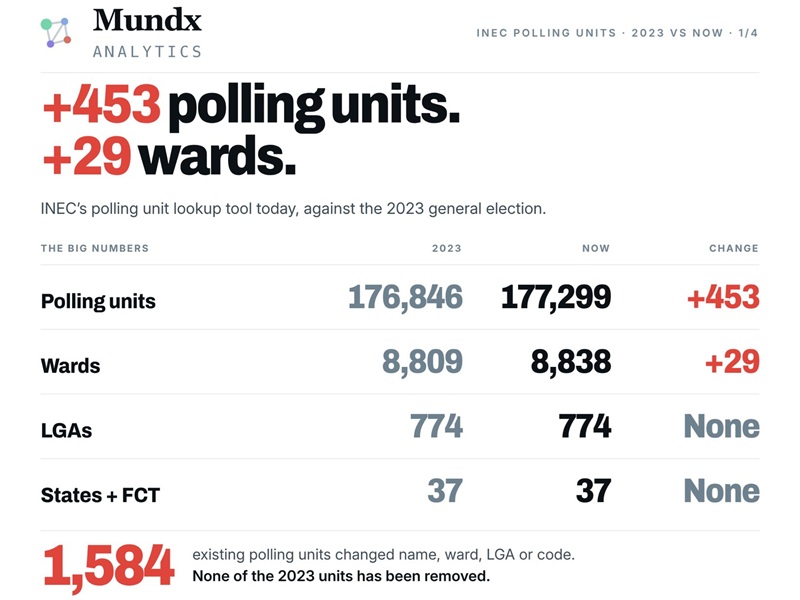
The current portal listing contained 177,299 entries, compared with 176,846 in the baseline, producing the reported net increase of 453.

The report found 175,262 baseline units unchanged, 1,584 existing records with changes, and 453 entries absent from the earlier snapshot.
It found no baseline polling-unit IDs missing from the current list, meaning none of the original 176,846 entries disappeared in this comparison.
The 453 additional listings were concentrated in three Warri-area local governments: 175 in Warri North, 97 in Warri South, and 181 in Warri South-West.
MundX also counted 29 more unique ward codes in the current hierarchy than in the August snapshot.
That comparison found 8,838 unique ward codes currently, against 8,809 in the baseline, alongside one known empty duplicate ward entry in Benue.
The MundX report includes downloadable comparison data and record-by-record differences.

Label and Code Changes Across States
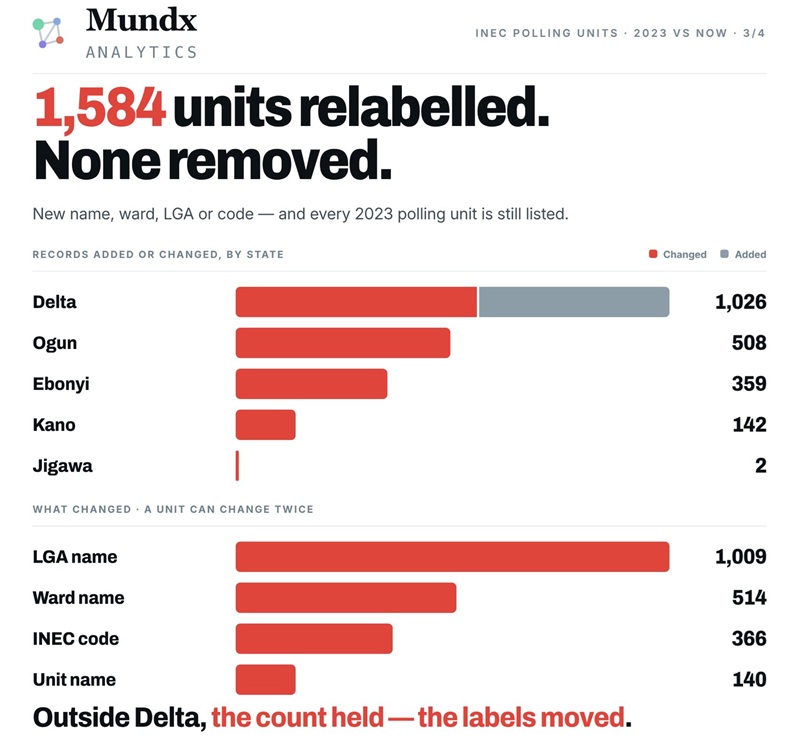
The report identified changes to existing records in Delta, Ogun, Ebonyi, Kano and Jigawa, with most activity in four states.
It counted 1,009 polling-unit records with changed local-government names, 514 with changed ward names, 366 with changed INEC codes, and 140 with changed polling-unit names.
These field totals overlap because one record may have multiple changes; MundX counted 1,584 distinct affected records overall.
Ogun accounted for 508 changed or added records, Ebonyi for 359, Kano for 142, while Jigawa had two.
In Ogun, the report recorded portal labels changing from Egbado North and Egbado South to Yewa North and Yewa South.
In Ebonyi, it recorded Afikpo North and Afikpo South as Afikpo and Edda, while Kano’s Kunchi appeared as Ghari.

MundX also flagged ward-name changes in Delta, including changes that could reflect renaming, ward reassignment or splits.
The report says its comparison describes differences between datasets, and does not determine when legal or administrative changes took effect.
The full report can be read here.
How MundX Built the Comparison
MundX says it downloaded current polling-unit information through INEC’s public portal and compared it with a community-maintained snapshot from August 10.
The baseline was a transcription of INEC’s public portal, rather than an INEC-issued bulk data release, the report states.
The November collection took about 12 minutes, so the records were not captured as one simultaneous database snapshot.
The report’s terms “added” and “changed” describe what differed between the two lists, not confirmed dates of administrative action.
It says its data covered 37 state and Federal Capital Territory areas, 774 local governments and 177,299 unique polling-unit codes.
INEC’s polling-unit directory describes a national total of 176,846, established after its 2021 expansion and conversion of voting points.
The difference between INEC’s published headline total and MundX’s portal comparison highlights a need for clarification and reconciliation.
INEC has not been cited in the MundX report as confirming the additional listings or explaining the observed label differences.
Why the Changes Matter Ahead of Elections
Polling-unit names, codes and ward assignments help voters identify where they are registered and where they should cast ballots.
A mismatched or updated listing could create confusion if voters rely on older records, although the comparison does not document specific cases of misdirected voters.
INEC’s online locator lets voters search for polling units, wards and locations through its official portal.
The data changes arrive as the commission prepares for the 2027 general elections and voters check their registration details.
MundX’s report provides a public audit trail with old and new labels, codes, and downloadable files for further review.
The figures should be read as a comparison of public listings, rather than proof that INEC formally established 453 new polling units.
A clear INEC reconciliation could help establish whether the additions reflect new units, delayed portal updates, data issues or another administrative process.
For voters, the practical advice remains to confirm their polling-unit information through INEC’s official channels before election day.