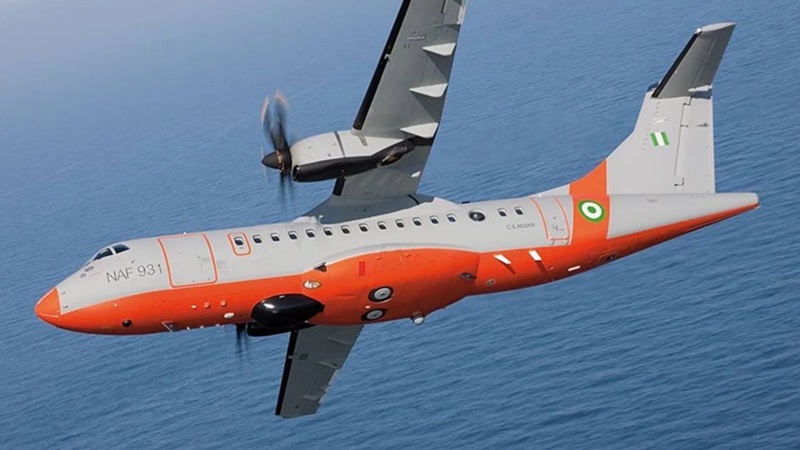

 I join the public to mourn the victims of the Nigerian Air Force aircraft that crashed on October 5 in Igbokoda, Ilaje Local Government Area of Ondo State.
If there was anything prime and proper, besides recovering the remains of the victims for proper burial, it would be to ensure that a thorough investigation is conducted to determine what went wrong and prevent a recurrence.
This is necessary to reduce the risk of such fatalities in the future, hold responsible agencies accountable for any negligence or safety lapses in aircraft maintenance and operational procedures, as well as to strengthen overall aviation airworthiness and safety.
While the country mourns the irreparable loss of the civilian and military victims of the incident, it is important to draw the attention of a host of stakeholders – the National Inland Waterways Authority (NIWA), Ondo State Ministry of Transport, boat operators and unions, Nigerian Safety Investigation Bureau (NSIB), National Emergency Management Agency (NEMA), the federal government, state governments, local government authorities and other transport agencies – to other preventable accidents and deaths across the country’s length and breadth.

We have more than enough lists of deaths that should worry the nation. On June 8, 2023, about five persons lost their lives in a boat accident at Ugbo Nla in Ilaje LGA, Ondo State. The victims were seafood traders, with only one person luckily able to survive the accident with the aid of a life jacket.
A similar boat mishap claimed one life, while 15 passengers narrowly escaped death in the same Ilaje LGA in 2021. The troubled boat was on its way to Igbokoda Market from Awoye when its engine developed a fault and was blown off course by a strong wind. The state’s Nigeria Security and Civil Defence Corps commandant at the time, Hammed Abodunrin, said the incident could have been avoided if the boat operator had not overloaded the boat or drove at excessive speed.

To also recall a similar tragic incident, the boat accident involving INEC officials in Ondo State during the state election in October 2020 is worthy of mention. The ill-fated boat, according to news reports, was conveying INEC ad hoc staff and election materials in the late hours of the day preceding the scheduled election. Personnel of the Nigerian Navy, however, reportedly rescued all election personnel and materials.
The grief of transportation tragedies in Nigeria has not been exclusive to road and water ways. In 2021, three separate NAF crashes claimed a total of 21 lives. Two of the incidents occurred near the Nnamdi Azikiwe International Airport in Abuja and in the North-East during an interdiction mission against terrorists in Kaduna respectively.
That Kaduna incident claimed the life of the then Chief of Army Staff, Ibrahim Attahiru. In a separate incident on April 19, 2022, two pilots died after a NAF Super Mushshak crashed during a routine training flight at the Kaduna NAF Base barely months later. It is particularly unfortunate that Nigeria has recorded no fewer than 16 major commercial and military aircraft crashes since 1956, with an estimated 1,437 lives believed to have been lost.
A 2023 report by the Foundation for Investigative Journalism revealed that Nigeria lost 40 personnel and aircraft valued at $135.13 million between 2015 and 2022. Just eleven days after the air crash in Ondo, a CL60 aircraft operated by Triton Aviation reportedly lost a door mid-flight from the Nnamdi Azikiwe International Airport in Abuja on October 15. Even now, many more tragedies remain risks only waiting to materialise.
With all the aforementioned, concern about safety and the protection of lives, as they pertain to transportation issues and the loss of lives and property in Nigeria, cannot be anything else but upsetting at this point. The wasteful loss of able-bodied Nigerians to preventable deaths must become a serious subject to be tackled. In January 2025, at a press briefing, the Federal Road Safety Corps (FRSC) Marshal Shehu Mohammed, said Nigeria recorded 5,421 road traffic deaths in the year 2024 from 9,570 reported crashes.
The following year, a separate report noted that the agency recorded 7,715 crashes between January and September 2025, which resulted in 3,915 deaths and 24,674 injuries. The same FRSC repeatedly noted that crashes peak and roads become most dangerous at the beginning and in the last quarter of the year. It is therefore lamentable and tragic that hardly a week passes without accidents that claim lives, and throw families and friends into an abyss of sorrow.

The economic consequences of accidents is another concern. And not just in the cost of damage to vehicles, boats, aircraft, buildings and other valuable properties, but also in the form of medical bills, funeral expenses, trauma and rehabilitation costs that may be incurred. It is purely the truth that the cost of transport tragedy defies calculation.
Prior to examining the government’s role in reducing the innumerable losses of many Nigerians to preventable deaths, it is important to emphasise the individual’s role in accident prevention. An ounce of prevention, they say, is worth a pound of cure. Nigerians can individually help reduce or become victims of deadly accidents by practice.
With many victims of transportation accidents being children and young adults, and 92 per cent of the world’s road fatalities occurring in low and middle-income countries, Nigerians must be safety-conscious and should embrace necessary precautions.
Safety rules and regulations are established to be obeyed, and lack of awareness should not absolve anyone of the responsibility to stay safe. It is a sad state of affairs that at docks and jetties in waterways across Nigeria, particularly in places like Igbokoda, Ayetoro, Oporoma, Bonny, Burutu, Ilushi and other parts of the country, boats are boarded by people without life jackets or properly fitted life vests – despite safety enforcement personnel.
This is unacceptable, and must no longer be treated as normal. It is important for transport users to shun transport facilities that lack adequate lighting and other essential safety provisions, while paying close attention to weather conditions and warnings about storms, strong currents, waves and poor visibility. The habitual consumption of alcohol or other substances that can impair judgment before and during journeys is one of the many acts that also must be discouraged.
Many accidents on roads, waterways and in the air can be prevented if suspected hazards are reported promptly and emergency procedures are learned rather than dismissed as though they are not beneficial forms of knowledge. Other remedies that should be strictly followed by Nigerians include insisting that unsafe transport be refused firmly, both to reduce exposure to preventable risks and to pressure boat, bus and other transport facility operators to comply with safety standards.

That said, the government has its fair share of responsibility to bear in the overall scheme of things. For the government, road, highway and waterway accidents must be tackled with greater preparedness than before. It is a common fact that accidents seldom herald their arrival. Hence, the fair share should begin with changing the country’s approach to accidents.
For one, there have been many investigations in the past without accompanying corrective actions to prevent a recurrence. Government agencies must realise that safety begins with preventing accidents as much as possible. Past and promised investigations into many of the air mishaps are yet to and should be made public (except security concern demands otherwise) within a defined time frame.
Where they cannot be concluded on schedule, the responsible agency should publish an explanation. There is no doubt that some air accidents could have been prevented if investigations had not simply disappeared from public attention after initial announcements, which is often aired through mouthful promises to ensure justice.
By the same token, local governments should establish a register where major transport accidents under investigation can be publicly tracked. This would particularly allow journalists, civil society organisations and concerned Nigerians to track each case to a reasonable conclusion. There is also a need for the government to establish secure channels through which eyewitnesses and other members of the public can report incidents and provide relevant information that could help in the prevention of accidents.
When people are assured of appropriate protection against retaliation, public participation in safety efforts can be more effective, as there would be a common incentive to report safety violations and cooperate with investigations. Local government areas (LGAs), which have been sidelined by the absence of true federalism in Nigeria, are well-positioned to help identify accident-prone roads, while working with statutory agencies to address overloading and navigation hazards in waterways, or other applicable areas.
The federal and state government’s failure to repair and address poor road networks is another cause of avoidable deaths in the country. Beyond road transportation, obstructions such as submerged tree stumps, fallen trees and sediment buildup on waterways pose serious hazards to waterway users and require government intervention. Regular hydrographic surveys, dredging of waterways where necessary, routine safety inspections and the removal of navigational obstructions cannot be overemphasised as essential to safer inland water transportation in Nigeria.
Similarly, completing abandoned trunk A, B and C road projects and rehabilitating deteriorating roads across the country are critical responsibilities that governments must not neglect. And where such funds for repairs exist, they must be put to intended use rather than stolen. Safe and pliable roads are a way to reduce accidents in Nigeria and the loss of human resources that could have been advantageous to the country. Similar aviation oversight and operational safety measures, which should not be strange to aircraft operators, must be implemented as it concerns the government.
No measure is too small to prevent the loss of lives and property. A simple search on the internet shows that both traffic gridlock and accidents have been caused, in some instances, by the failure of traffic signals and absence of safety precaution lights on the roads. Where some of these facilities are damaged, there are densely populated areas that do not have them.
The problem extends to lack of a good maintenance culture, as well as the absence of a mechanism to track or report failing traffic light systems in Nigeria. Despite the presence of agencies such as LASTMA, FRSC, VIO, the Federal Highway Patrol and the Marine Police Unit, more must be done to prevent transportation tragedies and protect lives.
The government must take the adequate provision of traffic lights and monitor its personnel efficiency more seriously. Greater responsibility for accountability, than ever experienced, must be vested in existing road safety management agencies in the country. The repair of all amendable traffic signs and lights must also be regularly fixed.
It is the little drops of safety measures not taken seriously that become the next tragedy. We should be worried about what is being done or not being done now to prevent the next heart-wrenching incident, and transform it into the right actions.
AUTHOR
Angwaomaodoko, the founder of Ejuchegahi Angwa Foundation, and a scholar at Kean University, writes via ejuchegahi.angwaomaodoko@gmail.com.