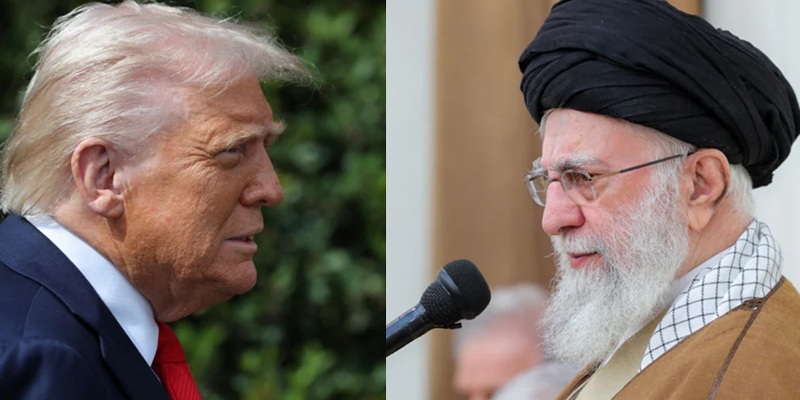
TDA volatile mix of stalled diplomacy, stepped‑up military deployments, unexplained explosions inside Iran, and widening great‑power naval activity has pushed the region into a dangerously narrow window.

Over the past 48 hours developments on multiple fronts have sharpened the prospect of rapid escalation.
The United States has begun a major redeployment of aerial refuellers and airborne early‑warning and reconnaissance assets toward U.S. bases in the Middle East.
Russia has sent surface warships to Bandar Abbas and announced surprise joint exercises with Iran near the Strait of Hormuz.
Furthermore, China, Russia and Iran are reported to be conducting coordinated naval activity under a “Maritime Security Belt 2026” framework.
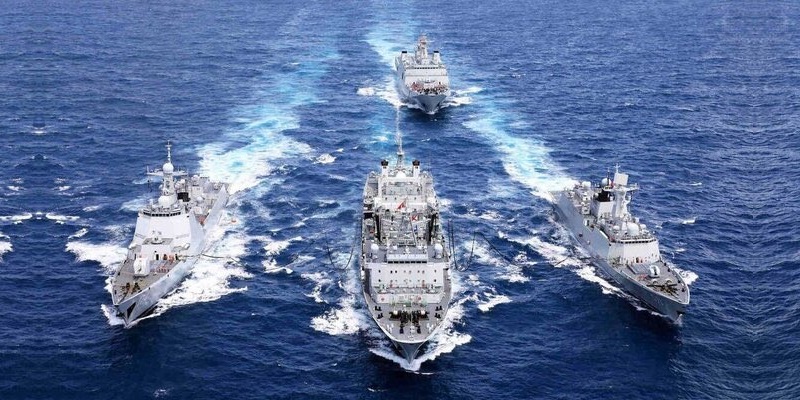
“The US President constantly says he has sent a warship toward Iran. Of course, a warship is a dangers piece of military hardware.However, more dangerous than a warship is the weapon that can send that warship to the bottom of the sea.”
U.S. Steps Up Military Buildup
This dawn had yesterday reported that 48 United States Air Force fighter jets are mobilizing, with flight paths suggesting they may be en route to the Middle East.
The deployment comes amid heightened tensions in the region, where U.S. military presence has often been a stabilizing but controversial factor.
The U.S. military buildup has doubled tremendously within the last 24 hours according to a source.
Twelve F-22 Raptor stealth fighter jets are en route for deployment.
Six have reportedly already arrived at RAF Lakenheath, and the remaining six are expected to arrive there shortly before continuing on to the Middle East—likely Al Udeid Air Base, which has hosted F-22 deployments in the past.
Thirty-six F-16 fighter jets are also on the move and are expected to deploy to the Middle East in the coming hours.
Two more E-3 Sentry AWACS aircraft are preparing to depart for Ramstein Air Base, where they will join two others that arrived earlier today at RAF Mildenhall (SHUCK84, SHUCK85, SHUCK86, SHUCK87).
One E-11A Battlefield Airborne Communications Node (BACN) aircraft with the tail numbers 22-9046 is scheduled to arrive at Ramstein Air Base in Germany before heading to the Middle East.
There are already three BACNs deployed at Prince Sultan AB.
Finally, a U-2 Dragon Lady reconnaissance aircraft departed RAF Fairford in the U.K. and was reportedly heading toward the Middle East.
It may be deployed to Cyprus or Prince Sultan Air Base.
It’s worth noting that the U-2 plays a key role as a communications bridge between the F-22 and F-35.

Diplomacy: Talks Continue, But the Margin for Agreement Is Thin
Indirect negotiations between U.S. and Iranian interlocutors in Oman and Geneva have produced limited movement on “guiding principles”.
However, key gaps remain on enrichment limits, ballistic‑missile constraints, and proxy activity.
Public statements from both sides have oscillated between cautious engagement and stark warnings.
With negotiators still far from a final accord, diplomacy remains the primary off‑ramp — but it is a narrowing one.
Military Posture: Rapid Redeployments and Naval Drills
- U.S. aerial redeployments:
In the past hours U.S. forces have moved significant air‑refuelling tankers and airborne early‑warning/reconnaissance aircraft from European bases toward U.S. facilities in the Middle East.
This has increased the U.S. military’s operational reach and readiness in the theatre.
- Russian naval presence:
A Russian corvette from the Baltic Fleet docked at Bandar Abbas on February 18 to participate in joint naval activities with Iran’s navy.
Moscow and Tehran have announced surprise exercises near the Hormuz chokepoint, complicating any single‑actor calculus in the Strait.
- Multinational drills:
Reports indicate coordinated naval deployments by Russia, China and Iran under the “Maritime Security Belt 2026” banner.
Meanwhile, U.S. warships remain active in the region.
The overlapping presence of rival fleets raises the stakes for any maritime incident.
- IRGC activity and unexplained blasts:
The IRGC has conducted live‑fire and “Smart Control” drills in the Strait of Hormuz.
Inside Iran, a string of unexplained explosions — including incidents near strategic missile stockpiles — has continued.
The incidents have increased the risk that a single incident could be misattributed and trigger retaliation.
Regional and Proxy Dynamics Plus Domestic Pressure in Iran
Iran’s network of proxies in Lebanon, Yemen and Iraq shows signs of strain after recent operations and logistical shifts in Syria, but proxies remain capable of disruptive action.
Israel is reported to be on heightened readiness for rapid escalation scenarios.
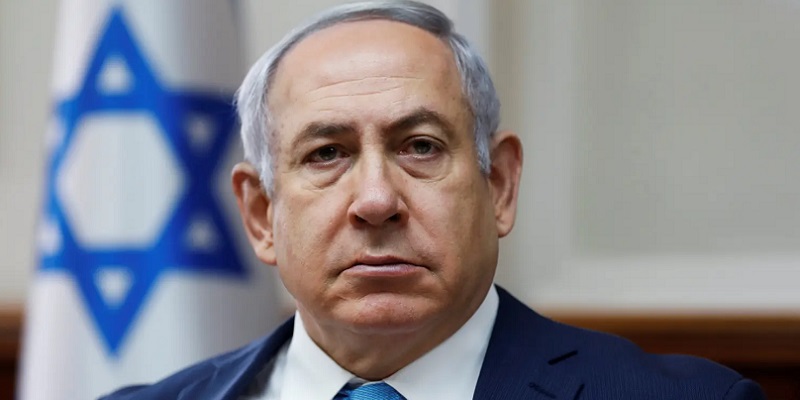
Analysts warn that coordinated U.S.–Israeli options are being refined should diplomacy fail.
Large diaspora demonstrations, ongoing domestic protests, and intensified security crackdowns — including mass arrests in restive provinces — add internal pressure on Tehran.
Economic hardship and social unrest could influence Iranian decision‑making, potentially making the regime more sensitive to external shocks or more willing to use external confrontation to rally domestic support.
Assessment: Is War Imminent or Inevitable?
Short verdict: Imminent risk is elevated; war is not yet inevitable.
Why the risk is elevated now
- Narrow diplomatic margins: Negotiations have not closed the core gaps; a collapse in Geneva would remove the principal diplomatic brake.
- Concentrated military readiness: Rapid U.S. redeployments of tankers and AWACS, Israeli readiness reporting, and Russian‑Iranian naval activity all increase the speed at which kinetic options could be executed.
- High miscalculation potential: Unexplained internal explosions, maritime seizures or proxy strikes create many plausible triggers for escalation. A single misinterpreted incident could cascade quickly.
Why war is not inevitable
- Active diplomatic channels remain: Indirect talks and back‑channel communications continue to offer a path to de‑escalation.
- Mutual deterrence and cost calculus: Major actors understand the severe human, economic and geopolitical costs of a sustained regional war, which incentivizes restraint.
- Complex multipolar dynamics: The presence of Russia and China complicates any unilateral plan for large‑scale strikes and raises the diplomatic and operational costs of escalation.
Bottom line: The situation has entered a critical phase.
If diplomacy collapses and a significant incident occurs that either side interprets as an attack, the probability of rapid military escalation would rise sharply.
Conversely, continued progress in talks or effective crisis‑management channels could still avert open conflict.
Key Indicators to Watch in the Next 72 Hours
- Official Geneva readouts — any movement from “guiding principles” to a concrete framework.
- U.S. force posture changes — additional carrier movements, munitions pre‑positioning, or public timelines for action.
- Attribution of unexplained blasts inside Iran, especially near missile or strategic storage sites.
- Proxy strikes or cross‑border incidents in Lebanon, Iraq or Yemen that could trigger wider responses.
- Naval interactions in the Strait of Hormuz — close encounters, interdictions, or exercises that constrain commercial traffic.
A rapid escalation would have immediate humanitarian consequences, disrupt global energy markets, and risk drawing multiple external powers into a wider confrontation.
Even without full‑scale war, sustained military pressure and naval blockades would severely affect regional stability and global trade.