
“Tinubu is a professional bonafide liar. I lectured at Chicago State University for five years, and during that period, he claimed he attended the institution. I was the director of the very programme he claimed to have attended.”— Statement attributed to a former Chicago State University lecturer, Dr. Adetokunbo Pearse, in the circulating post.
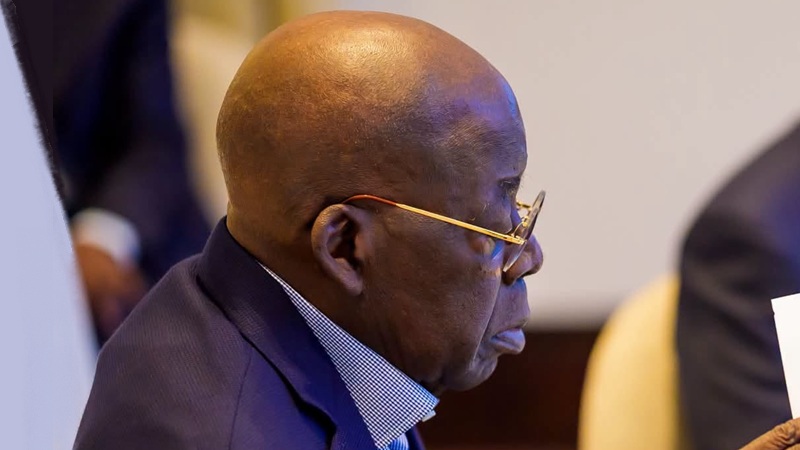
 That is an explosive accusation against a sitting president.
Reporting identifies the speaker as Adetokunbo Pearse, a PDP politician and former Chicago State University lecturer, who challenged Bola Ahmed Tinubu’s educational history during a News Central interview.
The allegation is his; the responsibility to substantiate it is also his.
But the political significance reaches beyond one angry interview.
Why must Nigerians repeatedly struggle through competing accounts of something as ordinary as their president’s education?
Why should a public biography require an army of political interpreters?

Why does an academic question become an occasion for ministers to advertise their loyalty?
The presidency is a position of trust. Its occupant should expect scrutiny of the qualifications presented to the electorate.
Citizens asking for documentary clarity are exercising a democratic right.
Recently, Education Minister Tunji Alausa described Tinubu as a first-class accounting graduate and a genius.
Yet PUNCH’s reporting distinguished that first-class claim from the university records, which confirmed accounting as his major without specifying that classification.
An education minister ought to understand the weight of those words.

Academic classifications are established by institutions. They cannot be awarded retrospectively in a television interview.
If Alausa possesses the record supporting his assertion, he should produce it.
Nigerians are entitled to expect the minister responsible for education to speak with documentary precision.
The same demand applies to Pearse.
Chicago State University has confirmed that Tinubu attended between August 1977 and June 1979 and received a Bachelor of Science in Business Administration with honours, majoring in accounting.
Pearse reportedly dates his own employment there to 1985–1990. Those dates do not overlap. His later employment alone cannot establish that Tinubu never attended.

If he has records contradicting the university’s confirmation, the country should see them.
A serious challenge to presidential integrity deserves more than a viral lifespan. It deserves evidence that survives examination.
There is also a specific documentary issue that should be described accurately.
The Associated Press reported in 2023 that the university registrar confirmed the existence of Tinubu’s academic records but could not authenticate the particular diploma submitted to the electoral commission.
That did not establish forgery. It identified a distinction between confirming graduation and authenticating a particular document.
These distinctions matter because a demand for accountability becomes stronger when every sentence can withstand scrutiny.
I have no interest in helping this presidency escape legitimate questions through an opponent’s careless exaggeration.
Nor will I accept the suggestion that a university’s confirmation of attendance obliges Nigerians to applaud every embellishment offered by a minister.
Public trust requires accuracy from everyone involved.
What troubles me is the political culture on display:
- officials reaching for superlatives,
- opponents reaching for denunciations, and,
- citizens left to assemble the documentary record themselves.
Nigeria deserves better. Its citizens deserve public servants who understand that an answer must address the question asked.
Calling a president brilliant does not establish a degree classification. Calling him a liar does not prove which statement was false.
Pearse has made his accusation. He should now make his evidence available.
Alausa has asserted a qualification. He should identify its documentary basis.
The presidency should address specific questions about the president’s records with explanations the public can check.
No office is too exalted for scrutiny. No minister’s praise should be mistaken for verification. No critic’s confidence should be mistaken for proof.
The president asks Nigerians to trust his judgment, accept his policies and entrust him with their future.
They are entitled to examine the account he gives of his past. That is the obligation of public office.
Answer the questions. Produce the supporting records. Let Nigerians judge.