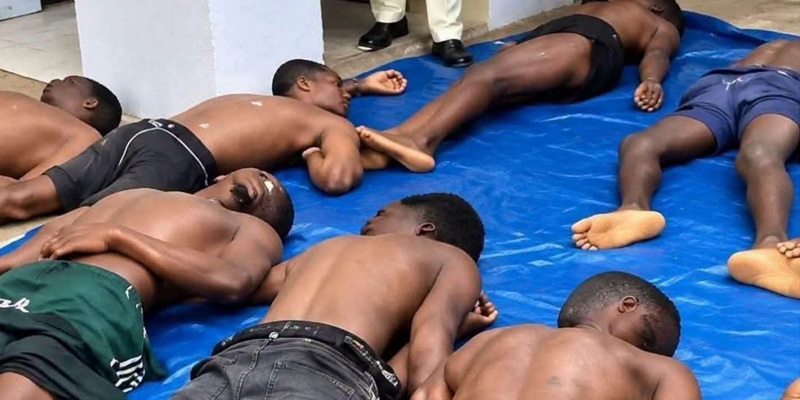
TD MINNA, Niger State — Protests have erupted in Minna following the deaths of 37 people detained by the Nigeria Security and Civil Defence Corps (NSCDC) during operations against suspected illegal mining activities in Niger State.
The detainees were arrested during raids on suspected illegal gold-mining sites around the Wushishi-Lukoto area, west of Minna, on September 15 and 16.
The NSCDC initially suggested that a suspected disease outbreak could have caused the deaths but subsequently said the actual cause had not been established and would be determined through medical investigations.
The death toll has been reported differently at various stages. Reuters said it filmed 33 bodies at Minna General Hospital on Thursday, while Niger State Governor Umaru Bago subsequently confirmed that 37 detainees had died.

Survivors allege suffocation
Questions over the initial explanation intensified after survivors described the detention conditions.
Dauda Shehu, a survivor, told journalists that detainees were packed into a poorly ventilated cell and struggled to breathe.
According to his account, detainees repeatedly appealed for help and banged on the cell door when they began experiencing breathing difficulties.

The Guardian reported that an intelligence report reviewed by Agence France-Presse indicated that overcrowding and inadequate ventilation were preliminary factors under investigation.
Other reports have cited information that about 65 people may have been held in the cell, although the precise number of detainees and the condition of the facility remain matters for investigators to establish.
Governor Bago has also said investigators are examining possible suffocation caused by overcrowding, as well as possible exposure to hazardous substances associated with illegal mining, including lead or other chemicals.
He stressed, however, that no cause of death had been scientifically established and cautioned against reaching conclusions before forensic and medical examinations are completed.
Protests turn violent
The deaths triggered demonstrations in Minna, with youths and relatives of the deceased demanding accountability.

Reuters reported that hundreds of people took to the streets, while witnesses said security forces fired live rounds during clashes with protesters.
Some protesters were reportedly carrying sticks, machetes and traditional hunting rifles, while others attempted to set fire to government buildings in the Tunga area.
The Associated Press separately reported that police fired tear gas to disperse protesters gathered near the NSCDC office.
By Friday, soldiers and police had been deployed across parts of Minna as authorities sought to restore calm.
24-hour curfew imposed
Following the unrest, Governor Bago announced a 24-hour curfew in Minna, effective immediately after Friday’s Jumu’ah prayers and continuing until further notice.

Residents were directed to remain indoors and avoid unnecessary movement, while security agencies were instructed to enforce the order and protect lives and property.
The governor also constituted a committee of inquiry into the deaths.
He said investigations were being conducted by the state government alongside committees established by the NSCDC, the Nigeria Police Force and the Department of State Services.
Niger NSCDC commandant suspended
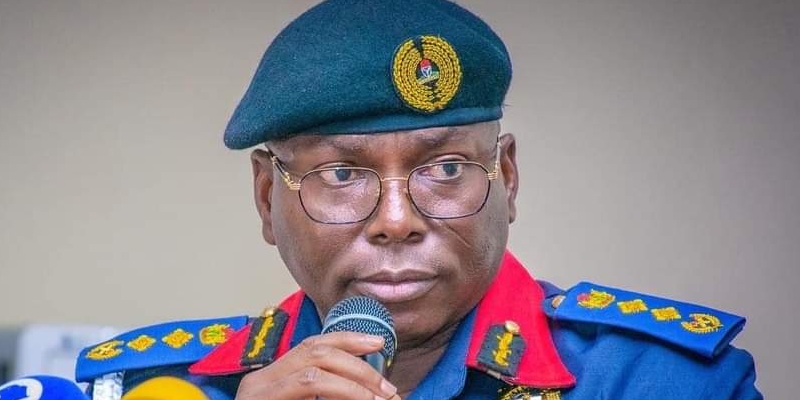
The Federal Government has suspended the Niger State NSCDC Commandant, Suberu Siyaka Aniviye, pending the outcome of investigations.
Interior Minister Olubunmi Tunji-Ojo ordered a full-scale investigation.
Similarly, NSCDC Commandant-General Ahmed Abubakar Audi directed Aniviye and senior officers responsible for operations, mining, legal, intelligence and investigations to report to the NSCDC headquarters in Abuja.
A new commandant has also been directed to assume command in Niger State.
The NSCDC said personnel found to have breached the law or professional standards would face appropriate sanctions.
Tinubu orders transparent investigation
President Bola Ahmed Tinubu has also directed a full and transparent investigation into the deaths.
The Presidency said the investigation should examine the circumstances of the arrests, the condition of the detainees when they were taken into custody, the number of people held in the facility, detention conditions, medical attention provided and events leading to the deaths.
Tinubu said suspicion of illegal mining did not remove the detainees’ rights to life, dignity and humane treatment while in government custody.
He directed that officials found, based on evidence, to have contributed to the deaths through abuse or negligence should face prosecution.
Federal Government promises accountability
Information Minister Mohammed Idris expressed condolences to the families and said the circumstances surrounding the deaths require a thorough, transparent and impartial investigation.
He also cautioned against prejudging the outcome of the investigation, while assuring the families that the government was committed to establishing what happened.
Questions surrounding the deaths remain
The incident has raised several unresolved questions, including the exact number of people detained, the identities and ages of the deceased, the conditions inside the detention facility and what happened between the arrests and the discovery of the bodies.
There are also conflicting accounts regarding the cause of death.
The NSCDC initially cited a suspected disease outbreak, while survivor testimony and preliminary intelligence cited by international media have raised overcrowding and inadequate ventilation as possible factors.
Governor Bago has said forensic examinations, medical examinations and autopsies are being used to establish the scientific cause.
However, Reuters reported that the victims were buried on Thursday in accordance with Islamic tradition, potentially complicating subsequent forensic examination.
Until the investigations are completed, suffocation, disease, chemical exposure or any other explanation should not be treated as an established cause of death.
The tragedy comes amid continued government efforts to combat unauthorised mining in Nigeria, which authorities say contributes to environmental degradation and loss of government revenue.