


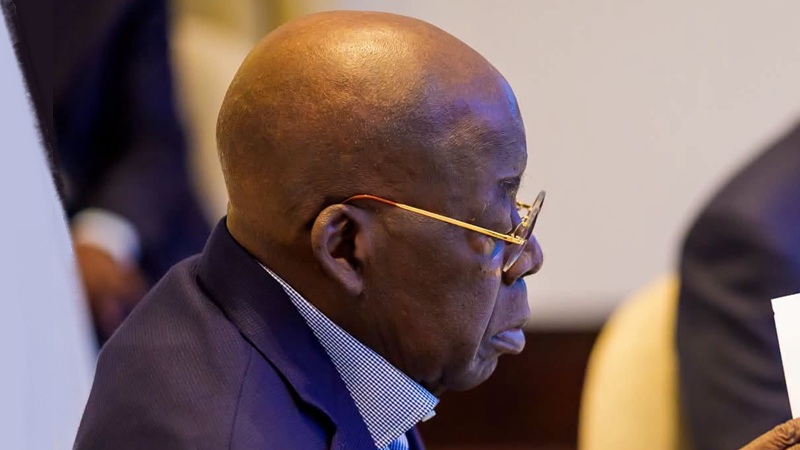

ABUJA, Nigeria — President Bola Ahmed Tinubu has welcomed the World Bank’s October 2026 Nigeria Development Update, describing its findings as evidence that his administration’s economic reforms are strengthening Nigeria’s economy and improving the country’s fiscal position.
The report, titled Beyond the Federal Purse: How Higher Revenues Reshaped State Priorities, examines Nigeria’s economic performance and how increased government revenues have influenced spending by state governments.
According to the World Bank, Nigeria’s economy grew by 4.2 per cent in the first half of 2026, compared with 3.9 per cent during the corresponding period in 2025. The bank also reported that economic growth helped stabilise the poverty rate for the first time since 2019.
This was contained in a statement issued by his Special Adviser on Information and Strategy, Bayo Onanuga.
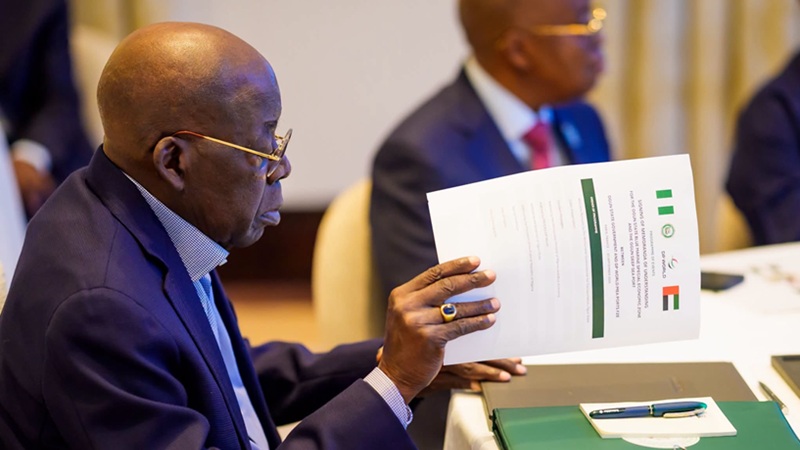
Tinubu said the findings showed that decisions taken since 2023, including the removal of the petrol subsidy and foreign exchange market reforms, had strengthened government revenues and economic stability.

The President, however, acknowledged that more work was needed to ensure that economic improvements translated into better living conditions for Nigerian households.
World Bank Projects 4.4% Average Growth
The World Bank projects that Nigeria’s economy will grow by an average of 4.4 per cent between 2026 and 2028, while inflation is expected to decline gradually to approximately 12 per cent by 2028.
Inflation fell from 27.6 per cent in January 2025 to 15.2 per cent in December 2025, according to the figures cited in the State House statement. However, higher global fuel prices associated with the conflict in the Middle East have slowed the subsequent decline.
The bank’s assessment indicates that Nigeria’s economic performance has improved across growth, public finances and external balances. Nevertheless, it emphasises that sustained reforms, private-sector investment and more effective public spending will be necessary to create jobs and reduce poverty.
Foreign Reserves Rise to $53.8 Billion
Nigeria’s external position also strengthened during the period under review.
The State House statement said the country’s current account surplus increased to $12 billion in the first half of 2026, compared with $8.6 billion during the same period a year earlier.

Gross external reserves reportedly rose from $45.5 billion at the end of 2025 to $53.8 billion at the end of August 2026.
These developments provide additional evidence of stronger external balances, although their long-term benefits will depend partly on the sustainability of foreign exchange earnings, import requirements and broader economic conditions.
States Benefit From Higher Government Revenues
A major focus of the World Bank report is the impact of increased federation revenues on state governments.
According to the assessment, reforms introduced since 2023 contributed to a 69 per cent increase in federation revenues in real terms between 2023 and 2025. State governments were identified as the largest beneficiaries of the additional revenue flows.
The report also found that state capital expenditure increased significantly as governments directed more resources towards infrastructure and other development priorities.
The World Bank said states expanded spending on roads and transport, agriculture, energy and housing, reflecting a shift towards investments intended to support economic activity.

However, the bank has stressed that higher revenue alone does not guarantee improved public services. States must also strengthen spending efficiency, accountability and service delivery to ensure that additional resources benefit residents.
Revenue Collection and Public Debt Improve
The World Bank’s assessment also highlighted improvements in states’ revenue collection and debt positions.
The State House statement cited the following findings:
- Internally generated revenue increased in real terms in 31 of 35 states.
- Twenty-one states reduced their debt-to-GDP ratios between 2021 and 2025.
- Nigeria’s overall public debt is projected to decline from 40 per cent of GDP in 2025 to 38.1 per cent in 2026.
The findings point to improvements in public finances, although the figures do not mean that all states have achieved financial independence or that their fiscal challenges have been resolved.
Indeed, the World Bank’s wider assessment stresses that states must use their increased revenues more effectively to improve infrastructure, education, healthcare and other essential public services.
Tinubu Promises More Support for Households
Reacting to the report, Tinubu said his administration would maintain its reform programme while placing greater emphasis on inclusive economic growth.
He said the government would expand targeted cash transfers, accelerate the deployment of compressed natural gas (CNG), improve agricultural productivity and increase access to affordable healthcare and quality education.
The President also urged state governments to manage their increased revenues prudently and prioritise projects that directly improve living standards, particularly in health and education.
He commended the Economic Management Team, led by the Minister of Finance and Coordinating Minister of the Economy, alongside state governors and other stakeholders, for their roles in implementing the reforms.
Economic Gains Must Translate Into Better Living Standards
Despite the positive indicators, the World Bank’s assessment underscores the continuing challenge of translating macroeconomic improvements into tangible benefits for ordinary Nigerians.
In particular, the bank has highlighted the need for more productive jobs, improved public services and stronger investment in human capital.
Its October 2026 update also found that education’s share of total state expenditure declined from 14.9 per cent in 2021 to 12.1 per cent in 2025, even as spending on education increased in inflation-adjusted terms. Health spending remained broadly stable at around 7 per cent of state expenditure.
These findings suggest that the next phase of Nigeria’s economic programme will depend not only on maintaining growth and increasing revenues but also on how effectively governments convert available resources into better services, employment opportunities and improved household welfare.
For the Tinubu administration, the central test remains whether the reported economic progress will lead to sustained reductions in the cost-of-living burden and measurable improvements in the lives of Nigerians.