Washington, D.C. / Abuja — Nigeria’s planned mining cooperation Memorandum of Understanding (MoU) with the United States at the UN General Assembly (UNGA) has become entangled in controversy.

Critics warn the timing of the MoU risks fueling bribery rumors that President Bola Ahmed Tinubu is “settling” Americans to block release of his FBI/DEA files.
A social media post by Von Batten-Montague-York, L.C. (@batten_von), a Washington-based Republican lobbying firm, has warned that the planned deal risks fueling damaging rumors in Nigeria.
The post, authored by Dr. Von Batten, cautioned that the timing of the deal could lend credence to claims circulating in Nigeria.
One of such claims is that President Tinubu used mineral resources to “settle” (bribe) American officials in order to block the release of his 1990s FBI/DEA drug-trafficking investigation files.

Mining Deal Confirmed
Recent reports from Punch Newspaper seemed to confirm that Nigeria and the U.S. are advancing a mining MoU focused on the critical minerals value chain, following high-level meetings between Nigerian officials and their U.S. counterparts.
Nigeria’s Minister for Solid Minerals Development, Dele Alake, has emphasized that the agreement will deepen cooperation in mining regulation, digitization of geological data, and investment opportunities.
The deal is expected to be signed on the sidelines of the UNGA in New York.
Punch has, however, deleted the publication.
Tinubu’s Legal Context
The controversy arises as ongoing U.S. federal court FOIA proceedings have confirmed that Tinubu was a subject of a 1990s heroin trafficking probe involving asset forfeiture.
While no conviction was recorded, the case has remained politically sensitive, with Tinubu’s lawyers actively fighting to prevent the release of related FBI and DEA files.
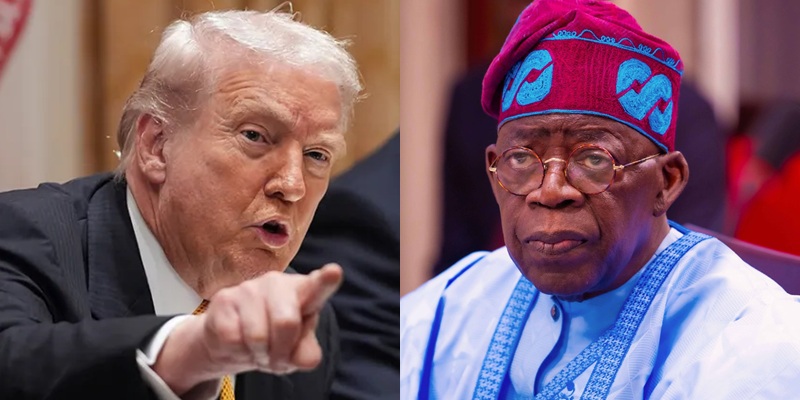
Dr. Von Batten’s post highlighted the optics of Tinubu pushing hard for a meeting with President Donald Trump at the UNGA while simultaneously resisting disclosure of his past investigation records.
The “Settled” Narrative
In Nigeria, the phrase “settle” is widely understood as slang for bribery.
According to Von Batten, reports that senior Nigerian officials are boasting about having “settled the Americans” risk undermining both Tinubu’s credibility and U.S. presidential integrity.
“Now, I doubt that the Nigerians bribed anyone in the Trump Administration,” Von Batten wrote.
“But agreeing to a mining deal with the Nigerian President who is fighting to keep his FBI and DEA drug-trafficking files hidden only strengthens the false ‘settled’ accusations,” he added.
Protecting U.S. Integrity
Von Batten stressed that “everything must be done to protect the integrity of the United States and our President,” warning that the optics of the mining deal could be politically damaging.
The lobbying firm’s intervention reflects growing concern in Washington that Nigeria’s domestic political controversies could spill over into U.S. diplomacy, particularly as Tinubu seeks to bolster his international legitimacy through high-profile agreements and meetings.
Nigerian Reaction
The post has already sparked debate across Nigerian social media, where suspicions about Tinubu’s past remain a recurring theme.
Critics argue that the mining deal’s timing appears calculated to curry favor with Washington, while supporters insist the agreement is a legitimate step toward economic diversification.
The Nigeria–U.S. mining MoU, intended to strengthen cooperation in critical minerals, has become entangled in political controversy.
With Tinubu’s past drug-trafficking investigation files still the subject of U.S. court battles, the deal’s timing at the UNGA risks amplifying unproven bribery claims.
While no conviction was ever recorded, ongoing FOIA litigation in Washington has revived scrutiny, and critics warn the timing of the MoU risks fueling bribery rumors that Tinubu is “settling” Americans to block release of his FBI/DEA files.
As Nigeria and the U.S. move forward, both governments face the challenge of ensuring that legitimate economic cooperation is not overshadowed by allegations that threaten to erode trust and credibility on both sides.
The 1990s Chicago Investigation
- Background: In the early 1990s, U.S. federal agencies investigated a heroin distribution network in Chicago. Financial records linked accounts to Bola Tinubu, then a corporate executive.
- Civil Asset Forfeiture: In 1993, Tinubu agreed to a civil forfeiture settlement of $460,000. Importantly, this was not a criminal conviction, and Tinubu was never indicted or arrested.
- FBI Confirmation: In August 2026, the FBI filed a sworn declaration confirming Tinubu was investigated in connection with drug-related crimes, though stressing this did not amount to a finding of guilt.
FOIA Proceedings and Court Orders
- Transparency Activist Aaron Greenspan filed FOIA requests in 2022–2023 seeking Tinubu’s FBI and DEA files.
- Judge Beryl Howell’s 2025 Ruling: Ordered the FBI and DEA to stop using “Glomar” responses (refusing to confirm or deny records) and to process non-exempt files.
- Thousands of Pages Released: Agencies produced heavily redacted documents, citing privacy and law-enforcement exemptions. Tinubu joined the case as an intervenor, fighting to keep portions sealed.
- FBI Declaration (2026): Officially acknowledged Tinubu was investigated, intensifying political debate in Nigeria.
Lobbying and Political Fallout
- Von Batten-Montague-York, L.C.: A U.S. lobbying firm has briefed Congress on Tinubu’s past, warning that the mining MoU could be misinterpreted as bribery.
- The firm stressed that while it doubts actual bribery occurred, the optics of Tinubu signing a deal while fighting FOIA disclosures are damaging.
- Atiku’s Lobbyist: The same firm, engaged by opposition candidate Atiku Abubakar, cautioned that U.S. diplomacy should not be mistaken for approval of Tinubu or his alleged past crimes.
Nigeria–U.S. Mining MoU
- Focus: Cooperation on critical minerals, digitization of geological data, and investment opportunities.
- Timing: Scheduled for signing at the UNGA in New York, coinciding with Tinubu’s push for a meeting with President Donald Trump.
- Controversy: Nigerian officials reportedly boasted of having “settled the Americans,” a phrase widely understood as bribery. This narrative risks undermining both Tinubu’s credibility and U.S. presidential integrity.
Political Implications
In Nigeria
- Fuel for Opposition: The FOIA disclosures and bribery rumors provide ammunition for Tinubu’s rivals ahead of the January 2027 election.
- Public Distrust: Many Nigerians view the mining deal skeptically, interpreting it as a transactional arrangement to shield Tinubu from damaging revelations.
In Washington
- Congressional Scrutiny: Lawmakers briefed on Tinubu’s past are wary of deepening ties without clarity on his record.
- Integrity Concerns: Analysts warn that U.S. engagement risks being perceived as tacit approval of a leader under investigation, potentially undermining America’s credibility in anti-narcotics diplomacy.
Apparently, President Tinubu’s legacy is now caught between two narratives: a statesman pursuing economic diversification through mining cooperation, and a leader haunted by unresolved questions from a 1990s heroin probe.
The FOIA litigation ensures his past remains under scrutiny, while the timing of the UNGA mining MoU risks amplifying suspicions of bribery.
For Nigeria, the stakes are high: the need to secure foreign investment without eroding trust in governance.
For Washington, the challenge is balancing strategic diplomacy with the imperative to protect U.S. presidential integrity.