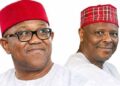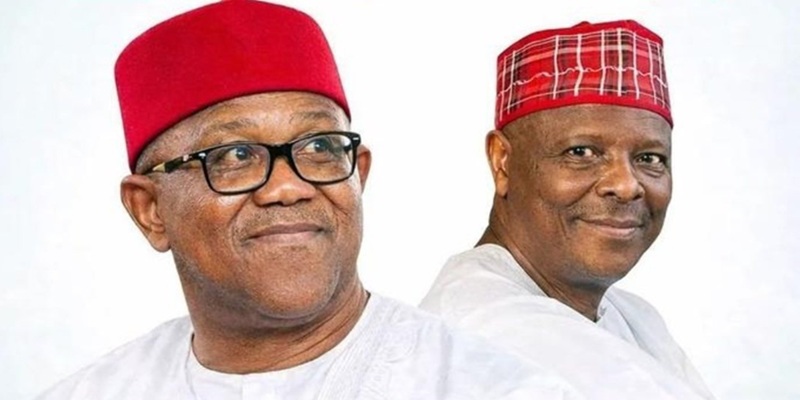

TD A chieftain of the Nigeria Democratic Congress (NDC), Nnamdi Dickson-Iroegbu, has praised Senator Rabiu Musa Kwankwaso for his response to what he described as propaganda targeting former Labour Party presidential candidate Peter Obi.
Dickson-Iroegbu, who also serves as the National Town Crier of the Village Boys Movement (VBM), said Kwankwaso’s intervention was timely and decisive, accusing unnamed political interests of promoting narratives intended to undermine Obi.
In a press statement dated October 20, 2026, Dickson-Iroegbu commended Kwankwaso for confronting the alleged propaganda and maintaining that the NDC would not be intimidated or distracted by political attacks.
He described the former Kano State governor’s response as a strong defence of Obi and an important intervention in the evolving political realignments ahead of the 2027 general elections.

Atiku Urged to Support Opposition Unity
Dickson-Iroegbu acknowledged former Vice President Atiku Abubakar as a respected elder and an influential political figure but argued that political experience alone would not determine the outcome of the 2027 presidential election.

He maintained that the opposition needed to reconsider its strategy and avoid fielding multiple candidates who could divide votes among parties seeking to challenge the incumbent administration.
According to him, Atiku should consider supporting the proposed Peter Obi–Rabiu Kwankwaso ticket in the interest of opposition unity and national balance.
The NDC chieftain also referred to what he described as an unwritten zoning understanding, arguing that supporting the proposed ticket would be consistent with the broader principles of national inclusion and federal character.
He cited Section 14(3) of the 1999 Constitution of Nigeria, which provides for the composition of the Federal Government and its agencies in a manner that reflects the federal character of Nigeria and promotes national unity.
However, Section 14(3) does not expressly require Atiku to withdraw from the presidential race or endorse a particular opposition candidate.
Obi–Kwankwaso Ticket Presented as Opposition Alternative
Dickson-Iroegbu argued that Nigerians seeking competence, inclusion and an alternative approach to governance were increasingly looking towards an Obi–Kwankwaso alliance.

He portrayed the proposed ticket as an opportunity to bring together political constituencies behind a common platform capable of challenging the ruling party in 2027.
He further maintained that opposition parties faced a critical choice: unite behind a common candidate or risk weakening their electoral prospects through fragmentation.
According to the statement, the proposed alliance represents an attempt to confront governance challenges, promote national cohesion and restore public confidence in Nigeria’s political leadership.
Dickson-Iroegbu insisted that the proposed ticket was not approaching the political contest from a position of weakness and would not seek the approval of what he described as an outdated political establishment.
‘A Winning and Healing Ticket’
Describing the Obi–Kwankwaso alliance as a “winning and healing ticket,” the NDC chieftain said the proposed partnership represented courage, political unity and a determination to address the country’s challenges.
He expressed the view that the 2027 elections should provide Nigerians with an opportunity to demand accountability and pursue a different direction for the country.

The statement concluded with a call for Nigerians and opposition political actors to support efforts aimed at building a united political alternative ahead of the next presidential election.
“A New Nigeria Is Possible,” Dickson-Iroegbu declared in his closing message.
Political Implications Ahead of 2027
The statement highlights the continuing debate over opposition coalition-building, presidential candidate selection and regional balance ahead of Nigeria’s 2027 general elections.
Whether the proposed Obi–Kwankwaso ticket can secure broader opposition support will depend on party structures, candidate decisions, coalition negotiations and the positions ultimately adopted by the political figures involved.