TDIn a dramatic legal turnaround, the Federal High Court sitting in Lokoja has vacated its earlier judgment of December 10, 2025, which had compelled the Independent National Electoral Commission (INEC) to register the Nigeria Democratic Congress (NDC) as a political party.
The ruling, delivered by Justice Isah Dashen, reopens a contentious chapter in Nigeria’s political and legal landscape, underscoring the delicate balance between judicial authority, electoral regulation, and party politics.
Court’s Ruling
Justice Dashen explained that the December 2025 order was constitutionally defective, as it was issued without joining all necessary and interested parties.
Central to the ruling was the Peace Movement Party (PMP), which had argued that its rights were directly infringed upon by the earlier judgment.
The court upheld the PMP’s application, noting that the NDC’s registration had relied on a logo previously submitted by the PMP to INEC.
Counsel to the PMP, Chikezie Ekeocha (C.S. Ekeocha), insisted that the oversight not only compromised the integrity of the registration process but also created a situation where one party’s identity was effectively appropriated by another.

Key Outcomes of the Ruling
- The December 10, 2025, judgment has been set aside.
- All actions taken pursuant to that judgment, including INEC’s registration of the NDC, are nullified pending further proceedings.
- The substantive suit will now commence afresh, with INEC, PMP, and NDC joined as parties.
- The status quo ante — the state of affairs before the December 2025 judgment — has been restored.
Background and Controversy
Following the December 2025 ruling, INEC had registered the NDC in February 2026, a move that immediately sparked controversy.
Rival political groups raised objections, questioning both the legitimacy of the registration and the speed with which INEC acted.
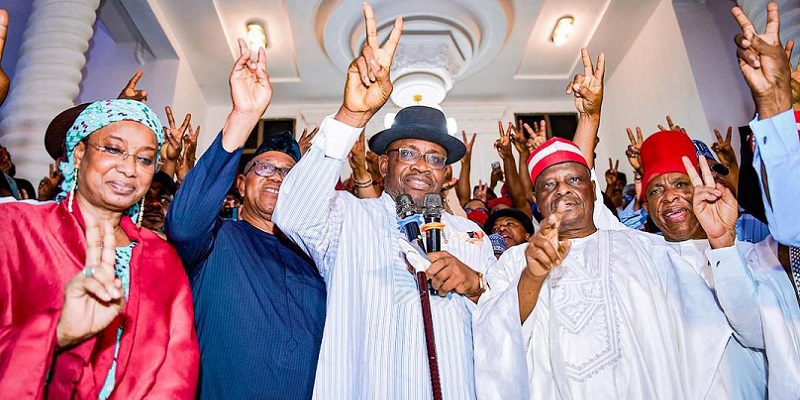
The NDC was quickly positioned as a potential platform for opposition realignments, with speculation that it could serve as a rallying point for dissatisfied factions ahead of the 2027 general elections.
However, the disputed logo and the absence of key parties in the original proceedings cast a shadow over the process.
Critics argued that the registration was rushed and lacked transparency, while supporters of the NDC hailed it as a breakthrough for political pluralism.
Implications for Nigeria’s Political Landscape
The ruling represents a temporary setback for the NDC, which now faces uncertainty about its legal status and future role in Nigeria’s political arena.

For the PMP, the decision is a vindication of its insistence on protecting its identity and rights within the electoral system.
More broadly, the case highlights the critical importance of due process in political party registration.
Nigeria’s political system, already marked by intense competition and frequent litigation, relies heavily on the judiciary to mediate disputes between parties and institutions.
This judgment reinforces the principle that shortcuts in legal procedures can undermine legitimacy and destabilize the political order.
What Comes Next
The fresh hearing will allow all parties — INEC, PMP, and NDC — to present their arguments on the merits of the registration application.
Central issues will include the disputed logo, compliance with constitutional requirements, and whether the NDC meets the criteria for recognition as a political party.

Observers note that the outcome could shape the dynamics of opposition politics in the run-up to the 2027 elections.
If the NDC is eventually registered, it may alter alliances and strategies among Nigeria’s political actors.
If not, the ruling could reinforce INEC’s gatekeeping role and limit the proliferation of new parties.
At the time of this report, no immediate reactions from NDC officials or associated figures were available. The case is expected to continue in the Federal High Court, Lokoja, with significant attention from political stakeholders nationwide.
This decision underscores the judiciary’s pivotal role in safeguarding constitutional order and ensuring fairness in Nigeria’s evolving democratic process.
It is a reminder that in the contest for political legitimacy, the rule of law remains the ultimate referee.