



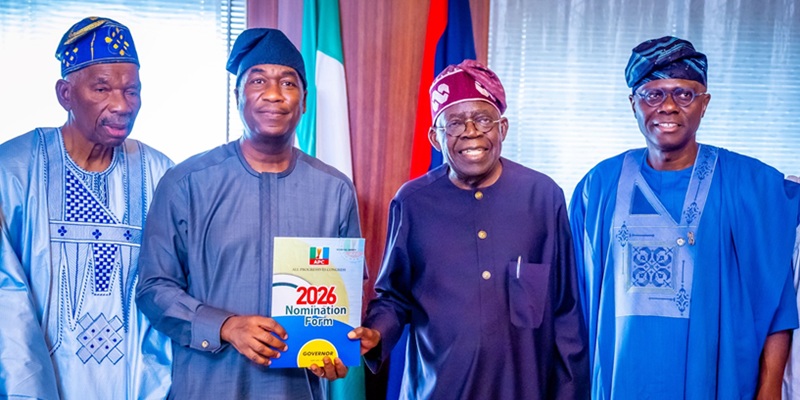

TDPresident Bola Ahmed Tinubu has formally endorsed Lagos State Deputy Governor Obafemi Hamzat as the All Progressives Congress (APC) consensus governorship candidate.
The move has intensified debate over internal party democracy and allegations of “state capture” in Nigeria’s commercial capital.
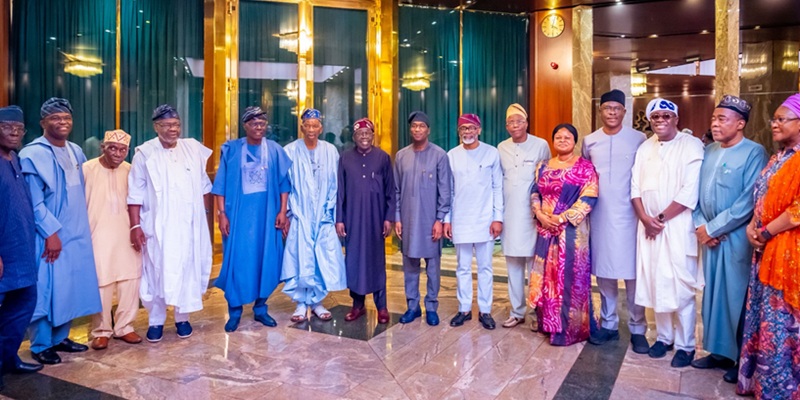
The endorsement reportedly took place during a high-level meeting with members of the Lagos Governance Advisory Council (GAC), the influential apex decision-making group within the Lagos APC.
The council was led by its chairman, Tajudeen Olusi, alongside Lagos State Governor Babajide Sanwo-Olu.
Sources familiar with the meeting said the President’s endorsement effectively settles the party’s governorship ticket ahead of the 2027 elections.
It reinforces the long-standing tradition of consensus candidacy within the Lagos APC.

Protagonists and Antagonists of Hamzat’s Endorsement
While party insiders argue that consensus arrangements help prevent divisive primaries and maintain unity, critics contend that the practice undermines competitive politics.
Political analysts describe the development as emblematic of “state capture”.
This is a situation where political power is concentrated within a narrow elite, limiting open contestation.
In this context, critics argue that Lagos politics increasingly operates through “selection” rather than “election”.
Key decisions in the state are made by party power brokers before reaching the broader electorate.
Opposition figures and civil society groups have raised concerns that such endorsements weaken democratic institutions.

Weakened democratic institutions are formed when aspiring candidates who may not belong to entrenched political networks are sidelined.
They warn that the absence of transparent primaries could discourage political participation and erode public confidence in the electoral process.
However, APC loyalists defend the process, noting that consensus candidacy is permitted under Nigeria’s electoral framework.
They argue that Hamzat’s technocratic background and experience in governance make him a suitable successor.
They emphasize continuity in policy direction and administrative stability in Lagos State.
Political Outlook of Lagos State
The endorsement also signals the enduring influence of Tinubu in Lagos politics, even as he serves at the national level.

Observers note that the GAC continues to play a pivotal role in shaping political outcomes in the state.
It often acts as the ultimate arbiter in leadership selection.
The political landscape is gradually shifting toward the 2027 general elections.
In the meantime, the controversy surrounding Hamzat’s emergence is likely to fuel broader conversations about internal party democracy, electoral competitiveness, and the balance between political stability and inclusive participation in Nigeria.