TDThe African Democratic Congress (ADC) has officially uploaded the names of Atiku Abubakar as its presidential candidate and Rotimi Amaechi as vice-presidential candidate to the Independent National Electoral Commission (INEC) nomination portal.
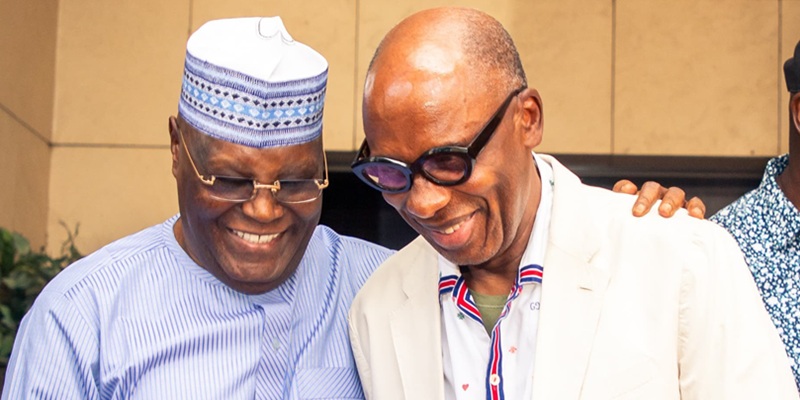
The announcement was made by ADC spokesperson Bolaji Abdullahi, who shared the update along with an image of the pair.
Party Statement
Bolaji Abdullahi wrote:
“We are pleased to announce that we have successfully uploaded the names and particulars of the African Democratic Congress (ADC) Presidential Candidate, Atiku Abubakar (GCON), and our Vice Presidential Candidate, Rotimi Amaechi (CON), to the nomination portal of the @INECNigeria.
“This marks another important step in our preparations for the 2027 general election and our commitment to offer Nigerians a credible alternative built on competence, unity, and national renewal.”
Background
- Atiku Abubakar: Former Vice President of Nigeria, who secured the ADC presidential ticket in May 2026 after defeating Amaechi in the primaries.
He previously contested elections under the PDP but has now aligned with ADC to strengthen opposition unity.
- Rotimi Amaechi: Former Rivers State Governor and Minister of Transport, brings southern political experience to the ticket, which the party frames as a unity alliance.
Political Significance
The Atiku–Amaechi pairing underscores ongoing realignments in Nigeria’s political landscape as parties finalize submissions ahead of the 2027 polls.
- Supporters hail the ticket’s blend of northern and southern experience.
- Internal ADC debates continue over the choice of Amaechi, reflecting broader tensions within the party.
Next Steps
With the formal upload completed, ADC now moves into the next phase of its campaign strategy.

It is now face with the task of positioning the Atiku–Amaechi ticket as a credible alternative to the ruling party and other opposition blocs.
The ADC’s formal submission of Atiku Abubakar and Rotimi Amaechi to INEC marks a decisive step in Nigeria’s 2027 election race.
It signals a unity-driven opposition strategy that could reshape the political contest.