


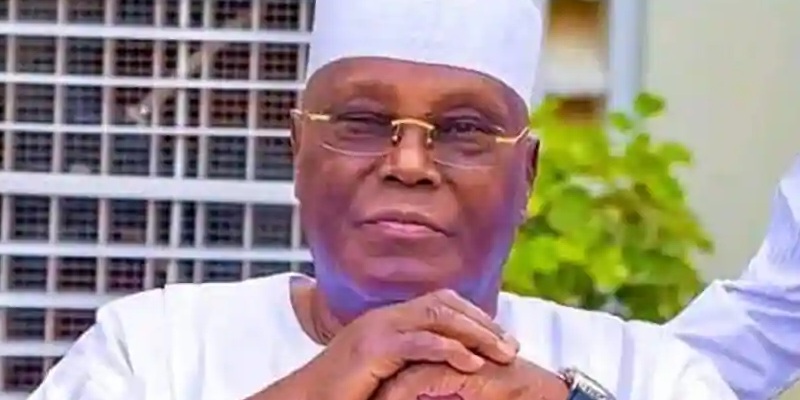

TD One remarkable thing about Atiku Abubakar’s bold position on fuel subsidy is that it has landed a political uppercut on the APC-led Federal Government.
Since Atiku declared that he would restore a targeted subsidy—not the old import racket perpetrated from the imposing building of the monstrous NNPC in Abuja’s Central Business District, but relief directed at ordinary Nigerians—the APC has struggled to provide a convincing response.
In its desperation to explain the supposed benefits of subsidy removal, the Federal Government has repeatedly indicted state governments, which are believed to appropriate both state and local government allocations with little accountability to the people.
In the coming weeks, President Bola Ahmed Tinubu may have to rein in some of his content creators and bring out his real economic experts to speak directly to Nigerians.
The Abuja landlord recently laughed off Atiku’s statement by arguing that Atiku did not even know that the NNPC had been commercialised.
He appeared to think that fuel subsidy was simply another name for the NNPC.

Such a response did not expose Atiku’s ignorance; it exposed the commentator’s limited understanding of the subject.
Fortunately, the duo of Reno Omokri and Femi Fani-Kayode—whom the President has effectively exiled from Nigeria through ambassadorial appointments, but who are allegedly yet to be formally settled in their countries of posting—have not jumped into this all-important discussion.
Perhaps even they understand that this debate is too serious to be reduced to the familiar business of defending every government policy. It is ultimately beyond the pay cheque of content creators.
The commercialisation of the NNPC does not, by itself, answer the fundamental question: should the government intervene to reduce the cost of an essential product whose price affects transportation, food, education, production and practically every aspect of national life? That is the discussion Nigerians deserve.
An average Nigerian does not need complicated economic grammar. He wants answers to simple questions.
- Has subsidy removal made food cheaper or more expensive?
- Is transportation cheaper today than it was before subsidy removal?
- Has it become easier for parents to send their children to school?
- Has the cost of running a small business gone down?
- Has the purchasing power of the average worker improved?
- What, precisely, has the ordinary Nigerian gained?
Whenever the APC-led Federal Government claims that governors now have more money, it almost sounds like an insult to Nigerians.

Are Nigerians expected to celebrate because more money is entering government accounts while less food is entering their homes?
Government revenue is not the same thing as citizens’ prosperity. My own community, Ukpor, provides a practical example.
While subsidy was still in place, Governor Willie Obiano commenced the road connecting Ukpor to Ozubulu through Umudike village and Ubu.
If completed, that road would have provided an important link between Ukpor in Nnewi South Local Government Area and Ozubulu in Ekwusigo Local Government Area.
Subsidy was removed, but somehow, the road also disappeared from the government’s priorities.
Recent videos trending across Ukpor social-media platforms indicate that the bridge connecting Ukpor to Ozubulu at that point is no longer accessible.

Weeds have reportedly overgrown the entire Ozubulu section in Ekwusigo Local Government Area, suggesting that this supposedly major road linking Nnewi South and Ekwusigo Local Government Areas has effectively been lost.
Even the bridge at Owerri Anude in Uhu Ebe, Ukpor, which was constructed through communal efforts under the auspices of the Ebe Development Union, was recently overwhelmed by flooding for the first time in its history, preventing pupils from going to school.
The most ridiculous situation is perhaps the Federal Government spur linking the Onitsha–Owerri Road to Ukpor and Ezinifite, where a major bridge collapsed.
Distress calls and appeals for urgent intervention were reportedly sent to both the Federal and Anambra State Governments, yet nothing was done.
This week, a philanthropist reportedly took it upon himself to intervene on that same road.
That is the irony of the entire subsidy-removal argument: the road was started when Nigerians still enjoyed fuel subsidy, but its vital infrastructure was abandoned during a subsidy-removal regime which, we are repeatedly told, has made substantially more money available to governments.
The people now pay more for fuel, food and transportation, yet private citizens and community unions are still compelled to undertake responsibilities for which governments receive increased allocations.
Before now, successive governors had undertaken identifiable road projects affecting Ukpor. Dr Chris Ngige constructed the Onuselogu Road, stretching from Awka-Etiti in Idemili South through Nnewi North and Ukpor to Iseke in Ihiala Local Government Area.
Peter Obi commenced the Ukpor Ring Road from Afor Ukpor towards Umunuko. Willie Obiano began the Ukpor–Ozubulu Road, which has now become one of the monuments of the “more money” era—abandoned despite the increased allocations repeatedly celebrated by the Federal Government.
Since subsidy removal, the only noticeable road intervention in Ukpor has been the completion of part of the Ring Road originally started by Peter Obi.
Even that was around the section where Governor Obiano had already constructed drainage to make the residence of the late nationalist, Dara Mbazulike Amaechi, accessible for his burial.
So, where is the evidence of this new prosperity?
What has the “governors now have more money” regime brought to Anambra State, particularly communities such as Ukpor?
Is it another airport project, being pursued in secrecy less than four years after the completion of the Umueri airport, while important roads connecting communities remain abandoned?
These are legitimate questions. They cannot be answered by content creators laughing before their cameras or enlarging their social-media viewership.
If the Federal Government’s defence is that governors receive more money, then it has merely confirmed one of the strongest arguments against its approach: money removed from the pockets of millions of Nigerians has been transferred to governments without adequate guarantees that it will be used for their benefit.
The President controls only the Federal Government’s share of the savings.
State and local government shares are largely left to governors whose priorities may have little connection with the immediate suffering of their people.
One governor may build roads, schools and hospitals.
Another may embark on a second or even third airport, as is alleged to be the case in Anambra State, while roads in Ukpor remain barely accessible, Ukpor General Hospital is left overgrown with weeds, and Ndi Ukpor are still required to pay monthly security levies for their own protection.
Other governors may simply relocate to Abuja while allegedly flying official documents from their states by private jet to Abuja for signature.
Yet another may leave behind little more than expensive drinks and unpaid obligations.
A national economic policy cannot depend entirely on the personal reputation or discretion of individual officeholders.
There must be a transparent and enforceable system for ensuring that the people from whose pockets the subsidy was removed receive a direct and measurable benefit.
This is why Atiku’s intervention is important. He has not merely criticised the present government. He has placed a policy alternative on the table.
He says he will restore a targeted subsidy, protect purchasing power and reduce the burden of transportation, food and production.
The responsibility now falls on the APC to explain its own policy—not through mockery, abuse or slogans, but through evidence.
How much has been saved? Where is the money? What has it achieved?
How has it improved the daily life of the Nigerian who pays more for fuel, food, transportation, electricity, education and almost everything else?
This is campaign season, and the discussion must continue. Campaigns are not periods for content creators to enlarge their viewership.
They are opportunities for political parties and candidates to explain how they intend to govern, what policies they will pursue and how those policies will improve the lives of the people.
Atiku Abubakar has started that conversation. The APC must now respond—not with laughter, but with facts.
Obunike Ohaegbu writes from his village in Anambra State.