


TDThe ECOWAS Observation Mission for Sunday’s presidential election in Benin has congratulated opposition candidate Paul Hounkpe on conceding defeat and called for a national dialogue to promote political inclusion and social cohesion in the country.
Hounkpe congratulated the Finance Minister and the ruling Coalition’s victorious candidate, Romuald Wadagni, before the National Electoral Commission, CENA, declared the provisional results, giving Wadagni 94.05% of the votes against Hounkpe’s 5.95%.
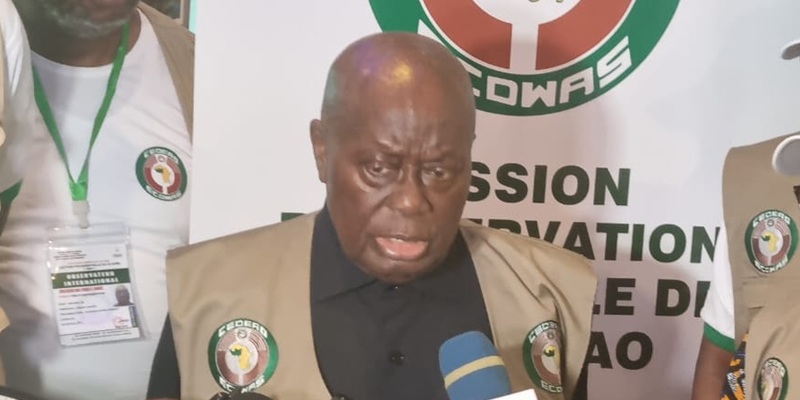
In its 15-page Preliminary Declaration read in Cotonou on Tuesday, 14 April, by the Head of Mission, former Ghanaian President Nana Akufo-Addo, the Mission “encouraged the authorities and political actors to continue their efforts aimed at strengthening the national dialogue, in the spirit of consensus and inclusion, with a view to consolidating social cohesion and national unity in Benin.”
Before the election, civil society organisations and opposition groups complained about exclusion and the shrinking of the civic space in the country.
As part of its recommendations, the ECOWAS Mission also urged the relevant authorities to take the necessary measures to explain electoral legal texts and to provide a precise timeline for the release of election results to reinforce transparency and credibility in the electoral process.
Furthermore, efforts should be doubled to improve the system of automatic inclusion of citizens 18 years and above on the electoral register, to be accompanied with citizen moblisation, sensitisation and civic education, to enhance public understanding of the electoral processes.

The ECOWAS Mission also mentioned the need for specificity on citizen participation and voter turnout.
It encouraged journalists and the media to be professional in disseminating information and the truth, and to respect the ethics of their profession.
The Head of Mission said that ECOWAS’ 150 Long- and Short-Term observers monitored the electoral process at 1,253 of the 17,350 voting units in the country’s 12 Administrative Departments.
He added that in the majority of the polling centres visited by the observers, balloting took place within the specified official period of between 7 am and 4 pm local time.
In a few isolated stations, voting started around 5 am or 6 am and closed slightly after 4 pm, the Mission reported.
The head of Mission recalled the Mission’s engagements with the Benin political stakeholders.

Such stakeholders include government officials, the opposition, civil society organisations, and the Constitutional Court, which has the final say on election matters.
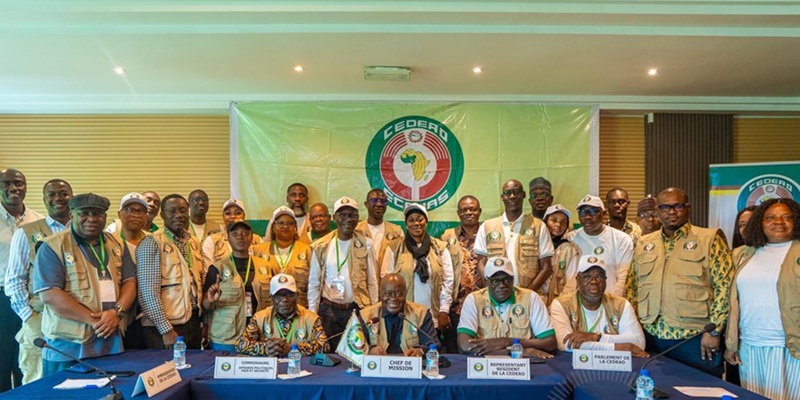
He noted that ECOWAS sent a fact-finding mission to Benin after the 11 January 2026 parliamentary and municipal elections and also supported the presidential election with US$260,000.
Ambassador Abdel-Fatau Musah, the ECOWAS Commissioner for Political Affairs, Peace and Security, presented the political and legal context to the elections, including the constitutional reforms.
The Head of the African Union Observation Mission, former Burundi President Sylvestre Ntibantunganya and Amb. Afo Salifou, Chair of the Expert Committee of le Conseil de l’Entente, also read their delegations’ Preliminary Reports at the same conference.
They echo the ECOWAS Mission’s observations on the generally peaceful and orderly conduct of the electoral process as well as the challenges and recommendations for future improvement.