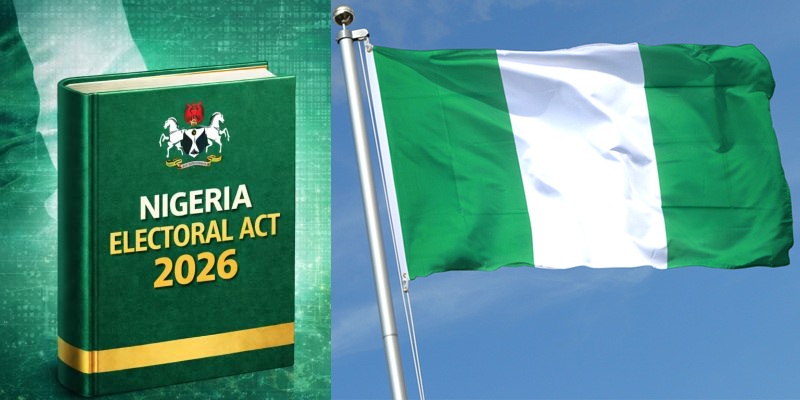
TDFormer Chairman of the Independent National Electoral Commission (INEC), Professor Attahiru Jega, has sounded a strong warning over provisions in Nigeria’s newly enacted 2026 Electoral Act.
Jega cautioned that unless urgent amendments are made, the credibility of the forthcoming 2027 general elections could be severely compromised.
Jega made the remarks while speaking at the public presentation of Reflections on Nigeria’s 2026 Electoral Act and Electoral Democracy.
Delivering his reflections at the public presentation, Jega praised lawmakers for replacing the 2022 Act within one electoral cycle.
He described it as a commendable step toward strengthening Nigeria’s democratic framework.
However, he stressed that several clauses in the new law are fraught with ambiguities and loopholes that could be exploited by political actors, thereby undermining electoral integrity.

Key Innovations in the 2026 Act
The Act introduces reforms designed to modernize Nigeria’s electoral process:
- Mandatory deployment of BVAS (Bimodal Voter Accreditation System): Fingerprint and facial recognition are now compulsory for voter accreditation at all polling units.
- Electronic transmission of results: Results must be transmitted electronically, though the law permits manual collation if technology fails.
- Party primaries restricted to direct and consensus methods: Indirect primaries have been eliminated to broaden participation.
- Digital membership registers: Political parties must maintain and submit comprehensive digital registers to INEC before primaries.
- New voter ID requirements: Registration is now limited to birth certificates, Nigerian passports, and National Identification Numbers (NIN).
- Campaign finance ceilings: Presidential candidates are capped at ₦10 billion, governorship candidates at ₦3 billion, and senatorial candidates at ₦500 million.
These provisions, Jega noted, represent “value additions” that could enhance transparency and accountability if implemented faithfully.
Jega Notes Grey Areas and Potential Risks
Despite these reforms, Jega highlighted three critical weaknesses:
- Exclusion of qualification as a ground for election petitions (Section 138(1)):
By removing qualification disputes from post-election challenges, the Act risks enabling unqualified candidates to contest and hold office without legal scrutiny. - Removal of courts’ jurisdiction in party affairs (Section 83(5)):
This sweeping provision could shield political parties from accountability, even in cases where internal decisions violate constitutional rights or democratic norms. - Hybrid transmission of results (Section 60(3)):
The fallback to manual collation, Jega warned, is dangerously vague and could be exploited by “do-or-die politicians” to manipulate outcomes, especially given Nigeria’s history of electoral malpractice.
“A good legal framework is a necessary condition for electoral integrity, but not a sufficient one.
“Other requirements include the democratic character of political parties, enlightened citizenry, and institutions that discharge their responsibilities with integrity,” Jega emphasized.
Recommendations for Reform by Jega
Jega urged the National Assembly to act swiftly, amending the Act at least six months before the 2027 elections, in line with AU/ECOWAS protocols.

His recommendations include:
- Unbundling INEC:
Assigning separate agencies to prosecute electoral offenders, regulate political parties, and manage constituency delimitation, allowing INEC to focus solely on election conduct.
- Reducing campaign finance limits:
Current ceilings entrench the monetisation of politics; lower thresholds would encourage fairer competition.
- Strengthening INEC’s independence:
Divesting presidential powers over the appointment of INEC commissioners to eliminate perceptions of executive interference.
- Clarifying result transmission procedures:
Ensuring electronic transmission is the default, with secure back-end systems rather than vague hybrid models.
Broader Implications and Conclusion
Jega’s intervention comes at a time of heightened public concern over Nigeria’s democratic trajectory.

He warned that “judicial rascality” and reckless interpretation of electoral laws by some judges could further erode trust in the judiciary, which remains a critical safeguard for democracy.
He also stressed that reforms must be inclusive, transparent, and nationally owned to prevent perceptions of hidden agendas.
The former INEC chairman underscored that electoral integrity is not only about laws but also about the political culture of parties, the vigilance of citizens, and the professionalism of institutions.
Without these, even the best legal frameworks risk being undermined.
While the 2026 Electoral Act represents progress, Jega’s critique highlights the urgent need for refinement.
His call for amendments, institutional restructuring, and stronger oversight reflects a broader struggle to consolidate Nigeria’s democracy.
As the 2027 general elections approach, the credibility of the process will hinge not only on the letter of the law but on its faithful and transparent implementation.