


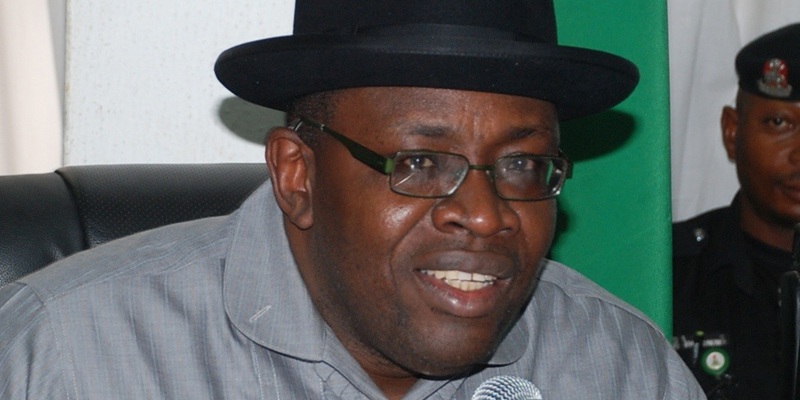

TDThe National Democratic Congress (NDC) is facing internal turbulence following a public exchange between party leader Henry Seriake Dickson and activist-politician Aisha Yesufu.
The dispute stems from Dickson’s televised remarks on Arise TV, where he addressed irregularities in the party’s primaries.
He also later claimed that Yesufu had rejected a House of Representatives ticket offered by himself and presidential candidate Peter Obi, who rather insisted on a Senate ticket.
Dickson’s Position
In his interview, Dickson acknowledged “noticeable irregularities” in the primaries.
He, however, urged aspirants to remain patient, citing the party’s infancy and the compressed electoral calendar.
He argued that the NDC, barely four months old, had been forced to conduct membership registration, congresses, conventions, and primaries within a short timeframe.

Dickson blamed the Electoral Act’s compulsory direct primaries, imposed by the APC-led majority, for widespread irregularities across parties.
He insisted that the NDC had performed admirably given its circumstances, noting that no party had formally announced primary results.
“The results of party primaries are not announced like school results.
“They are communicated through formal channels,” Dickson said, urging members to disregard social media claims.
He emphasized that reconciliation was underway, with a committee approved by the party’s NEC to manage grievances.
He promised that future primaries would be technologically driven to avoid similar issues.

Dickson also thanked supporters for their sacrifices.
He stressed that the NDC was self-funded and committed to the success of its presidential team, Peter Obi and Senator Rabiu Musa Kwankwaso.
He called on stakeholders to take responsibility for reconciliation, warning against blame-shifting.
Aisha Yesufu’s Response
Aisha Yesufu, a prominent activist known for her role in the #EndSARS movement, responded sharply on social media.
She accused Dickson of insecurity and poor leadership focus, arguing that his interview was self-centered rather than reassuring to party members.
Yesufu rejected Dickson’s claim that she had refused a House of Representatives ticket.

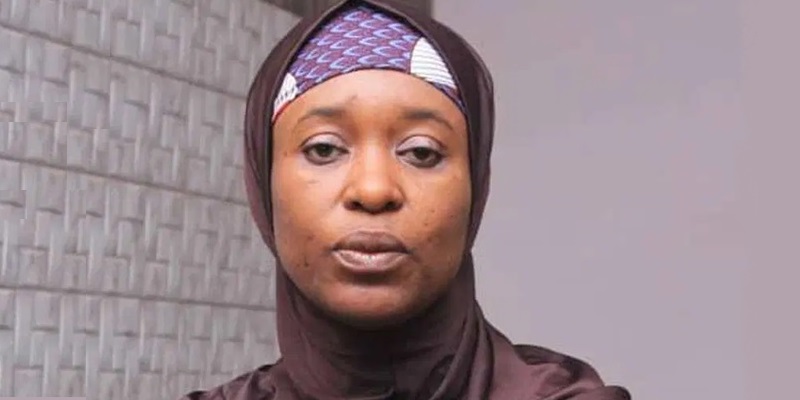
She insisted she had played “field politics” and followed due process despite cancelled Senate primaries in the FCT.
“It looked as if you were insecure and in competition with your Presidential Candidate.
“Your first one-on-one interview after primaries, instead of selling your candidates and giving confidence to people on how set the road to winning the 2027 election was, you made it about yourself.”
She warned that Dickson risked reducing the NDC to a “Special Purpose Vehicle” rather than a serious political party aiming to win the 2027 elections.
According to her, the party leader should have focused on pacifying aggrieved aspirants and rallying supporters instead of antagonizing them.
Yesufu urged Dickson to take full responsibility for the party’s shortcomings, stressing that accountability and humility were essential for growth.
“The party is young. It was overwhelmed. Mistakes will be made.
“Accepting the mistakes and being accountable is how the party will get better,” she said.
She concluded with a quote from motivational speaker Jim Rohn:
“If what you did yesterday is still looking big to you today, then you are not doing enough.”
Implications for NDC
The exchange underscores growing tensions within the NDC as it navigates its first electoral cycle.
Dickson insisted that the party is “on the ascendancy”.
Meanwhile, Yesufu’s remarks highlight dissatisfaction among aspirants and supporters who feel sidelined.
With the 2027 general elections looming, the NDC faces the dual challenge of reconciling internal divisions and projecting unity to the electorate.
Analysts note that the party’s ability to manage grievances and present a cohesive front will be critical to its credibility as a viable alternative in Nigeria’s political landscape.