
TD The 2026 edition of the Phillips Consulting State Performance Index (pSPI) has ranked Abia State highest in overall citizen satisfaction with governance, scoring 3.86 out of 5, while neighbouring Anambra State trailed at 23rd place.

The findings highlight the uneven distribution of public confidence across Nigeria’s 36 states and the Federal Capital Territory.
It underscored the gap between rising state revenues and lived experiences of citizens.
Citizen Satisfaction Rankings
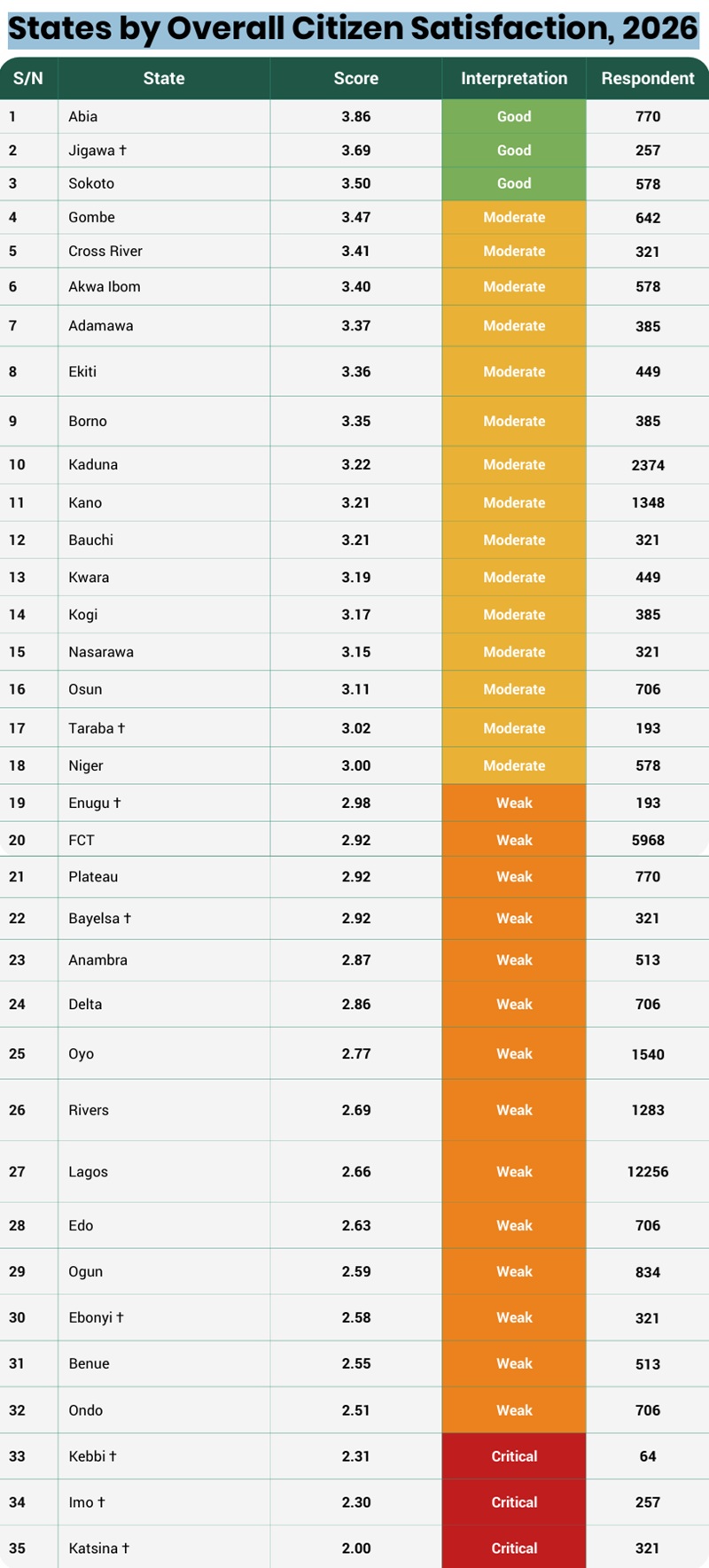
According to the report, Abia’s score of 3.86 placed it firmly at the top of the national table, followed by Jigawa (3.69), Sokoto (3.50), Gombe (3.47), and Cross River (3.41).
Other states in the top 10 included Akwa Ibom (3.40), Adamawa (3.37), Ekiti (3.36), Borno (3.35), and Kaduna (3.22).
Notably, six of the top 10 states are located in Northern Nigeria — Jigawa, Sokoto, Gombe, Adamawa, Borno, and Kaduna.
The development suggests that citizen satisfaction is not strictly tied to resource wealth but to governance delivery and institutional performance.
Meanwhile, Anambra, despite its relatively strong revenue base, ranked 23rd, reflecting weaker citizen sentiment compared to its South-East peers.
Methodology and Caveats
The pSPI blends 70% objective fiscal and performance data with 30% citizen perception surveys, creating a multidimensional view of governance.
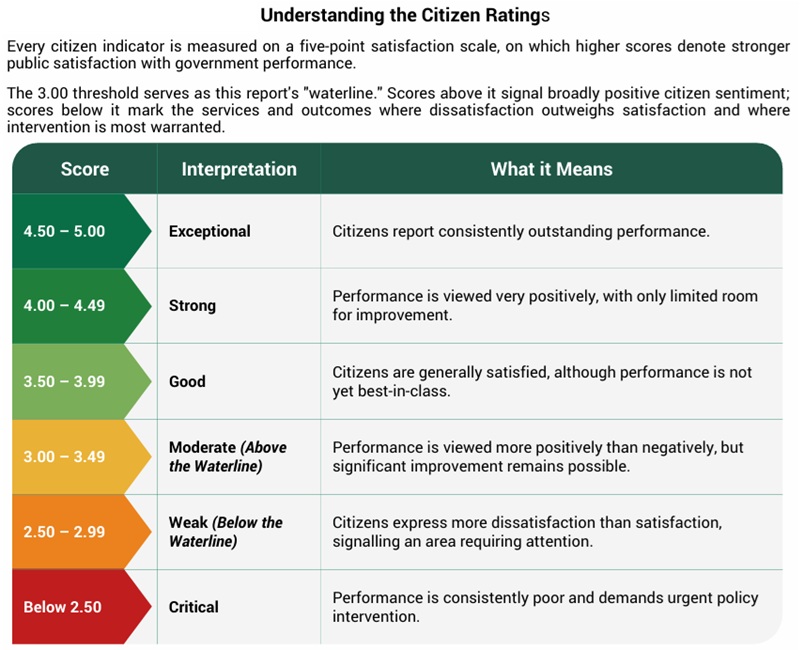
Citizen satisfaction scores are based on a five-point scale, with 3.0 as the “waterline” between dissatisfaction and satisfaction.
- Small Samples: States such as Jigawa had relatively modest survey samples, meaning their results should be interpreted as directional rather than definitive.
- Exclusions: Zamfara and Yobe were excluded from the satisfaction rankings due to insufficient survey responses, though they were assessed on fiscal indicators.
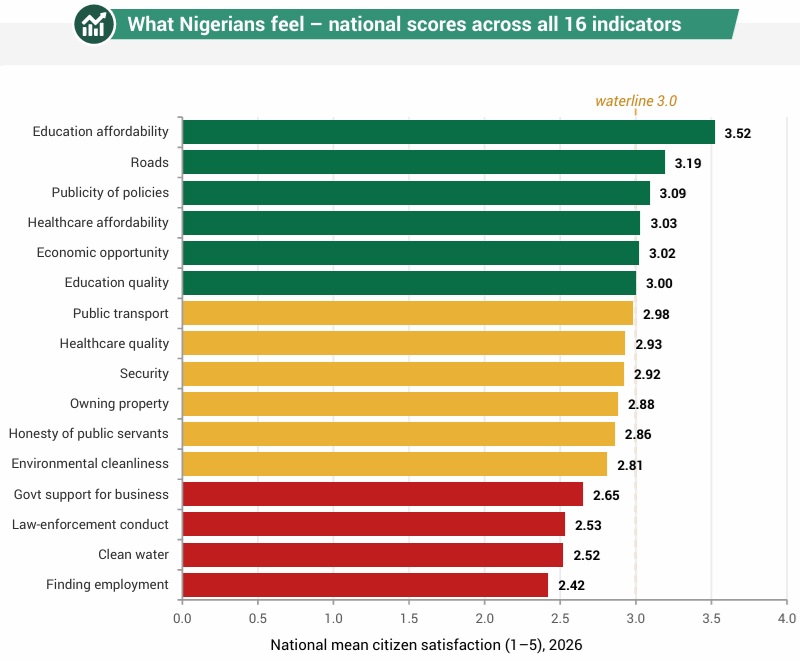
Nationally, the average citizen satisfaction score hovered around 2.90/5.
This indicates that most Nigerians remain dissatisfied with governance outcomes despite rising revenues from subsidy removal and tax reforms.
Key Insights
- Abia’s Performance: Abia’s citizens rated their state highly not only in overall governance but also in security perceptions and public transport quality, making it a standout performer in the South-East.
- Northern Gains: Gombe and Borno recorded strong satisfaction scores, reflecting improvements in healthcare, infrastructure, and post-conflict recovery efforts.
- Cross River & Akwa Ibom: Both South-South states scored above 3.40, showing that resource-rich states can achieve positive sentiment when revenues are translated into visible service delivery.
- Lagging States: Despite Lagos’s revenue dominance, its citizen satisfaction score fell below the national average.
It reinforces the report’s central finding that wealth does not automatically translate into satisfaction.
National Context
The 2026 pSPI report situates these findings within Nigeria’s broader economic and political landscape.
Following subsidy removal and naira float reforms, state revenues rose sharply, with capital spending surpassing recurrent expenditure for the first time.
Yet, as the World Bank noted in its “Building Momentum for Inclusive Growth” report, these fiscal windfalls have not yet translated into felt progress, with over 60% of Nigerians still living in poverty.
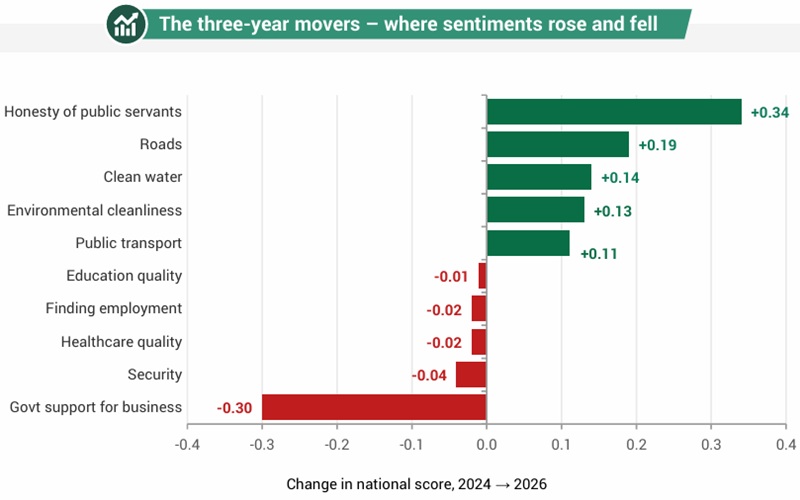
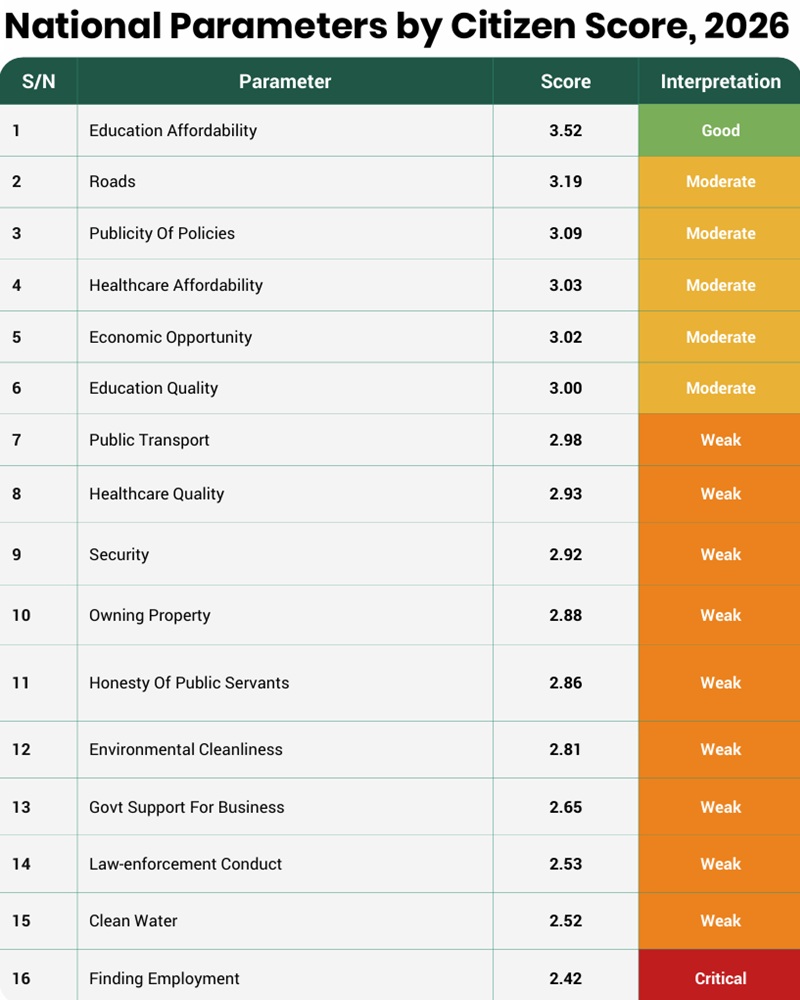
The pSPI’s citizen satisfaction scores thus serve as a reality check: while states may boast stronger fiscal indicators, citizens continue to judge governance by the quality of services they experience daily — from clean water and healthcare to security and employment opportunities.
Regional Patterns
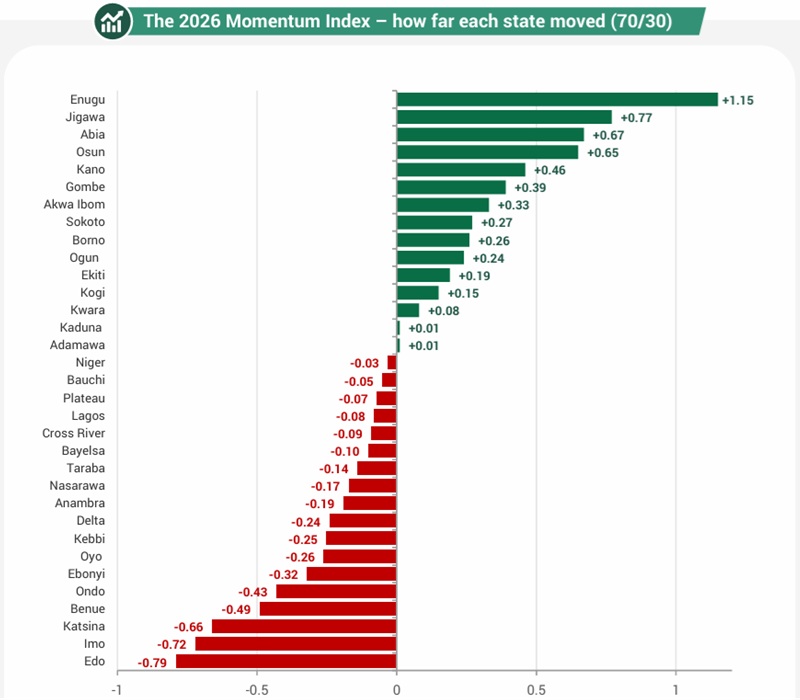
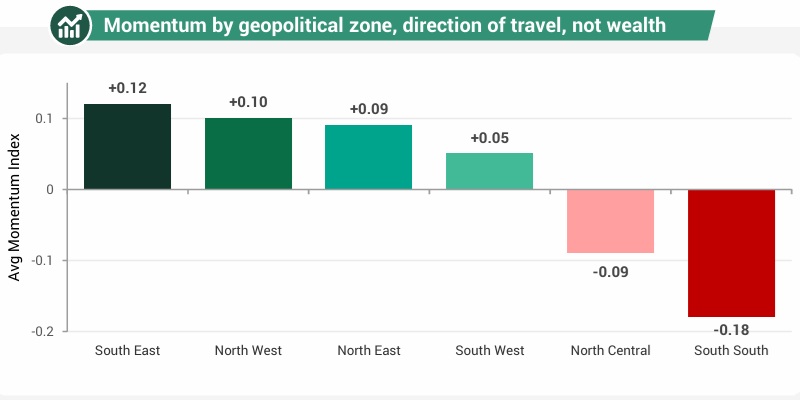
- South-East: Abia’s strong showing contrasts sharply with Imo’s poor performance and Anambra’s middling rank, illustrating wide disparities within the zone.
- North-West: Jigawa’s fiscal discipline and Kano’s social-sector scale boosted satisfaction, despite the region being the epicenter of banditry.
- North-East: Gombe and Borno’s recovery efforts lifted the zone’s average, showing how deliberate delivery can improve sentiment even in fragile contexts.
- South-South: Despite commanding Nigeria’s oil wealth, the zone trailed in overall momentum, with Edo and Bayelsa recording declines.
- South-West: Lagos’s revenue machine did not translate into higher satisfaction, while Osun and Ekiti fared better due to improvements in service delivery.
Implications
The report’s findings reinforce a critical lesson: governance and delivery, not resource endowment, determine citizen satisfaction.
States with modest revenues but deliberate reforms — such as Jigawa and Gombe — outperformed wealthier counterparts.
For policymakers, the rankings highlight the urgency of converting fiscal gains into tangible improvements in citizens’ lives.
For investors and development partners, the pSPI offers a credible evidence base to assess governance risks and opportunities across Nigeria’s subnational landscape.
Conclusion
Abia’s top ranking in citizen satisfaction underscores the importance of service delivery and governance reforms in shaping public confidence.
Conversely, Anambra’s 23rd-place finish reflects the challenges of translating fiscal strength into citizen trust.
With national satisfaction averaging below 3.0, the report makes clear that Nigeria’s states must do more to bridge the gap between rising revenues and lived realities.
As the federation approaches another election cycle, the pSPI provides a sobering reminder: citizens measure progress not by fiscal windfalls, but by the services they experience every day.