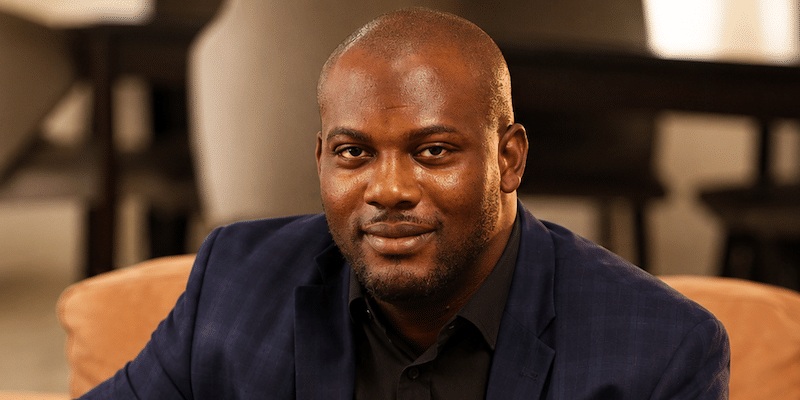
TD A total of 40,757 students have registered to participate in the 2027 South-East Maths and Science Olympiad, according to Alex Onyia, one of the organisers of the initiative.
Onyia announced the development in a social media post, describing the competition as the largest academic competition in Africa.
He said the initiative is designed to identify, develop and nurture young talents who could play a major role in Africa’s future industrial and technological development:
“We now have 40,757 students registered to participate in the 2027 South East Maths and Science Olympiad.
“This is now the largest academic competition in Africa.
“We are identifying and grooming the talents who will drive Africa’s industrial revolution.”
‘Building Africa’s Greatest Workforce’
Onyia said the organisers have set a long-term target of developing what he described as Africa’s greatest workforce within the next decade.
According to him, the focus is not merely on conducting an academic competition but on creating a pipeline for identifying exceptional students and equipping them with the knowledge and skills required to contribute to economic transformation.
“Within the next 10 years, we are determined to build the greatest workforce in Africa,” he said.

He added: “The future is being built, one child at a time.”
Support for Skills-Based Development
The announcement has generated enthusiastic reactions online.
Supporters describe the initiative as an important investment in the intellectual and technological future of the South-East.
Unwujere O. argued that societal transformation should begin with developing people capable of sustaining strong institutions and productive economies.
He wrote that “revolution is not chaos or replacing politicians” but a gradual process of “building minds that are capable of sustaining a system or society.”
He further argued that every successful nation must focus on industrial development rather than relying solely on political leadership or hoping for an individual “messiah” to transform society.

‘South-East Can Become Technology Hub’
Another commentator, Dee Macé, described the growing participation as “a great win for the present and the future of the South East and of Nigeria.”
He expressed optimism that the initiative could contribute to making the South-East a major technological centre on the continent.
“The SE shall be the technological hub of Africa,” he wrote.
Another supporter, identified as PapaAkum1, expressed strong personal support for Onyia and prayed for his continued ability to pursue the initiative.
Focus on Mathematics and Science
The scale of registration highlights the potential demand for programmes that place mathematics, science and technical education at the centre of youth development.
Competitions of this nature can provide students with opportunities to test their abilities, develop problem-solving skills and compete with peers beyond their immediate schools and communities.

They can also help identify students with exceptional aptitude in science, technology, engineering and mathematics (STEM), potentially creating a talent pool for universities, research institutions and technology-driven industries.
Long-Term Economic Implications
The organisers’ emphasis on workforce development reflects a broader argument that sustainable economic transformation depends on investment in human capital.
In the South-East, technology, manufacturing, entrepreneurship and private enterprise already play significant roles in the regional economy.
Advocates believe that systematically identifying talented young people could strengthen the region’s future industrial capacity.
However, the success of such an ambition will depend not only on identifying talented students but also on providing sustained access to quality education, laboratories, mentorship, scholarships and opportunities for advanced study.
With more than 40,000 students already registered, the 2027 South-East Maths and Science Olympiad is positioning itself as a potentially significant platform for developing the next generation of Nigerian scientists, engineers, innovators and entrepreneurs.
Onyia’s declaration that “the future is being built, one child at a time” captures the central philosophy behind the initiative: that Africa’s industrial transformation must begin with deliberate investment in the minds and capabilities of its young population.