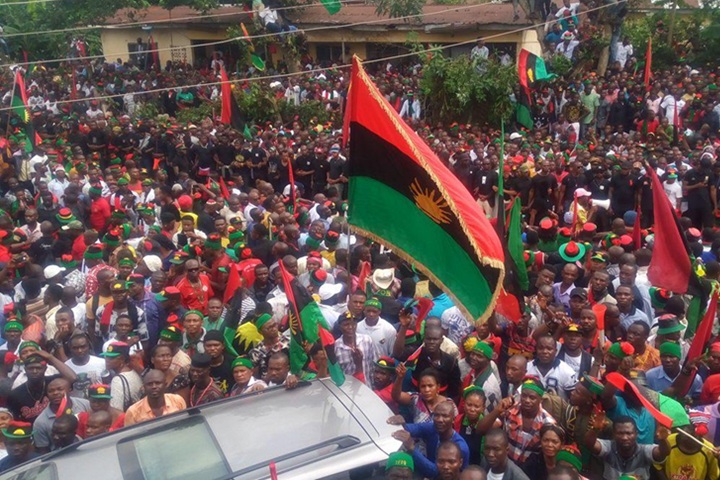

 ABUJA, Nigeria — Human rights lawyer Aloy Ejimakor has criticised the 20-year prison sentence imposed on Paul Okechukwu, a self-confessed member of the Indigenous People of Biafra (IPOB).
Ejimakor describing the punishment as evidence of what he alleges is a double standard in Nigeria’s counterterrorism policy.
He argued that the sentence was disproportionate because the charge linking Okechukwu to an attack that killed two security operatives was withdrawn by the prosecution and struck out by the court.
He contrasted Okechukwu’s imprisonment with the Federal Government’s rehabilitation and reintegration programme for former Boko Haram insurgents.
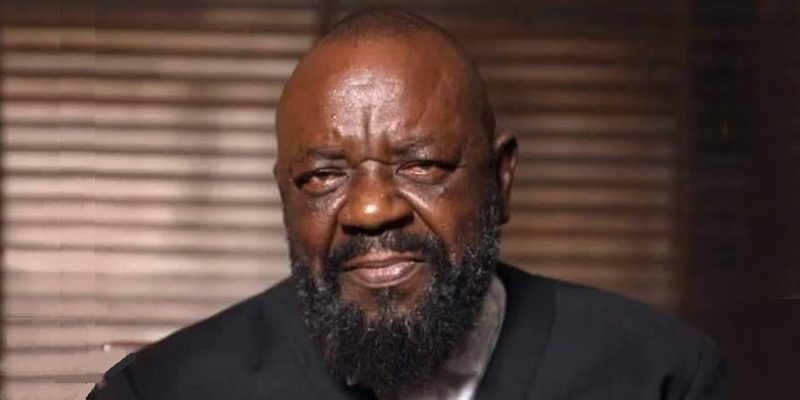
Ejimakor argued that the difference in treatment raises serious questions about fairness, equal protection under the law and national cohesion.
In a statement published on social media, he alleged that the disparity amounted to ethnic persecution against the Igbo.

Court Sentences Okechukwu to 20 Years
The Federal High Court in Abuja, presided over by Justice Hauwa Yilwa, sentenced Okechukwu, 48, to 20 years’ imprisonment on Thursday, October 22, 2026.
According to reports, Okechukwu pleaded guilty to a charge of belonging to the proscribed IPOB in Imo State in 2021.
The prosecution brought the charge under Section 16 of the Terrorism (Prevention) (Amendment) Act, 2013.
A second count accused him of participating in an attack in which two security operatives were killed.
Okechukwu pleaded not guilty to that allegation.
Attorney-General of the Federation and Minister of Justice Lateef Fagbemi, who led the prosecution, subsequently withdrew the second count, prompting the court to strike it out.

The court then convicted Okechukwu on the membership charge and imposed a 20-year sentence.
It directed that the term run from the date of his arrest and ordered his rehabilitation and deradicalisation after completing the sentence.
The reports also stated that a Department of State Services witness, identified in court as ABC, alleged that Okechukwu had been involved in terrorist activities, including attacks on security personnel.
The witness tendered an investigation report that was admitted in evidence.
The distinction is important: the attack-related count was withdrawn, but the prosecution also presented evidence alleging broader involvement in terrorist activities.
The publicly reported proceedings do not establish that Okechukwu was convicted of the specific attack alleged in the withdrawn count.

Why Ejimakor Is Challenging the Sentence
Reacting to the judgment, Ejimakor argued that Okechukwu had been punished with exceptional severity despite the withdrawal of the allegation directly connecting him to a fatal attack.
He maintained that the case demonstrated how an individual could receive a lengthy prison sentence for membership of a proscribed organisation even when a separate allegation of participation in a deadly attack did not proceed to conviction.
The lawyer’s central argument is that the justice system should distinguish between membership of a prohibited organisation and proven personal responsibility for killings or other violent crimes.
His comments raise a wider question about the proportionality of terrorism-related sentences, particularly where the prosecution relies on a guilty plea to membership rather than a conviction for a specific violent act.
However, Okechukwu’s guilty plea means the court did not sentence him solely because of an unproven allegation.
It convicted him of the membership offence to which he pleaded guilty.
Whether the sentence was legally correct, constitutionally sound or open to challenge would depend on the applicable legislation, the court record and any arguments advanced through the appellate process.
Boko Haram Rehabilitation Programme Fuels Debate
Ejimakor also contrasted Okechukwu’s imprisonment with the government’s rehabilitation and reintegration programme for former Boko Haram insurgents.
Nigeria operates Operation Safe Corridor, a government-led initiative that provides deradicalisation, rehabilitation and reintegration support to eligible former insurgents.
The programme includes psychological support, vocational training and assistance intended to facilitate participants’ return to civilian life.
The National Emergency Management Agency confirmed in an April 22, 2025, statement that it had delivered relief materials in support of the programme for repentant former insurgents.
The programme is part of the government’s non-kinetic approach to addressing insurgency in the North-East.
However, participation in a rehabilitation programme does not necessarily mean that every former insurgent has been granted immunity from prosecution or released without legal consequences.
The circumstances of individual participants, including whether they surrendered, were accused of particular offences or had been convicted, can differ significantly.
Consequently, a direct comparison between Okechukwu’s case and the treatment of former Boko Haram fighters requires evidence about the legal status, criminal conduct and disposition of each group of cases.
Nevertheless, Ejimakor argues that the apparent contrast in the government’s approaches deserves public scrutiny, especially where individuals accused of participating in mass violence may qualify for rehabilitation while another person receives a lengthy prison sentence for membership of a proscribed organisation.
What Does Nigerian Law Prescribe?
The legal basis of the sentence is central to the controversy.
Section 16 of the Terrorism (Prevention) (Amendment) Act, 2013, criminalised membership of a terrorist group or a proscribed organisation and prescribed imprisonment of at least 20 years upon conviction.
The Terrorism (Prevention and Prohibition) Act, 2022, subsequently replaced the earlier legislation and contains provisions addressing membership of terrorist groups and proscribed entities.
Reports of the Okechukwu proceedings state that the prosecution relied on the 2013 amendment for the membership charge and argued that the law prescribed a minimum sentence of 20 years.
The precise statutory provisions applicable to the alleged conduct in 2021, and the legal basis for the sentencing procedure used in 2026, are matters that would require examination of the charge, the court’s ruling and the complete case record.
The fact that the prosecution withdrew the second count does not automatically invalidate the conviction on the first count, to which Okechukwu pleaded guilty.
It does, however, leave an important distinction between the offence for which he was convicted and the more serious attack-related allegation that did not proceed to judgment.
Ethnic Persecution Allegation Remains Unproven
Ejimakor went beyond questioning the proportionality of the sentence, alleging that the treatment of Okechukwu amounted to ethnic persecution and could deepen alienation among Igbo Nigerians.
He argued that applying severe punishment to a person associated with IPOB while offering rehabilitation to some former Boko Haram fighters risks undermining confidence in the impartiality of the state.
The allegation is politically significant, but the available court reports do not establish that Okechukwu was sentenced because of his ethnicity.
Establishing discriminatory treatment would require evidence that ethnicity influenced the prosecution, sentencing or application of the law, rather than relying solely on differences between cases involving different organisations and security circumstances.
At the same time, the perception of unequal treatment can have consequences for public trust, particularly in communities that already express concerns about political representation, security operations and the administration of justice.
The government has a responsibility to ensure that counterterrorism policies are applied consistently, that prosecutions are supported by evidence and that sentencing decisions comply with the law.
National Unity and Confidence in the Justice System
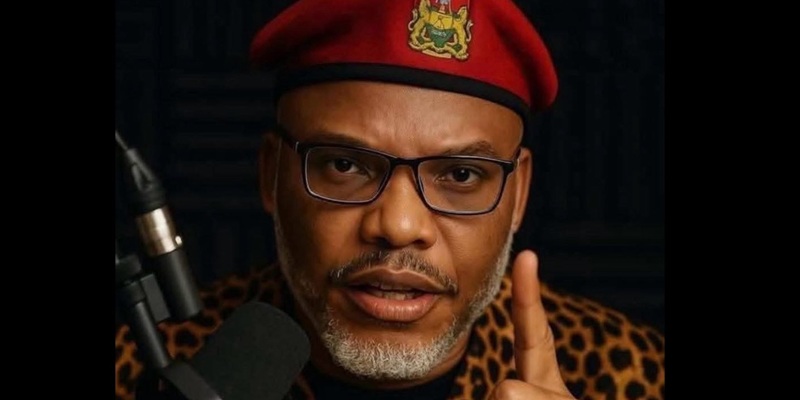
The controversy comes amid longstanding tensions over IPOB’s campaign for an independent Biafran state and the government’s security operations in the South-East.
IPOB remains a proscribed organisation in Nigeria, and authorities have linked it and associated armed actors to violence in the region.
IPOB and its supporters have disputed aspects of the government’s characterisation of the movement and its activities.
The wider security challenge includes the need to protect civilians and security personnel, prosecute those responsible for violence and avoid collective punishment or discrimination against people on the basis of ethnicity or political association.
The Okechukwu case is likely to intensify debate over whether Nigeria’s counterterrorism framework strikes an appropriate balance between national security, individual culpability and proportional punishment.
It also raises questions about transparency in the treatment of former insurgents and the criteria used to determine who qualifies for rehabilitation and reintegration.
What Happens Next?
The complete judgment and case record would help clarify the legal reasoning behind the sentence and the precise statutory provisions applied.
Any challenge to the conviction or sentence would have to proceed through the appropriate legal channels.
The government could also help address public concerns by explaining the distinction between rehabilitation for eligible former insurgents and criminal prosecution for membership of proscribed organisations, including the safeguards used to ensure consistent treatment.
For Ejimakor, the issue extends beyond Okechukwu’s individual case to the broader question of whether Nigeria’s security and justice institutions are applying the law fairly across regions and communities.
That allegation remains to be established.
But the sentence, the withdrawn attack-related count and the comparison with rehabilitation programmes have placed the proportionality and consistency of Nigeria’s counterterrorism policies under renewed scrutiny.