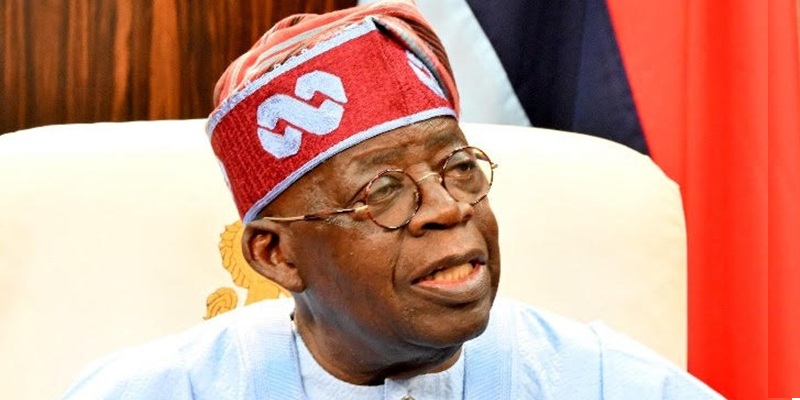
TDNigeria finds itself grappling with persistent economic pressures, security challenges, and questions about leadership visibility.

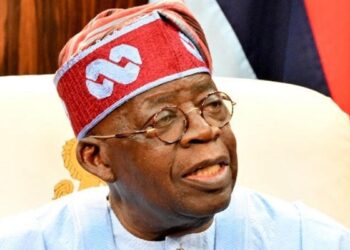
President Bola Ahmed Tinubu returned to Abuja in early June after the Eid-el-Kabir break in Lagos.
Yet public discourse is once again dominated by a familiar refrain: Where is the President?
Recent Activity (or Lack Thereof)
Official records show Tinubu was only partially active in the first half of June.
On June 9, he personally received the President of Madagascar, Colonel Michael Randrianirina, at the Presidential Villa for bilateral talks — a standard diplomatic engagement.
Around the same period, a wave of FCT infrastructure commissions (Outer Southern Expressway stages, Arterial Road N5, and others) was announced as part of his administration’s third-anniversary deliverables.
However, many of these high-profile site events were handled by proxies: FCT Minister Nyesom Wike, Vice President Kashim Shettima, or Senate President Godswill Akpabio.
The June 12 Democracy Day address — a major national moment — was delivered as a broadcast/speech rather than a large in-person spectacle.
Since then, public sightings and Villa-issued updates have been relatively sparse.
Routine governance (National Economic Council meetings, statements on flooding and fertiliser initiatives) has largely proceeded through the VP and ministers.
This pattern is not entirely new. Tinubu has long balanced time in Lagos, occasional overseas trips, and working breaks with official duties.
Critics, however, see a pattern of delegation that borders on absenteeism at a time when bold, visible leadership is demanded.
The Autopilot Critique
Nigeria is a complex federation with robust institutions — the civil service, security apparatus, ministers, and state governors keep the machinery running.
But the presidency is not meant to be a ceremonial or remote role.
Key concerns raised by observers include:
- Economic Hardship: Inflation, fuel costs, and naira volatility continue to bite.
While reforms are defended as long-term necessities, the day-to-day pain requires presidential communication and course-correction signals that feel intermittent.
- Security: Banditry, kidnappings, and regional tensions persist despite military efforts.
Citizens expect the Commander-in-Chief to project resolve through more frequent field visits or national addresses.
- Perception of Vacuum: When major project launches and policy rollouts are dominated by Wike, Shettima, or other appointees, questions arise about whether strategic direction is truly coming from the top or if the administration is coasting on bureaucratic momentum.
Opposition voices and social media have amplified this into claims of a “missing” president.
Supporters counter that governance is not a spectacle, that Tinubu works behind the scenes, and that constant public appearances are not the measure of effectiveness.
Both sides have partial points: excessive visibility can be performative, but prolonged low visibility fuels anxiety in a country facing compounding crises.
Historical Context
Nigerian presidents have faced similar scrutiny. Goodluck Jonathan was criticised for perceived detachment during Boko Haram’s rise.
Muhammadu Buhari’s frequent medical trips abroad triggered “where is Buhari?” memes and serious constitutional debates.
Tinubu’s style — Lagos-centric roots, preference for trusted allies in key roles, and a more hands-off public image — fits his personality but clashes with demands for charismatic, ever-present leadership in the social media age.
The Constitution does not mandate daily photo-ops.
A functional system should not collapse without the president’s constant physical presence. Yet symbolism matters.
In a federation with deep regional suspicions and economic discontent, the president’s visible engagement reassures citizens that someone is steering the ship.
Time for Greater Visibility?
Nigeria is not literally “on autopilot” — institutions are functioning, projects are being commissioned, and diplomacy continues.
But the perception of a leadership vacuum risks eroding public confidence at a critical juncture.
With 2027 politics already simmering, Tinubu’s team would be wise to increase strategic public engagements: more unscripted interactions, regional visits, or town-hall-style addresses.
The president owes Nigerians not just policy continuity but the confidence that the captain is on the bridge — especially when the waters are rough.
Prolonged absence from the public eye, whether real or perceived, invites exactly the speculation now circulating: Where is Bola Ahmed Tinubu, and who is truly in charge?
Governance by delegation has limits. Results ultimately matter more than optics — but in politics, optics shape the narrative around those results.
Nigerians are watching closely.