



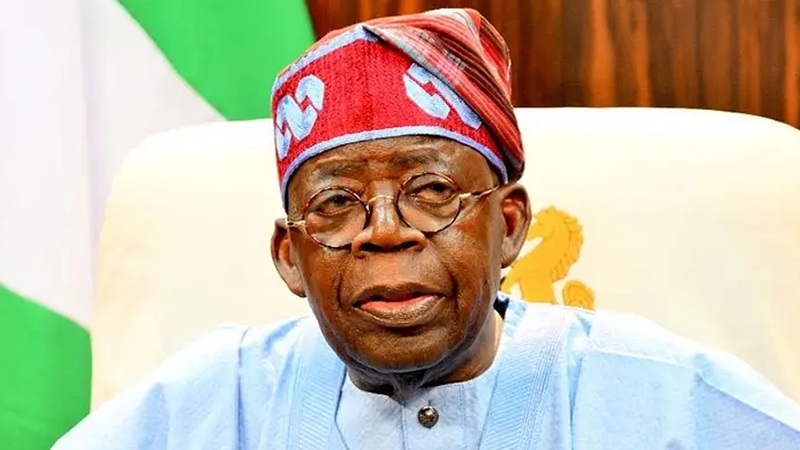
 Nigeria’s Senate has approved President Bola Tinubu’s supplementary external borrowing plan, covering projects and other government commitments in 2026 and 2027.
Lawmakers endorsed the request during Tuesday’s plenary after considering a report from the Senate Committee on Local and Foreign Loans.
The House of Representatives had approved the plan earlier, clearing the way for both chambers of the National Assembly to back it.
The amount reported in the Senate approval is $20.517 billion and €1.45 billion, although coverage of the request and House vote gives the euro figure as €1.045 billion.
The difference between the reported euro amounts could not be reconciled from the reports reviewed, so the approved figure requires clarification from official records.
The borrowing plan is supplementary and applies across two years, rather than being presented as a single-year borrowing request.

Reports do not set out the full breakdown of projects, loan terms, or expected disbursement dates for the approved facilities.
Borrowing plan and funding priorities
The President’s borrowing proposal was presented to the Senate lawmakers as financing for projects and government commitments across 2026 and 2027.
Earlier coverage of the request described a programme spanning infrastructure, agriculture, health, education, water supply, security and employment initiatives.
The House approval report said the government could use a mix of concessional and commercial financing sources, including multilateral and bilateral institutions and Eurobond issuance. Tribune
The specific mix of lenders, interest rates, repayment periods and currency exposures was not detailed in the Senate report.
Those terms will shape the eventual cost to the government and the foreign-currency obligations attached to any funds raised.

The approval authorises the borrowing plan; the reports reviewed do not establish that the full amount has already been borrowed or disbursed.
The government has not published, in the reports reviewed, a project-by-project schedule linking each planned facility to its expected results.
Senate action coincides with revised 2026 budget request
The borrowing approval came hours after Tinubu sought legislative approval for a revised 2026 budget, proposing to reduce spending by more than ₦3 trillion.
The revised framework puts aggregate expenditure at ₦65.176 trillion, down from the previously approved ₦68.323 trillion.
Projected federal revenue is ₦33.720 trillion, while capital expenditure is set at ₦26.232 trillion, according to the budget report.
Despite the proposed spending reduction, the fiscal deficit remains ₦31.457 trillion, equivalent to 5.64 per cent of gross domestic product.

The President’s letter said the changes would address existing commitments, underprovided debt-service obligations and selected capital priorities.
Tinubu also said a proposed $7.7 billion external loan would finance an existing foreign borrowing provision without increasing the overall borrowing limit.
The revised appropriation still requires legislative consideration, while the Senate referred the President’s budget letter to its Rules and Business Committee.
Questions for the Senate remain over implementation and costs
The Senate’s approval advances the borrowing plan through the National Assembly, but the public reports reviewed leave important implementation details unresolved.
They do not specify how much funding will come from each lender or financing instrument, or when funds are expected to be raised.
The reports also provide limited detail on how the government will monitor project delivery and publish information about the use of borrowed funds.
Those details matter because foreign borrowing creates repayment obligations that can expose public finances to exchange-rate and interest-rate changes.
The revised budget separately retains a large deficit, even as it lowers projected expenditure, underscoring the scale of the government’s financing needs.
Legislative approval does not by itself show when borrowing will occur, how quickly projects will begin, or what outcomes communities can expect.
The government’s next steps include implementing the approved plan and advancing the revised budget through further legislative scrutiny