TD

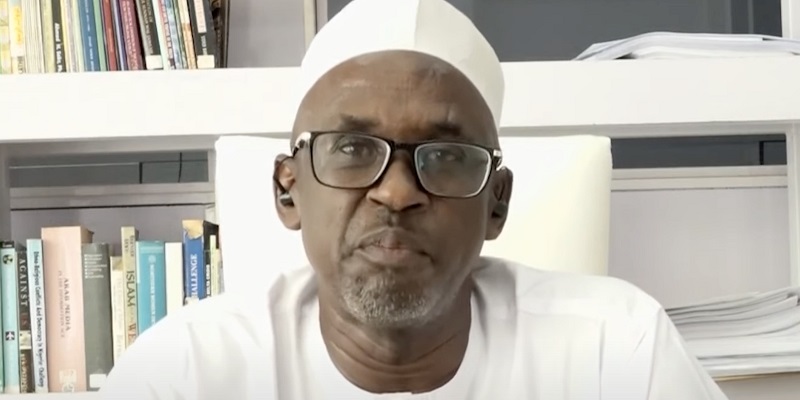
Abuja, Nigeria — Public affairs commentator and whistleblower Mahdi Shehu has raised alarm over what he describes as a monumental scandal in Nigeria’s 2026 budget, involving the National Commission for Almajiri.
Speaking during a televised interview, Shehu accused politicians of hijacking the commission’s mandate.
He further accused them of diverting funds meant to address the plight of millions of out-of-school children in Northern Nigeria.
The Revelation
Shehu pointed viewers to pages 2287 to 2790 of the 2026 budget, where allocations for the commission are listed.
The commission was established to tackle the Almajiri system — a practice prevalent in Northern Nigeria that has left over 30 million children without formal education.
Instead of focusing on education, welfare, and infrastructure for Almajiri schools, Shehu claims the budget has been manipulated to include capital projects unrelated to the commission’s mission.
“Politicians are now using the platform of the Almajiri system to siphon money and insert capital projects that have no bearing with the life and welfare of the Almajiri,” Shehu said.
Examples of Alleged Misuse
Shehu highlighted several questionable allocations:
-
₦1.4 billion for road construction in Abeokuta, Ogun State — far removed from the northern regions where Almajiri children reside.
-
Another ₦1.4 billion for road networks in a secondary school in Ekiti State.
-
₦1.4 billion for a Computer-Based Testing (CBT) center intended for WAEC, JAMB, and NECO — examinations unrelated to the Almajiri system.
-
Meanwhile, only ₦70 million was allocated for solar power installations across all Almajiri schools in Northern Nigeria.
Shehu contrasted the figures, noting the disproportionate priorities: billions for road projects in southern states, but a meager sum for critical infrastructure in schools serving millions of vulnerable children.
Whistleblower’s Verdict
Shehu condemned the budgetary process as an “annual ritual” designed to enrich politicians and their associates rather than serve the public interest.
“Budgetary provisions in Nigeria are just garbage in, garbage out.
“Meant to siphon public money, meant to deceive the larger society, meant to grease the palms of the high and mighty,” he declared.
He warned that while corruption may thrive temporarily, accountability is inevitable: “Every day is for the thief, one day is for the owner. A day is coming.”
Wider Implications
The allegations strike at the heart of Nigeria’s governance challenges.
The Almajiri system has long been a humanitarian crisis, with millions of children roaming the streets without access to formal education.
The commission was expected to provide solutions, but Shehu’s revelations suggest it has become another conduit for misappropriation.
Civil society groups are expected to demand explanations from the Ministry of Finance and the National Assembly, which approved the budget.
Analysts warn that if true, the scandal undermines efforts to address education inequality and perpetuates cycles of poverty and insecurity in the North.
New Frontier
Mahdi Shehu’s exposé has opened a new chapter in Nigeria’s fight against corruption.
His claims, if substantiated, reveal how funds earmarked for one of the country’s most pressing social challenges are being diverted to projects with little or no connection to the intended beneficiaries.
The revelations are likely to spark investigations, public outrage, and renewed calls for transparency in Nigeria’s budgeting process.