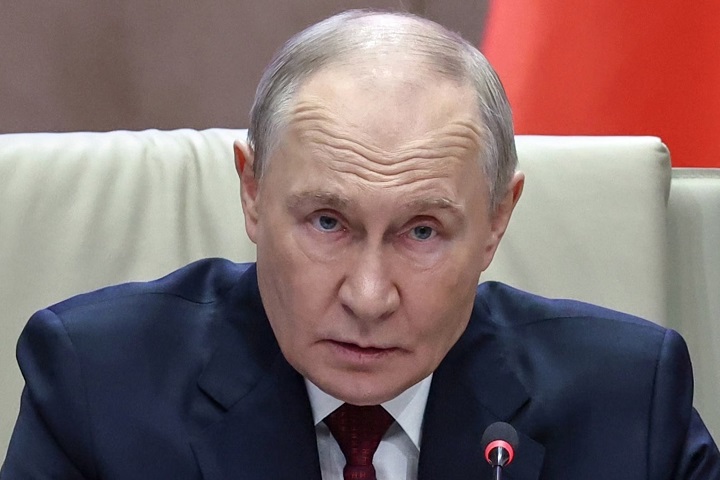
THIS DAWN — Tensions between Russia and Ukraine escalated further on December 29, 2025, after Moscow announced that Ukrainian forces attempted to strike one of President Vladimir Putin’s residences with drones.

The Kremlin insists the attack was thwarted by Russian air defenses.
Meanwhile, Ukraine has categorically denied the accusations, describing them as lies designed to derail ongoing peace negotiations.
According to Russian Foreign Minister Sergei Lavrov, Ukraine launched 91 long-range drones targeting Putin’s state residence in the Novgorod region.
Lavrov stated that all drones were destroyed by Russian air defenses, with no injuries or damage reported.
The Kremlin emphasized that such “reckless actions” would not go unanswered.
The statement signaled that retaliatory strikes had already been identified by Russia’s armed forces.
It remains unclear whether President Putin was present at the residence during the alleged attack.
Putin’s Response, Ukraine’s Denial
President Putin personally addressed the incident, warning that Ukraine’s actions would provoke consequences.
He told U.S. President Donald Trump in a phone call that Russia would review its position in peace negotiations following the alleged drone strike.
Putin’s remarks underscore Moscow’s intent to leverage the incident as justification for a harder stance in ongoing diplomatic talks.
Ukrainian President Volodymyr Zelensky dismissed the Russian claims as fabrications.
He argued that Moscow was attempting to create a pretext for future strikes against Kyiv and to undermine peace talks mediated by Washington.
Zelensky insisted that Ukraine had not attacked Putin’s residence and accused Russia of manipulating narratives to justify escalation.
International Context
The timing of the allegations is significant.
Russia and Ukraine are engaged in sensitive negotiations with U.S. mediation, and the drone attack claim threatens to derail progress.
Analysts suggest that Moscow may be using the incident to strengthen its bargaining position.
Kyiv, on the other hand, views the accusations as propaganda aimed at weakening international support for Ukraine.
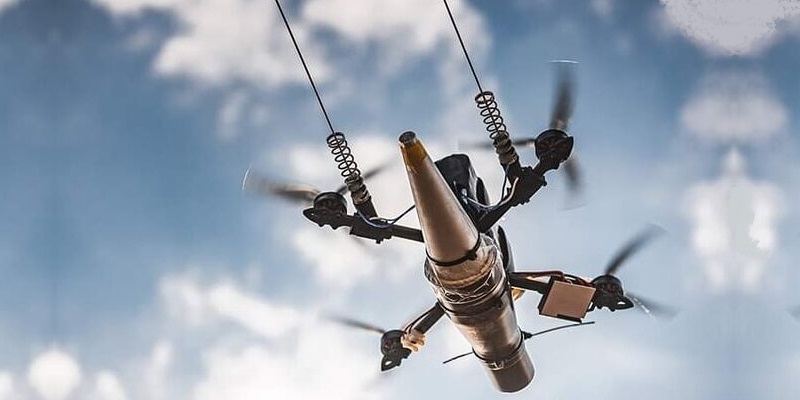
The incident also highlights the growing role of drone warfare in the conflict.
Both sides have increasingly relied on unmanned aerial systems for surveillance and strikes, raising concerns about escalation and civilian safety.
Implications
- For Russia: The Kremlin may use the alleged attack to justify retaliatory operations and harden its negotiating stance.
- For Ukraine: Denials reflect Kyiv’s concern that Russia is manufacturing pretexts for aggression, potentially undermining peace efforts.
- For International Diplomacy: The incident complicates U.S.-led negotiations, with Washington now tasked with balancing Russia’s demands against Ukraine’s denials.
- For Security: The claim underscores the vulnerability of high-value targets to drone warfare, even if defenses prove effective.
Russia’s claim that Ukraine attempted to attack President Putin’s residence with drones has injected fresh volatility into the ongoing conflict.
Russia’s claim that Ukraine attempted to attack President Putin’s residence with drones has injected fresh volatility into the ongoing conflict.
While Moscow insists the attack was real and vows retaliation, Kyiv denies the allegations and accuses Russia of fabricating evidence to sabotage peace talks.
As both sides harden their positions, the risk of escalation grows, threatening to derail diplomatic efforts and deepen instability across the region.