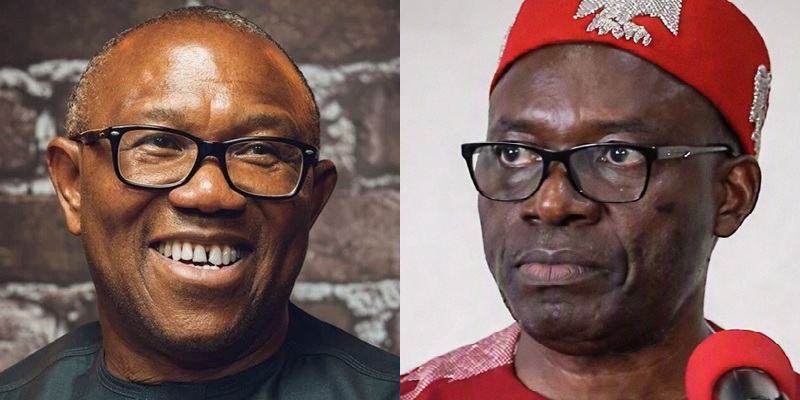

TD Former Anambra State Governor Mr. Peter Obi has publicly responded to Governor Charles Chukwuma Soludo following claims that the state government is still repaying loans incurred during Obi’s administration.
The exchange has reignited debate over fiscal management and accountability in Anambra politics as the 2027 elections approach.
The Statement by Peter Obi
In a video message, Peter Obi firmly rejected Soludo’s assertions:
“I left office as Governor nearly 13 years ago.
“On the day I left office, I was not owing any salaries, pensions, gratuities, or any money that the Anambra State Government was supposed to pay.
“I did not owe a single supplier or contractor.
“If you find even one person I owed, I will end my 2027 campaign today.
“I left a balance of ₦2,139,951,400 at First Bank alone…”
Obi emphasized that his administration was debt-free at the time of his departure in 2014, insisting that he left behind financial reserves rather than liabilities.
Watch the video.
Political Context
Governor Soludo’s remarks about lingering loan repayments prompted Obi’s rebuttal, highlighting the sensitivity of fiscal records in Nigerian politics.
Peter Obi, who is widely expected to contest in the 2027 elections, framed the issue as one of transparency and credibility.

He also reminded Soludo that, like every citizen of Anambra State, he has only one vote in the upcoming election:
“Governor Charles Chukwuma Soludo, like every other citizen of Anambra State, has only one vote in the 2027 election.”
Implications and Public Reaction
The exchange underscores several key themes:
- Fiscal accountability: Obi’s insistence on leaving office debt-free contrasts with Soludo’s claims of ongoing repayments.
- Political rivalry: The back-and-forth reflects broader tensions between current and former leaders in Anambra.
- Election dynamics: Obi’s reference to the 2027 campaign signals his readiness to defend his record as part of his political platform.
The video has circulated widely on social media, sparking debate among supporters and critics.
Many commentators view the challenge by Peter Obi — pledging to end his campaign if any unpaid debts are proven — as a bold move to reinforce his reputation for fiscal prudence.
Others argue that Soludo’s administration should provide detailed records to substantiate its claims.
Peter Obi Takes to Social Media
Debunking the phantom debts and ecological loan fallacy, Peter Obi posted on X (formerly twitter):

“My attention has been drawn to trending claims by the Anambra State Government that my administration left behind inherited debts, including a ₦2 billion ecological loan, contractor liabilities, and unpaid salaries, gratuities, and pensions.
“This is completely false.
“We systematically liquidated historical gratuities and arrears dating back several years, amounting to over ₦35 billion.
“At the point of handover, the state owed nothing in salaries, gratuities, or pensions, nor did we owe anything to any contractor for projects duly executed and certified.
“The ₦2 billion ecological fund in question was released barely three months before the end of my tenure for the Oko/Umuchiana erosion crisis.
“Despite pressure to spend the money, I refused, insisting that it should be left for my successor because government is a continuum and the funds were tied to a specific project.

“The money was therefore left 100 per cent intact in First Bank, in Account No. 2018779464, with a balance of over ₦2.13 billion.
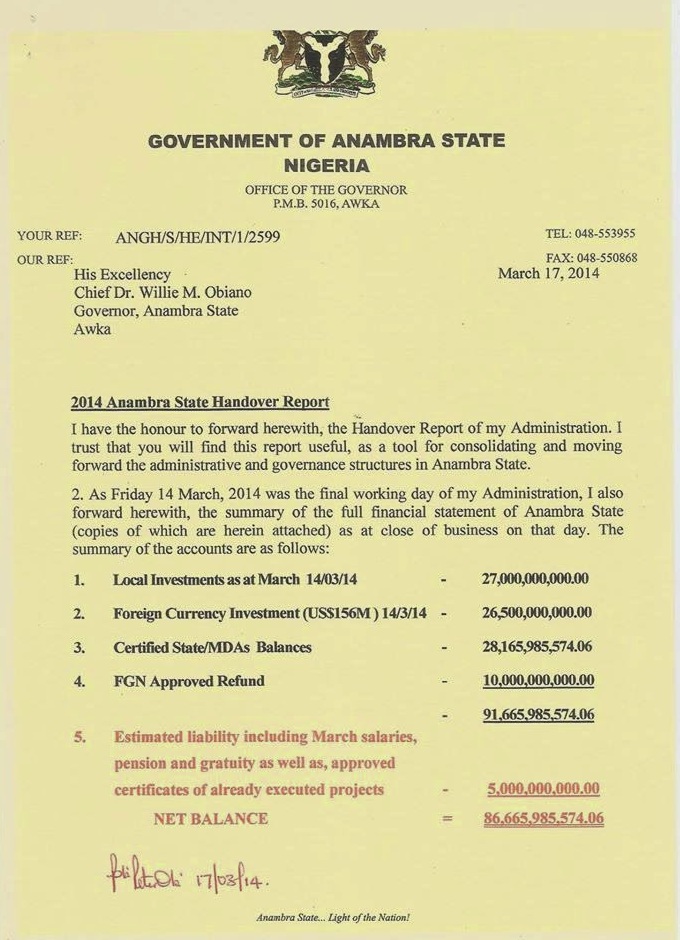
“It is important to stress that funds tied to specific projects or set aside for particular purposes were not even included in the over ₦75 billion in savings we left behind.”
He concluded with a daring “if anybody can establish anything to the contrary, I will stop campaigning.”
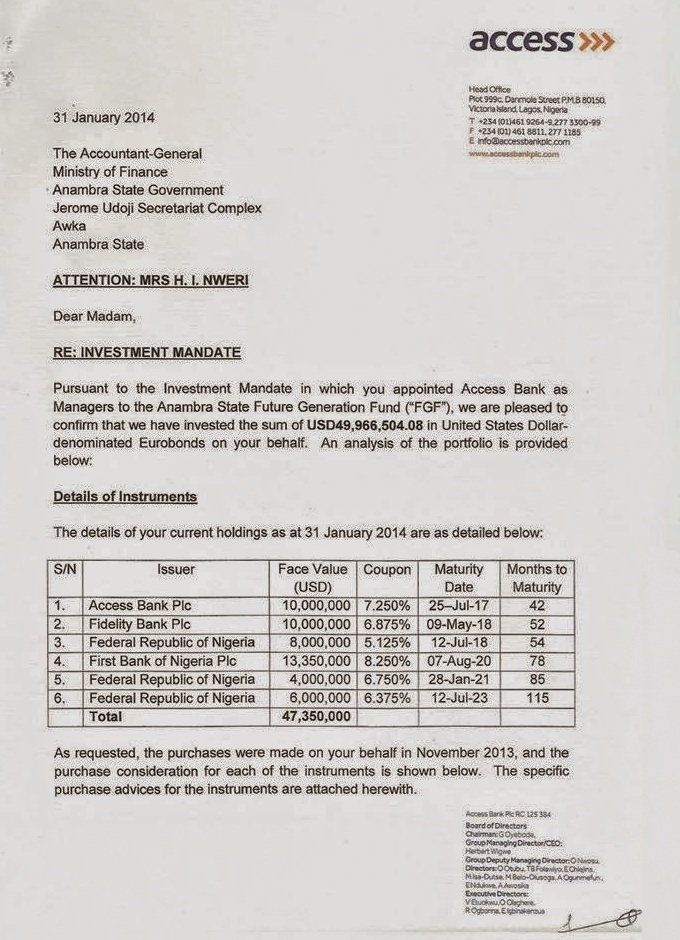
See the attached document below:
Bottom Line
Obi’s response to Governor Soludo highlights the enduring importance of financial stewardship in Nigerian politics.
As the 2027 elections draw closer, the dispute over Anambra’s fiscal legacy is likely to remain a focal point in both state and national debates.
It will, no doubt, have far reaching implications for the campaign of Peter Obi and Soludo’s credibility.